Bryanston – Latin and Classical Civilisation Sixth Form Trip to Greece.
Dr Ben Pullan, Head of Classics, reflects on the Latin and Classical Civilisation Sixth Form trip to Greece.


Dr Ben Pullan, Head of Classics, reflects on the Latin and Classical Civilisation Sixth Form trip to Greece.
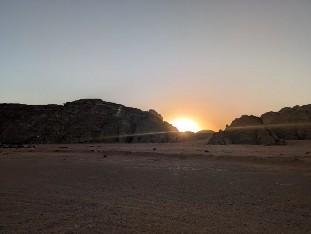
Figure 13: The sunrise at Wadi Rum.
Despite not intending to join Sharon and Tash to watch the sunrise on day 3, not closing my curtains meant I was awake at about 6:45, just in time to see the sun come up over the cliffs across the desert from our domes, as well as spot the two hot air balloons go past.
After breakfast and packing we had two camps to check out – Hasan Zawadieh Camp and Captain’s Camp. The latter of which was owned by the same family that owned the restaurant and hotel we had dinner at that evening (more on that later). Both camps ticked a lot of boxes for us all, and we were subject to the wonderful hospitality of the locals, being fed dates and sweet biscuits, offered herbal tea and cardamon coffee whilst we looked around.
We were all fans of the cave rooms at the Captain’s Camp, complete with hatch in the ceiling to stargaze through!
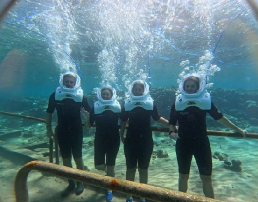
Figure 14: SeaTrek Aqaba
Climbing back in the minivan, we headed off to Aqaba, Jordan’s only piece of coastal city, and the country’s access to the Red Sea. A shorter drive of about an hour, we headed straight to the Royal Diving Club (after a brief bit of redirecting due to road closures on the approach and some unclear road signs).
We thought we’d just be doing some snorkelling, but we were given the opportunity to do a Sea Trek, using bubble helmets, so of course we all said yes! After receiving a safety talk and getting changed into wetsuits and swim shoes, we were walked to the end of the pier and one at a time descended down the stairs where we stopped whilst the helmets were connected to the oxygen tubes and then placed over our heads, before the diver then escorted down the rest of the steps to the seafloor.
Then, having equalised our ears, we had a handrail to follow as we moved along the sand past a coral reef teeming with fish. The drop off from the level we were at to where the diver was taking photos from was quite something! At one point some larger fish did pop up from the depths to have a brief swim before returning into the darker blue. This is something I never thought I would do, and certainly won’t forget doing, what an experience!
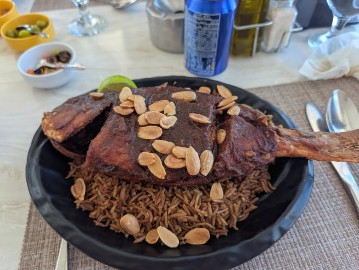
Figure 15: Sayadieh – baked fish with rice and almonds
After surfacing and drying off we headed into central Aqaba for lunch at the Ara Revolt Plaza, with it’s 130m tall flagpole. We ate lunch at Mirwas, and when offered, chose the local speciality fish option; Sayadieh.
We thought, as we had had meat for dinner and lunch so far, a fish dish would be best. It was delicious, and just as filling as every other meal we’d had so far. It was such a large piece of fish, it probably didn’t need all the usual starters, but we ate them all anyway! Hungry work, trekking along the seafloor!
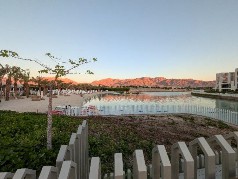
Figure 16: The Hyatt Regency Beach
We were then off to our Hotel, the Hyatt Regency Aqaba, the hotel that has since ruined all other hotels for me (except maybe where we stayed at the Dead Sea). It was huge, it was very fancy, and it was amazing!
We had some free time before dinner and some evening hotel inspections, so we took full advantage of the hotel. We met down at the private beach to discuss everything so far and have a bit of a swim and a relax before heading back to change into our evening wear. Meeting Basim and Abdullah at the front desk we headed first to the Oryx hotel for an inspection, a 4 star hotel, used to hosting sports and e-sports teams it could be good for groups if they have gone as far south as Aqaba.
Hopping back in the minivan we headed to the Sharif Hussein’s House Museum where we learnt all about the Arab Revolt with the Jordanian Heritage Revival Company, seeing weapons, letters, and clothing from the period. Then it was over to the Captain’s Restaurant for dinner.
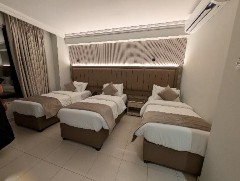
Figure 17: A triple room at the Captain’s Hotel, Aqaba
After a second round of salad and Sayadieh for dinner, we had a brief inspection of the Captain’s Hotel, a 3 star hotel that would be great for groups staying in Aqaba. The restaurant allows for HB, there’s a separate diner for groups at breakfast, it’s all been refitted recently so is modern and up to date, and the on-site pool meets all STF standards. After that it was back to the hotel to pack and sleep ahead of the journey to the Dead Sea on day 4.
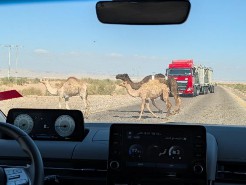
Figure 18: Camels crossing!
We were all up early enough to get down to breakfast in good time, and what a buffet spread it was! I went for the simple option this time and had eggs benedict, (made to order), and some pastries.
It was a long drive from Aqaba to the Dead Sea and our visits on day 4, just under 4 hours or so, though we were able to stop several times (once, unfortunately, due to a flat tire). Just like with the drive from Amman to Petra, the changing landscape as we left the flat plains outside Aqaba to the more mountainous area near the Dead Sea was something that really stuck out, about halfway along the journey we used Google Maps to tell we were the other side of the mountains and gulleys that hide Petra.
We also enjoyed the wild camels that occasionally caused roadblocks whilst they crossed the road! After a little while in the minivan we reached the bottom of the Dead Sea and you then have mountains and cliffs on your right, and the salt pans of the Dead Sea on your left. We drove past the Museum at the Lowest Point on Earth and Lot’s Cave, which may be of interest to some groups with religious studies students.
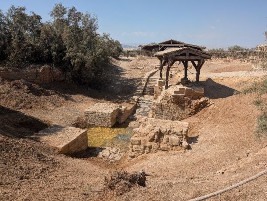
Figure 19: The Baptism Site
The first place on our visit list for the day was the Baptism site and the river Jordan, north of the Dead Sea. I think we were all a little underwhelmed by the Baptism site, especially as the flow through from the River Jordan had dried up.
Instead of being treated with the reverence of what should be an incredibly holy site, it seemed more like a standard tourist attraction, though the requirements to even visit it seemed very stringent – permits, permission, a shuttle bus to take you from the security checkpoint to the car park for the site (though we had permission for the minivan to drive down). We then walked down to the River Jordan, which serves as the line of the border between Jordan and Israel, seeing the colour of the water, I was fine with not taking a dip, though the rest of the group did. There was even a mother and daughter also visiting the site who went in and ducked under the water in a religious manner.
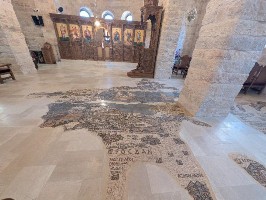
Figure 20: A section of the Madaba Mosaic Map
Departing the site, we headed to Mount Nebo, where Moses supposedly had his view of the promised land before he died. The remains of the Memorial Church of Moses are situated on top of Mt. Nebo, dating from the 4th-6th Centuries AD.
Between 2007 and 2016 a new basilica was basically built over the ancient church, and this now can be used for services, as well as holding mosaics from the site. I got to see mosaics, I was happy! The small museum on site also had some interesting archaeology in from Roman, Byzantine and other periods.
We briefly stopped off at a Mosaic Workshop to talk to the staff before heading to Madaba, where we went straight to the church of Saint George to see the Madaba Map, the incredibly detailed map of the Holy Land, from Lebanon to the Nile Delta (north to south) and from the Mediterranean Sea to the Eastern Desert (west to east). While incomplete and fragmentary within the church floor, it is still stunning!
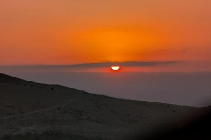
Figure 21: The sunset over the Dead Sea
Unfortunately, we didn’t get to see either of the Archaeological Areas or the Museum in the city that feature other Byzantine era mosaics, but just gives me a reason to go back! Our very late lunch was at Haret Jdoudna, which seems like a perfect setting for lunch for groups that are spending a day in Madaba to see all the mosaics.
It was another full on, absolutely filling lunch, and then we were off back to the Dea Sea to check in to our hotel – the Kempinski Ishtar, which along with the Hyatt Regency, the nicest hotel I have ever stayed in! As we came over the hills on the way back from Madaba the sun was setting over the Dead Sea and reflecting off the surface, making for an absolutely stunning view, and then by the time we checked in, it was purple hour, which made for a stunning view.
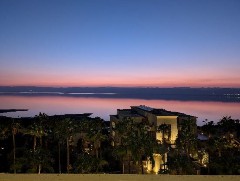
Figure 22: Purple hour at the Kempinski Ishtar
We had arrived too late to go into the Dead Sea and float around, and most of the pools were also closed, but I did manage to get into the infinity pool before that closed. Given our lunch was later than usual, we only went for a light pasta and salad dinner from the large buffet choices, before retiring for bed.
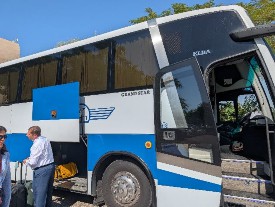
Figure 23: The Jett Bus for our transfer to Amman
Unfortunately, this last full day was when my body decided to come down with some kind of virus/stomach bug, so while the ladies went down to the dead sea to try the floating experience, I spent the time in my room before eating as plain a breakfast as possible.
Luckily, Sharon C had some rehydration powder and the journey from Dead Sea to Amman was not that long. Instead of Nadir and the minivan this morning, our journey to Amman was in a Jett coach, like the ones groups would most likely be using for transfers.
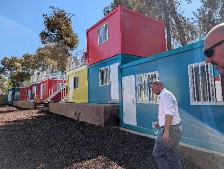
Figure 24: The bright and colourful accommodation at the Challenger Academy
We had a brief check in with the Challenger Team’s Academy, who had been at the event in London earlier in the year that had led to the invite by the Tourism Board. Their on-site upgrade was still being finished but there were plenty of Jordanian school groups there having a go at their various activities. As part of this upgrade, they were in the process of installing new accommodation blocks, and we were given a tour of the whole facility.
In the discussions after our tour, we talked about what else they can offer, including being local agents for airport to airport services or smaller services. We then continued on to Amman to inspect a hotel in the city centre that could be of use for groups, though it was more of a business hotel. It was good to have seen a real variety of hotels and camps throughout the country during our stay.
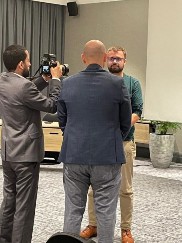
Figure 25: Me being interviewed after the workshop
We then left to check into the Intercontinental IHG before eating lunch at the hotel, one last large lunch before departure. Basel had told us day 1 that lunch was the main meal of the day for Jordanians, and that had definitely proven to be true! From then it was onto the workshop, an almost speed-dating experience where Sharon, Sharon, Tash and I were sat around on the room and one by one representatives form various Jordanian travel companies pitched themselves to us.
We have now established a good rapport with several and we will be launching our Jordanian tour with one of them this year. We were then interviewed by Abdullah from the Jordanian Tourism Board, for their promotional materials.
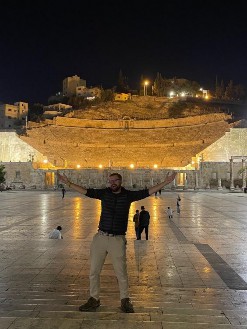
Figure 26: Me very excited to see the Roman Theatre in Amman
Once the workshop was done, we headed out for dinner at the Majdoline restaurant, during which we celebrated Sharon’s upcoming birthday, before we headed back to our hotel. Knowing we were leaving very early the next morning, I convinced the others to jump in a taxi and come with me down to Amman’s Roman Theatre and Odeon, as I wanted to see them for the purposes of being able to then advise any groups that go on a Jordanian Tour.
It was about a 10 minute taxi from our hotel for 5 dinar each way, and while the sites were closed, the large square in front of them was open and bustling at 10pm, with young people hanging out, kids playing catch, older people sat around chatting.
We managed to see through the bars of the theatre gates and the wooden slat doors of the odeon to sections of the inside. The nymphaeum just around the corner was also closed, but you could see the entirety of what remains and it was great to be able to tick off these 3 sites in some form, before returning to the UK.
We returned to the hotel and our rooms to make sure everything was packed before bed, I think by the time we had returned and I had packed everything it was 01:00. We were then up and ready to leave the hotel at 06:45 to avoid any Amman rush hour traffic on our way to the airport. This meant we got to spend a lot of time at Amman airport as we waited for the gate to open, but it also allowed us to get breakfast and hydrate before we got on the long flight home.
Luckily, rather than having to navigate various public transport back from Heathrow, Sharon P was able to give me a lift back to Southampton as she lives in the area. This made my journey home about 2-3 hours quicker.
Having been nervous about travelling to Jordan given the ongoing issues in the region, I was so glad that I went in the end! It was a once in a lifetime experience, made up by the people I travelled with, and those we met along the way, the places we saw, and the food we ate.
By the end of our time in Jordan, I think it was safe to say that the kindness and welcoming nature of the locals, along with the amazing things we had seen and done, had left quite the impression on us all.
by Dr. Kerry Phelan (@KerryLPhelan on X/Twitter)
My husband had to attend Marmomac’s 2025 Exhibit in Verona in September and I, of course, jumped at the chance to head back to the region to do a little more exploring. There was no pretence this year – he knew very well that I would have a specifically Classically-themed itinerary in mind this time – and so I flew over to meet him in Italy when the trade show had finished. We hired a car at Valerio Catullo Airport and drove over to Desenzano del Garda as our first stop.
The town of Desenzano is a vibrant spot, with shimmering views across Lake Garda; it’s well-connected by train (to Verona and other major cities, like Milan) and by ferry to other beautiful towns around the Lake itself.
I didn’t waste any time, and, on our first morning in Desenzano, we headed out early to explore the Villa Romana, a mere five minute walk from the centre of town.
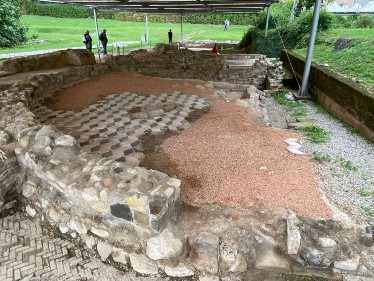
The archaeological complex – comprising of a Roman dwelling and garden, statute-adorned courtyard, workshop, and a thermal area – also has a little museum on site displaying the finds from the villa. Under the museum building itself, the ancient structures that can be seen through the glass-protected openings in the floor were first uncovered in 1970. They are the oldest part of the building, the first villa in the area, which was erected around the 1st century BC. That building was later incorporated into a larger complex with structural changes in made the 1st century AD, further remodelling in second century AD, and a final 2
full redesign in the middle of the 4th century AD, when most of the mosaics visible today were added. The remains stand as one of the most important examples of a late antique villa complex in northern Italy, built during the general economic crisis of the 3rd-4th century AD, where the owners of such properties were seeking an escape from the frenetic activities of urban life.
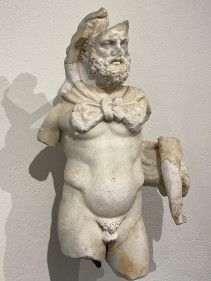
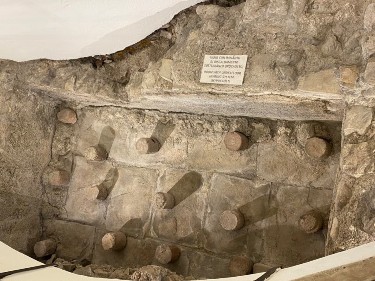
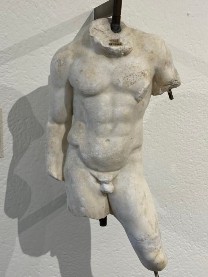
I was thrilled to discover a rather dashing white marble statue of Hercules inside the museum; roughly datable to the mid-2nd century AD, it’s a lasting reminder of an extraordinary sculpture collection that would have adorned the gardens of this private residence.
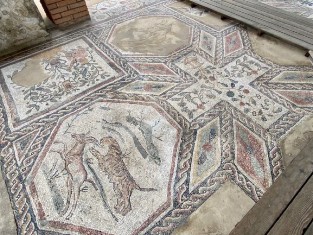
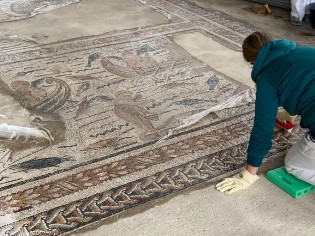
A visit to the complex is entirely worthwhile just to see intricate mosaics on display there, with stunningly detailed patterns and life-like depictions, their beauty cannot be overstated. Vivid red, orange and black colours show various fishing and hunting scenes, beasts attacking wild animals, cupids, and even chariot racing. The mosaics themselves have been preserved in excellent condition, and we were able to watch the staff actually cleaning and maintaining them in situ during our visit.
Though the site is quite small – everything can be seen in less than an hour – it was really impressive. Last year, I dragged my then unsuspecting husband to the Grotte di Catullo in Sirmione to visit the largest and more elaborate Roman villa in northern Italy; however, I do think that I was more taken with the single storey villa that would have stretched along the waterfront at Desenzano than its better-known counterpart in Sirmione.
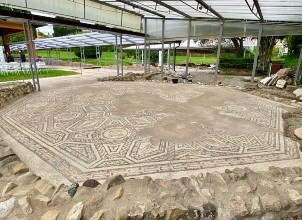
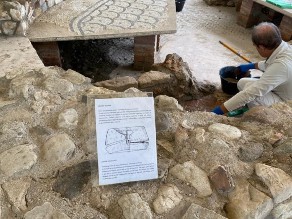
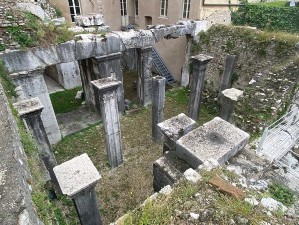
While in the area, James had asked me to visit Brescia for a quick recce for our future student groups and I was happy to oblige (we never truly stop working at Hellene!). About 30 minutes away from Desenzano by car, the city of Brescia thus became our next stop. Geographically, this city is sandwiched between Verona and Milan; and, although the latter two tend to feature more frequently on generic Italian itineraries, the Brixia Roman Archaeological Area is an absolute must see for students and teachers of Classical Studies alike. It stands as yet another significant and wonderfully preserved site in the region, so much so that Brixia has had UNESCO World Heritage Site recognition since 2011; the Area itself includes the Republican Sanctuary from the 1st century BC, the Flavian Capitolium (built AD 73), and the Theatre dating between the 1st-3rd century AD.
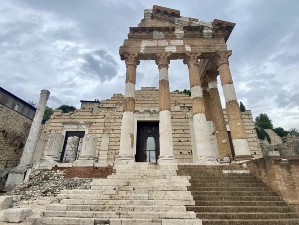
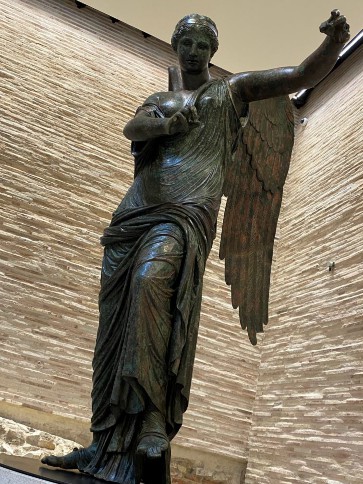
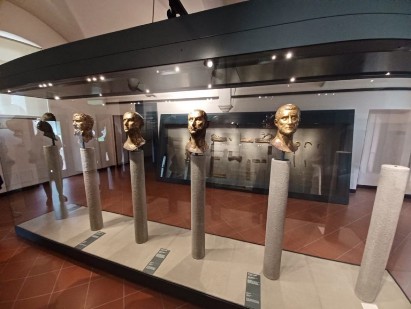
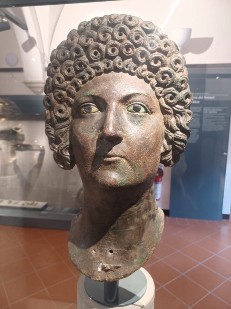
The Capitolium and its temple were dedicated to the triad of gods, Jupiter, Juno, and Minerva. Today, visitors can pay to enter into the Capitolium space and see parts of its original decoration and furnishings. On the walls of the central hall, there is a display of the epigraphic collection; the eastern cell is home to the very large and truly exquisite bronze Winged Victory, dated to the 1st century AD, which was discovered together with six imperial heads and hundreds of other bronze artifacts in 1826.
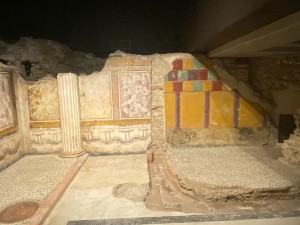
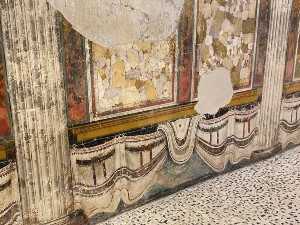
Underneath the Temple, and included in the paid entry access, visitors find the partially-preserved structures of the Republican Sanctuary; in its interior, there are frescos of painted white columns and mock polychrome marble slabs. This monument, unique in northern Italy, is attributable to high-level workers from central Italy, who hired to construct a building in Brescia to demonstrate the city’s adherence to Rome’s cultural model, in the years immediately following the bestowal of citizenship (89 BC).
Next to the Capitolium – and free to visit! – stands the remarkable Theatre, set on the slopes of the Cidneo Hill. The layout of the building dates back to the Augustan age, and was subject to numerous enlargements and improvements over the centuries. This Theatre was used until late antiquity (late 4th– early 5th century AD), but it was mostly likely abandoned after the 12th century due to the damage caused by an earthquake. It seems likely that both the Theatre and the Capitolium were subsequently buried by landslides and falling rubble from the hill behind them.
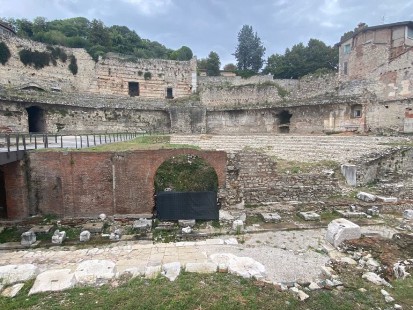
Just to the south of Capitolium, about a 2 minute walk away, are the remains of the Basilica Romana. The Basilica structure, now incorporated into the façade of modern building (currently the office of the Lombardy Superintendence for Archaeological Heritage, of all things!), was constructed in the Flavian period to close off the Forum area and to serve as a sort of monumental entryway for the space.
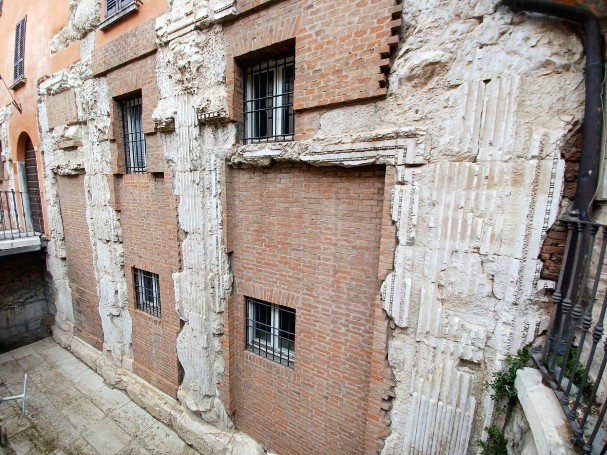
From the main archaeological area, then, we then followed the so-called UNESCO Corridor to the Museo di Santa Giulia. The museum houses a wide and varied collection that includes ceramics, inscriptions, architectural fragments, and lots of post-Roman artifacts and art too. For me, there were a couple of features worth mentioning in particular.
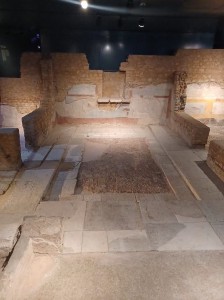
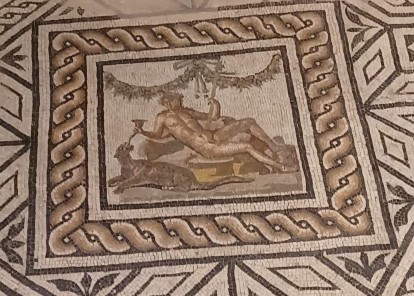
Firstly, the Domus dell’Ortaglia which is located in the northeast part of the museum complex. This area actually consists of two separate houses, the Domus of the Fountains and the Domus of Dionysus. The Domus of the Fountains, the larger of the two structures, seems to have originally been constructed in the 1st century BC and was occupied until the 4th century AD. The smaller Domus of 7
Dionysus was built in the 2nd century AD and was still in use until the 4th century AD. This house gets its name from a superb mosaic depicting a reclining Dionysus and his panther. Frescos of sea life and pastoral scenes decorate the walls, along with the rather special portrayal of a Nile river scene at the centre of the Domus complete with Pygmies, hippopotamuses, and an Egyptian priest of Isis.
And secondly, the display of the six bronze portrait heads (five male and one female) identified as members of the Flavian dynasty, and 2nd and 3rd century AD emperors. These precious items would have been displayed inside the Capitolium temple; they were most likely hidden when the building was abandoned.
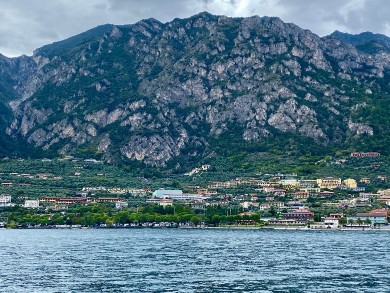
For the rest of our trip, my husband and I based ourselves in Limone sul Garda, a town nestled between Lake Garda and steep mountains on its western shore. From there, we explored some of the towns to the north (like Malcesine, Riva del Garda, and Tremosine sul Garda). Limone itself is very picturesque, with winding narrow alleys, and a beautiful waterfront promenade from the Porto Vecchio harbour area to the historic old town.
One of the last hits on my Classically-themed itinerary was one that I missed out on last year’s visit to Verona, and that was the Museo Archeologico al Teatro Romano. The site of the Roman Theatre in Verona is also home to a super impressive Archaeological Museum in a former convent from the 15th century.
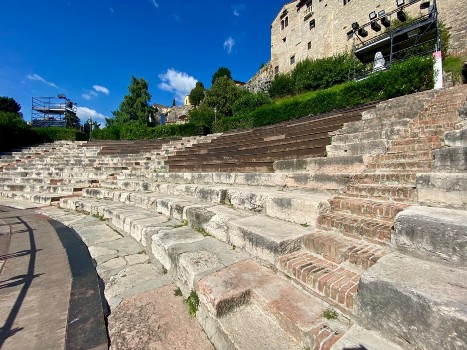
The Theatre was built on the slopes of the San Pietro Hill towards the end of the 1st century BC, and would have extended all the way down to the the Adige river below; ancient audiences would have enjoyed performances set against the beautiful backdrop of the city’s urban landscape and its river banks. During the summer season, the Theatre continues to music and drama festivals and, while we were there, the White Project Band was carrying out a soundcheck for its performance later that evening.
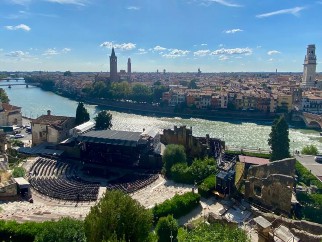
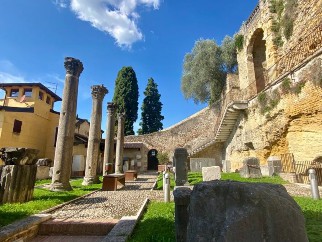
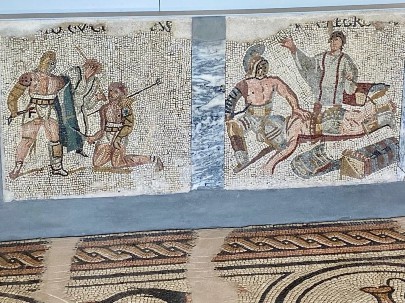
The views of Verona, as you ascend to the Archaeological Museum on the Hill and look out from the Great Terrace, are magnificent. The exhibits display Roman materials found in Verona and the province, with numerous sculptures, sacred and sepulchral inscriptions, mosaics, and columns from the Arena di Verona. One of my favourites from the collection was the mosaic showing gladiatorial scenes, used to decorate a reception-room floor of a house from the first half of the 3rd century AD. The battles depicted are presided over by a referee, and the inscriptions in the black tesserae give the names of some of the gladiators and the outcome of the contest.
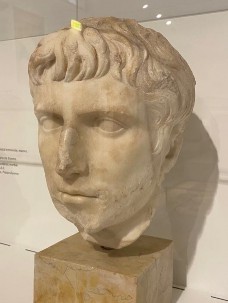
Another highlight was the marble portrait of Octavian, identified by many scholars as the future emperor in mourning after the death of Julius Caesar since his beard is only hinted at, and datable to the years after 44 BC. Overall, I spent a little over two hours exploring the various different rooms, but the very keen Roman historians could easily spend 3 or even 4 hours fully exploring the collection.
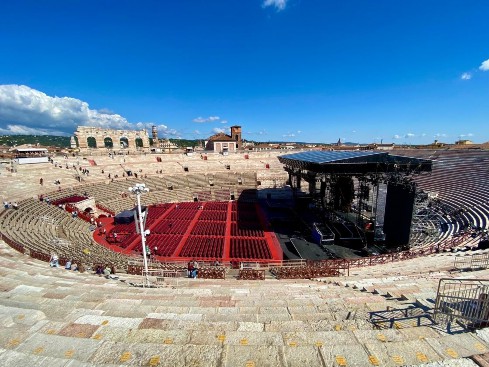
We spent our last evening back in Verona, soaking up the atmosphere from the Piazza Brà and enjoying the music from the Italian superstar, Zucchero, and his very special guest Russell Crowe (I kid you not, Maximus Decimus Meridius himself!) resonating from the Arena di Verona.
I certainly wouldn’t hesitate to go back to Verona again next year; while I have no interest in its annual Exhibit on natural stone (and my husband certainly wouldn’t believe me if I tried to claim that I did) the opportunity to continue to explore the ancient sites that northern Italy has to offer is simply irresistible. I wouldn’t hesitate in recommending visits to Verona and also Brescia to all Classical scholars looking for an alternative to the usual Rome-based itinerary.
Jordan, specifically Petra, has been on my travel wish-list for a while, but I never thought I would actually get to go! However, I was then lucky enough, from the 9th-15th of October to be invited out to the country, and hosted, by the Jordanian Tourism Board. I was one of four representatives from the sector, alongside Sharon (Equity), Sharon (Camps International) and Tash (Winchmore school).
We all met at Heathrow on the afternoon of the 9th, and flew out on our Royal Jordanian flight, landing in Amman just before midnight local time. We were met by representatives from the Tourism Board who fast-tracked us through the visa process, helped us with our luggage, and introduced us to our guide for our tour – Basel.
We got our SIM cards sorted for our phones (to avoid data roaming fees) and then met our driver, Nadir, and departed for our Amman hotel.
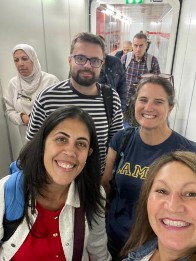
Figure 1: Our Little Group – Tash, Me, Sharon C, Sharon P (left to right)
Arriving at the House Boutique hotel, it took a little while for the adrenaline and excitement to wear off, so I wasn’t asleep much before half past two in the morning. We met at nine-thirty for breakfast the next day, and the choice was a bit overwhelming, there was so much to choose from on the buffet, a lot of which wouldn’t seem out of place on a lunch time mezze table, which was quite interesting to mix in with pastries and fruit.
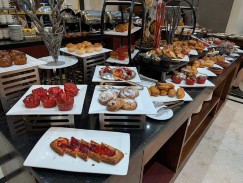
Figure 2: House Boutique Hotel’s Pastry Selection
The first visit of our trip was to Jerash, the Roman site just shy of an hour north of Amman. The first glimpse you get of the site is the Arch of Hadrian as you approach on the road. Once parked up and with tickets collected, we were then taken through a small souq-like area (also where the toilets are) before emerging at the path leading up to the Arch of Hadrian, the colossal, triple-arched gateway that was built in honour of the emperor’s visit to the city of Gerasa in AD 129-130. Beyond this monumental arch is the hippodrome and then you go through the southern gate, past the path up to
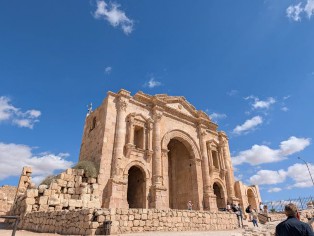
Figure 3: The Arch of Hadrian
the Temple of Zeus and the Southern Theatre, to reach the most famous part of the site; the Oval Plaza. One of Jerash’s nicknames is the City of a Thousand Columns, and starting in this plaza it is easy to see why. As we followed the southern cardo maximus past the archaeological museum, columns topped with capitals line the street, and still stand over most of the monuments across the site, visible in the distance.
We weren’t able to have too long at the site, as we had our lunch plans and the Amman Citadel and Underground Tour to do, so we continued past the Macellum, South Tetrakionion, Cathedral, the Nymphaeum, and the Propylaeum of the Sanctuary of Artemis before we turned off to visit the North Theatre. The North Theatre, also know as an Odium, is smaller than the South Theatre, which means it was more likely used for poetry and musical performances rather than theatrical shows. It was built in the 2nd Century AD before having works done in the 3rd Century AD.
The view from the upper seats was quite something, and the detail of aulos-player reliefs in at the ends of the cavea is a nice little touch to keep an eye out for! After spending some time here, we continued on to the north Tetrapylon and the then the northern gate (also known as the Damascus Gate).
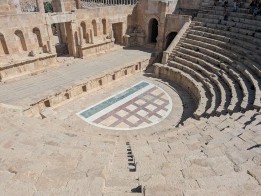
Figure 4: Jerash’s North Theatre
We hopped back into the minivan and then we were off to Beit Khairat Souf which is a kitchen and restaurant, owned and run by women, employing 25 from the local area. While this wasn’t yet our lunch stop, we did have a go at making the spice mix for the local bread speciality; manakish with the staff, getting to portion up our own bags of the spices.
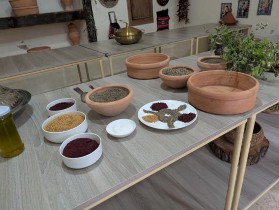
Figure 5: The spices at Beit Khairat Souf
Once we had finished our spice mix and done a little shopping for their home-made sauces and jams, we were back on the road heading to lunch at Dar Ne’meh Souf. Dar Ne’meh is another local community project, backed by the Princess Taghrid Institute for Development and Training, the project’s goal is to allow women with home based businesses to generate sustainable incomes. They have several branches throughout Jordan that include a small shop full of hand-crafted goods alongside the
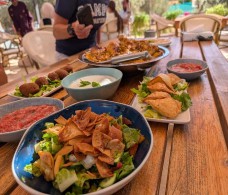
Figure 6: Lunch at Dar Ne’meh Souf
kitchen and café space. Lunch was a very filling chicken and rice dish, one of the local delicacies, alongside a lot of salad and side dishes. This became the trend for the whole trip! Can’t fault their portion sizes or hospitality!
Arriving in Amman we headed straight up to the Citadel, the ancient heart of the city, where you can find layers upon layers of history, from the earliest bronze age caves, through the Roman period with the Temple of Hercules, Byzantine buildings including Churches and villas, and several Umayyad period remains, like the mosque, and palace. You can easily spend a couple of hours up here, walking around the sites and admiring the views over Amman (including looking down on the Roman Theatre).
We got a quick look inside the Jordan Archaeological Museum before heading down to meet our guide for the Underground Tour. We thought perhaps we were literally going underground, but instead we had a tour of key pieces of street art, right in the centre of the city! Turns out there’s a fairly big street art culture in Amman, and about 70% of street artists in the city are women! We learnt about certain artists signatures, such as a robot face or a paper boat. We got to try a couple of local desserts and different flavours of honey before the end of the tour and heading out for dinner at Sufra.
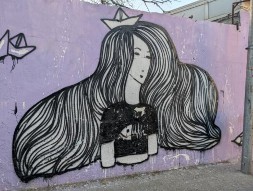
Figure 7: One of the pieces of street art in Amman
Dinner, just like lunch before it, and every meal for the rest of the trip, was huge! Plates and bowls full of salads, dips and small bites came out alongside the bread – Tabbouleh, Fattoush, Falafel, Hummus, Moutabal, chopped fresh tomatoes, fried cheese, to name just a few. Then came the mains – a chicken and rice option, or a potato and meat dish in a creamy sauce. Pudding was an ice cream alongside a scoop of candyfloss.
It was an early start the next day, but on-one was grumbling as we were off to Petra! As we drove south, you could see just how much the natural geography of the country changed, from Amman a built up city nestled on hills with green spaces, to flat, dry desert for a lot of the journey, then as we approached Wadi Musa, the large cliff and rock formations appeared and began to dominate our view of the landscape from the minivan windows. We briefly stopped to see the Paradise bakery on the outskirts of Amman to pick up some bread and biscuit sort of snacks, it was certainly interesting to see the variety and range of products you could pick up there, as well as being able to see the baking process and production line in the back corner.
Back on the road, our rest stop came at a roadside bazaar, where they had restrooms, a large shopping section, as well as a café/diner for food and drink. These are the sorts of locations we would encourage groups to think about stopping at for rest breaks. Just before reaching Wadi Musa we stopped looking down towards the valley where Petra sat amongst the rock formations and took some photographs before arriving and heading into the site.
Going past the museum you then enter a large square, with toilets on the right, the visitor centre on your left, and a souq for shopping, with eateries mixed in. There was an option to take (6 seater) golf carts from just outside the visitor centre down to the end of the Siq to then walk the last part, so we did that.
We were allowed to stop a few times on the way down at the Djinn Blocks, Obelisk Tomb and the Bab as-Siq Triclinium, as well as at several points once we entered the Siq, like the remains of the relief of a camel. At one point whilst we stopped and were looking around, I was laughing to myself in bewilderment of actually being there. Once we’d got about three quarters of the way to the end of the Siq, we left the golf cart,
Basel turned us around by claiming there was an eagle’s nest up high back the way we’d came before spinning us round for the reveal of the Treasury through the end of the Siq. That magical, marvellous view. Nothing quite prepares you for it, and it just astounds you to see it in person, no matter how many times you’ve seen it in films or TV shows. Given the recent issues in the neighbouring countries it was also fairly empty compared to what you would expect it to be like there.
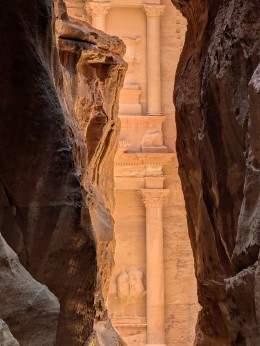
Figure 8: First glimpse of the Treasury through the Siq
We spent some time in the area of the Treasury, but didn’t get to go any further, which I am so gutted about, but I knew it was for good reason – we had to get to Wadi Rum to do the activities there. However, Basel did introduce us to his friend who takes photos for visitors. We paid about 25 dinar to get about 50 photos and 4 videos in total, a mix of group shots and individual photos. After this we took a golf cart back up to the entrance, bought a shemagh/keffiyeh each and then had a quick whip around the museum where I managed to get quite a few photos and a guidebook for Jordan’s historic sites. Lunch was next, at the Mövenpick hotel opposite the site entrance, we had the usual salad and dip starters followed by a lovely salmon and vegetable main.
Finishing lunch, we hopped straight back into the minivan and were off to Wadi-Rum, the journey was around an hour and 45 minutes and included a stop at the Lawrence of Arabia train that the Jordan Heritage Revival Company use for their 1916 Arab Revolt reenactment. We met with the jeep driver and hopped into the back for the 4×4 desert drive, it was rather bumpy, but the landscape was something else, we were really starting to get that Mars-like feeling, with all the red rocks and sand. After about 25 minutes we stopped for our next mode of transport – Camel! This was a method of transport I was a little hesitant about, and it wasn’t the most comfortable experience, but what an experience it was to ride a camel through the desert! You need thighs of steel though, and make sure you pull your legs out of the way before your camel bumps into another, we ended up crashing into a larger group and Tash had a rather large bruise on her leg where it got pinned between her camel’s seat and another camel.
We made it to the Bedouin camp, had some herb tea and then got back in the 4×4 to reach the spot at which we would watch the sunset, which was another amazing experience! It really hits home how, except for the occasional 4×4 going past and the clusters of camps scattered around, that this would have been the same sunset view that the Nabataeans would have had 2000 years ago as they made their way through Wadi-Rum.
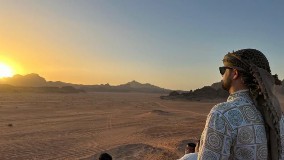
Figure 10: Wadi-Rum sunset
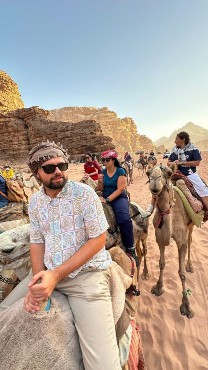
Figure 9: Camel riding through Wadi-Rum
Once the sun had set below the horizon we were back in the 4×4 heading to the Sun City Camp where we would spend the night. Our accommodation were the Martian domes, situated on the edge of the camp, looking across the desert. Dinner was a Bedouin special, where they had cooked the meat and veg in underground chambers for hours before bringing it up in a small ceremony and taking into the larger dome to then serve alongside a large buffet.
There was also a local dance performance by the campfire, which we avoided taking part in, before we then got to relax for a bit until it got dark enough for us to go and take part in the stargazing with the RumSky company. The four of us were part of a much larger group that was split in two, one group went to do some naked eye stargazing whilst we got to use telescopes to see Saturn, the star Veiga, and the Pleiades. The telescopes were incredible, you could
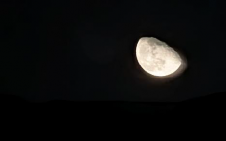
Figure 11: The moon over the desert
see the ring around Saturn, Veiga was shining bright as a diamond and the Pleiades were so clear, swapping over to naked eye gazing, we discussed the north star, using Cassiopeia constellation to find it, and talked about Aquila and other constellations before coming back to be one big group and watched the moonrise over the cliffs. The telescopes were so powerful we could see the heat lines on the moon as the light from the sun reflected off its’ surface.
Returning to our camp, we retired to bed, Tash and Sharon intended to wake up early for the sunrise, and while I wasn’t intending to get up that early, I left the curtains of my done open so that I could see the stars, and it was plenty dark enough, given the lack of light pollution, my done was facing just the right way for me to be able to see Cassiopeia as I fell asleep.
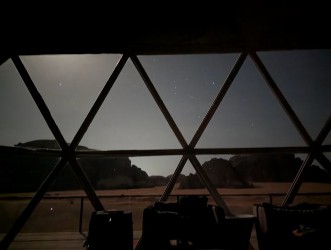
Figure 12: The view from my dome room, with Cassiopeia visible
Over dinner we had discussed how it seemed like we’d done so much within two days, and it was true, this was very much whistlestop, but in the best way, these first two days had gone at a steady pace, but the rest of the trip flew by!
Despite not intending to join Sharon and Tash to watch the sunrise on day 3, not closing my blinds meant I was awake at about 6:45, just in time to see the sun come up over the cliffs across the desert from our domes, as well as spot the two hot air balloons go past. After breakfast and packing we had two camps to check out – Hasan Zawadieh Camp and Captain’s Camp. The latter of which was owned by the same family that owned the restaurant and hotel we had dinner at that evening (more on that later).
Both camps ticked a lot of boxes for us all, and we were subject to the wonderful hospitality of the locals, being fed dates and sweet biscuits, offered herbal tea and cardamon coffee whilst we looked around. We were all fans of the cave rooms at the Captain’s Camp, complete with hatch in the ceiling to stargaze through!
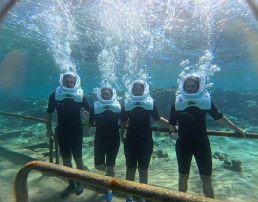
Figure 13: SeaTrek Aqaba
Climbing back in the minivan, we headed off to Aqaba, Jordan’s only piece of coastal city, and the countries access to the Red Sea. A shorter drive of about an hour, we headed straight to the Royal Diving Club (after a brief bit of redirecting due to road closures on the approach and some unclear road signs). We thought we’d just be doing some snorkelling, but we were given the opportunity to do a Sea Trek, using bubble helmets, so of course we all said yes! After receiving a safety talk and getting changed into
wetsuits and swim shoes, we were walked to the end of the pier and one at a time descended down the stairs where we stopped whilst the helmets were connected to the oxygen tubes and then placed over our heads, before the diver then escorted down the rest of the steps to the seafloor. Then, having equalised our ears, we had a handrail to follow as we moved along the sand past a coral reef teeming with fish. The drop off from the level we were at to where the diver was taking photos from was quite something! At one point some larger fish did pop up from the depths to have a brief swim before returning into the darker blue. This is something I never thought I would do, and certainly won’t forget doing, what an experience!
After surfacing and drying off we headed into central Aqaba for lunch at the Ara Revolt Plaza, with it’s 130m tall flagpole. We ate lunch at Mirwas, and when offered, chose the local speciality fish option; Sayadieh. We thought, as we had had meat for dinner and lunch so far, a fish dish would be best. It was delicious, and just as filling as every other meal we’d had so far. It was such a large piece of fish, it probably didn’t need all the usual starters, but we ate them all anyway! Hungry work, trekking along the seafloor!
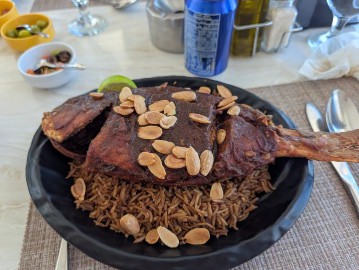
Figure 14: Sayadieh – baked fish with rice and almonds
We were then off to our Hotel, the Hyatt Regency Aqaba, the hotel that has since ruined all other hotels for me (except maybe where we stayed at the Dead Sea). It was huge, it was very fancy, and it was amazing! We had some free time before dinner and some evening hotel inspections, so we took full advantage of the hotel.
We met down at the private beach to discuss everything so far and have a bit of a swim, tried out the swim-up bar in the pool, and relaxed before heading back to change into our evening wear. Meeting Basim and Abdullah at the front desk we headed first to the Oryx hotel for an inspection, a 4 star hotel, used to hosting sports and e-sports teams it could be good for groups if they happen to be in Aqaba.
Hopping back in the minivan we headed to the Sharif Hussein’s House Museum where we learnt all about the Arab Revolt with the Jordanian Heritage Revival Company, seeing weapons, letters, and clothing from the period. Then it was over to the Captain’s Restaurant for dinner.
After a second round of salad and Sayadieh for dinner, we had a brief inspection of the Captain’s Hotel, a 3 star hotel that would be great for groups staying in Aqaba. The restaurant allows for HB, there’s a separate diner for groups at breakfast, it’s all been refitted recently so is modern and up to date, and the on-site pool meets all STF standards. After that it was back to the hotel to pack and sleep ahead of the journey to the Dead Seas on day 4…
It was recon trip time for me in the middle of May as we were in need of updated hotel audits and to review some sites that we hadn’t seen in a while. There was also the added bonus of Salerno airport opening last year and the need to see if it was a viable alternative to Naples airport.
The week before I left it was announced there was going to be a public transport strike in Italy on the day I landed, which would have really messed my plans up, but it was postponed at the last moment due to the Pope’s inauguration, phew!
Currently, easyJet only fly into Salerno from Gatwick on Wednesday and Saturday mornings, so I took a bus, ferry and train up to Gatwick from the Isle of Wight on the Friday afternoon to have a stop off at the Premier Inn ahead of my 07:35 flight. The first step of the journey went all smoothly and after a very brief sleep I was up, through security and eating a hastily bought Starbucks breakfast before heading to the gate. The flight itself was only slightly longer than the ones to Rome and went rather smoothly.
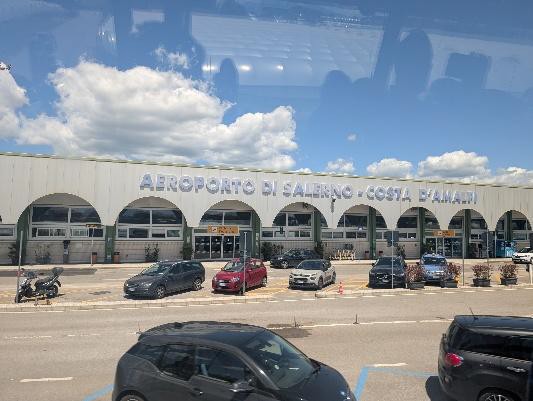
Figure 1: Salerno Airport
Salerno airport, having been a recent reopening, still has some way to go before being massively suitable. We had to queue outside the terminal to get into passport control, there’s only two half-sized luggage belts, and once you’re through to the main area, it’s one café, small toilets, and info point and a car hire station, and that’s it. There was no obvious taxi rank outside the terminal, though I got lucky and managed to jump on the shuttle bus before it departed. This journey took about 40 minutes and cost €5 (it’s €10 with luggage, but I had already put my suitcase in the hold before I bought my ticket). Arriving in central Salerno, we had chosen my hotel as it was directly opposite the train station to make my journey to Naples easier on the Sunday.
Once I’d checked in, I bought myself some lunch from various locations around town – including pizza by the slice (the best way to eat pizza) and a cannoli and a maritozzo. I was going for that high sugar, high carb diet.
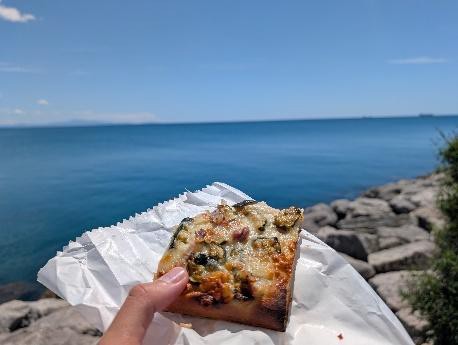
Figure 2: Pizza by the slice, by the sea
Having eaten lunch and washed it down with an ice tea (the best soft drink in Italy), I made my way back to the station to take my train to Paestum, the train journey was about 20 minutes and then there was the 10 minute walk from the station to the site. Being able to see the old walls and the arch as you walk down the long road from the station had me so excited for the site itself, which then proceeded to blow me away! I knew of the temples and the wider site, but even so, that doesn’t prepare you for the scale of it all. The surviving level of the temples and the ability to walk through the temples (along set paths, sure, but still) was fantastic. So many temples that survive that well today, from the Greek or Roman periods, you can’t get inside – the Parthenon in Athens, the temples of Hera and Concordia at the Valley of the Temples, for example.
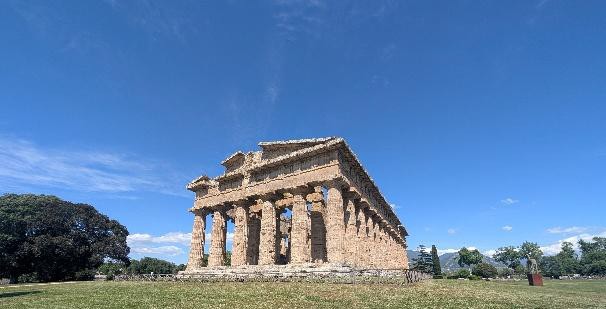
Figure 1: The Temple of Poseidon, Paestum
The rest of the site was just as impressive, I had a good time just wandering the streets back and forth to see if there was something particular hidden along them, like the house with the mosaic of Poseidon. Knowing I had only a certain amount of time before my return train, and I had to still look at the restaurants and the museum, I perhaps rushed myself slightly, but there was work to do! The Via Magna Graecia that runs between the Archaeological Park and the Museum, has several restaurants and eateries along it, serving a variety of food types, and we will be including photos of menus of these in pre-tour packs in the future. Some may work better than others, depending on group size etc.
Paestum’s Archaeological Museum is a fairly modern building, certainly a modern interior, based on the design and layout of one of the temples. I’m not certain when it had an update, but it must have been recently, and work is still ongoing in giving the museum an upgrade. While I didn’t check out
the prehistoric pieces in the basement, the ground floor was made up architectural pieces and reliefs from the temples, with a few smaller votive pieces. The central cella like room had casts of a frieze on the outside while the inside had panels detailing the work done by conservators, excavators etc. Behind this was a room that featured a large screen and cavea-like seating, presumably used for lectures. There were a couple of display cases in this room with grave goods and coins in. Through a doorway in the back, a route leads you to the frescoes from the Tomb of the Diver, though no information in the room explain the fresco.
Following this route also takes you past plenty of empty cases and fenced off areas that really bring to the attention that work is still going on at the Museum.
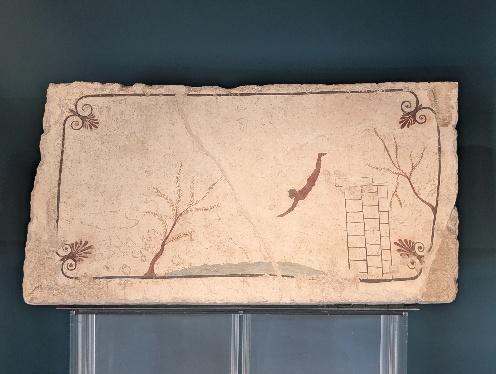
Figure 2: Tomb of the Diver fresco, Paestum Museum
Having returned to Salerno, and recharged my phone at the hotel, I headed out for dinner, eating at café Ragusa, I had a lovely ravioli in a tomato sauce. The restaurant had something I hadn’t seen before – they were making fresh pasta by hand and selling it for locals to use in their own dinner that night.
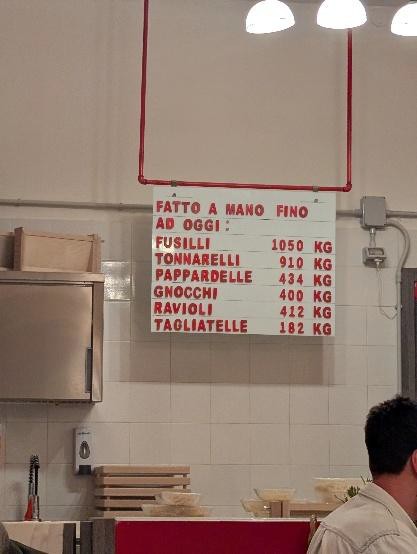
Figure 3: Buy your own pasta from the restaurant
After picking a lot of the sweet options at breakfast on Sunday, I checked out of the hotel then walked over to the Salerno Provincial Archaeological Museum, entry was free, which was nice! Featuring more pre-Roman pieces than Roman ones, there was still enough for me to photograph (whilst keeping an eye on the staff, as I had clocked a ‘no photos sign’, though they didn’t seem too interested). Alongside all the Magna Graecia period pieces, grave goods from the town of Fratte, as well as architectural pieces from the temple of Hercules there, were a couple of interesting inscription fragments, a relief possibly commemorating to Augustus’ visits to Tyrrhenian coastal towns in 19BC, and a bronze head of Apollo.
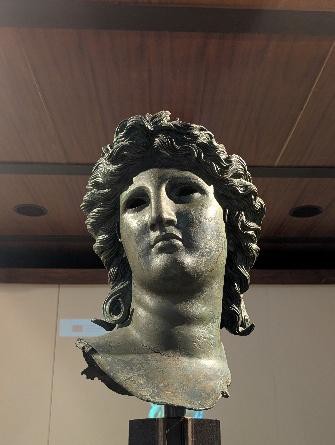
Figure 4: Bronze head of Apollo, Salerno Museum
I spent the rest of the morning walking through Salerno; there were a few Roman era sarcophagi in the Duomo courtyard, and I was given a presentation on the pieces in a Pinacoteca by Italian students practising their English. I did see a vending machine selling wine and beer, and I walked past a church where there was some form of singing going on, which was quite lovely.
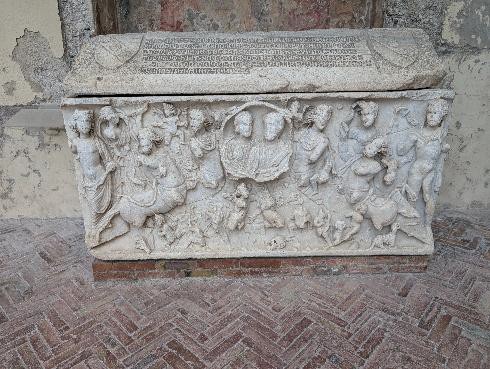
Figure 5: Roman Sarcophagus, Salerno Duomo Courtyard
My train to Naples was a bit stop start, but was more than comfortable, and I still managed to drop my suitcase off with the owner of a little coffee bar using the Bounce app, before heading back up towards the MANN for a visit, hopeful that more would be than the last time I visited in 2019. But first, LUNCH! Part of the reason for this trip was to find places to eat near the Museum in Naples. I had one in mind that would be ok for small groups, but I also photographed a lot of menus of bigger ones in the area of the museum, which like with the Paestum ones, we shall be listing in pre- tour packs. The one I had in mind, and ate at, was called Past(a) Food and I ate a bowl of pasta, two slices of bread, a fried pasta ball, and a coke for €11.50. You select your pasta shape and your sauce and then wait for them to make it, taking a ticket. It was about a 10 minute wait, but I expect that would be much longer for bigger groups. It’s a hole-in-the-wall place the other side of the Galleria di Principe di Napoli from the MANN.
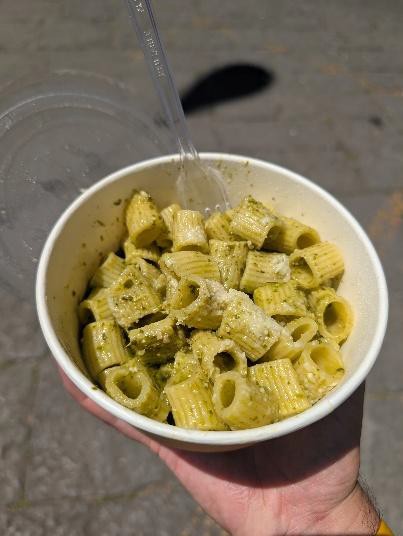
Figure 6: My Past Food past lunch
Once I was inside the MANN, it turns out even less was open that last time – the Gemma Farnese (though that has now reopened), the Mosaic, the Magna Graeci and the Epigraphic Gallery were also closed, the latter has no known reopening date. However, the new Campania layout on the ground floor does manage to include some epigraphic pieces, so it wasn’t like there was a shortage of things to see. I still took over 900 photos, adding to the 600 that were already in my Flickr album. Boy, am I not looking forward to going back and re-organising that one. Despite my own self- inflicted grumbles, the MANN is one of the most spectacular museums going, the sheer amount of statues, frescoes, reliefs, sarcophagi, and everything else ancient under the sun make it a must see. I was also happy to see that the Villa of the Papyri rooms had reopened!
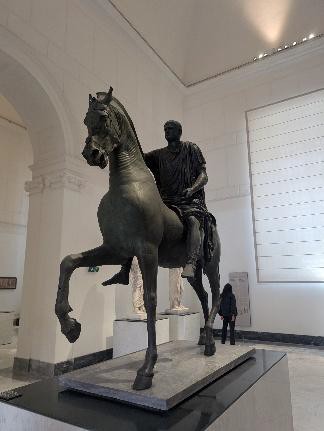
Figure 9: Bronze equestrian statue of Caligula from Pompeii at MANN
There’s also an exhibition on until the end of September – ‘Treasures Found: Stories of Crimes and Stolen Artefacts’ that I had quick whip through which includes this bronze head of Philip the Arab.
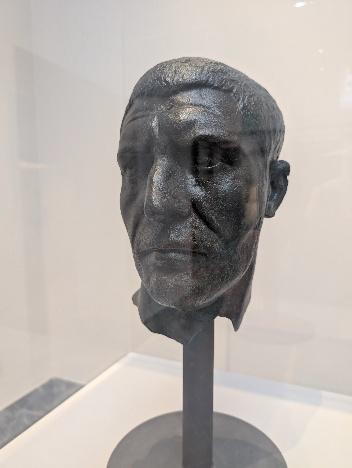
Figure 10: Bronze head of Philip the Arab, MANN
After about 2 hours in the MANN it was time to head over to the Basilica di San Lorenzo Maggiore Complex for the underground. We had had good feedback from groups about this site so I thought I’d best check it out. Next time I’m in Naples I will be scoping out the LAPIS Museum and the Bourbon tunnels. I didn’t have the timing to have one of the tours of the underground, so I was on my own, and while there is signage at the start, it does disappear as you go on. I believe we make sure to get the guided tour option for groups, so you won’t have the same issue. There are certainly some interesting parts to it, like the bakery, but I didn’t make the most of it.
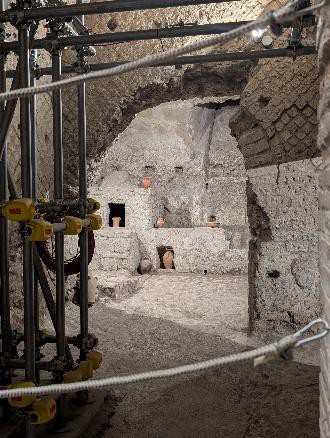
Figure 7: Bakery at San Lorenzo Maggiore Underground
Having come out of the Complex and walked back to the little bar where my luggage was stored, I had time for a quick drink before walking down to Molo Beverello to take my ferry to Sorrento. It was nice surprise to see remains of the old (possibly ancient, but no information panels) city walls and other remains in the Molo Beverello port building. A potential option for groups, as the boats are certainly large enough, it would just be making sure there was enough luggage storage space, the boats from Naples to Sorrento take about 45 minutes to complete the journey. It was mostly smooth, a couple of rocky moments, but that was to be expected for the distance out to sea we were for the crossing of the Bay. There were fabulous views of Capri, Vesuvius and the other towns along the coastline. The sun was getting low in the sky as we docked
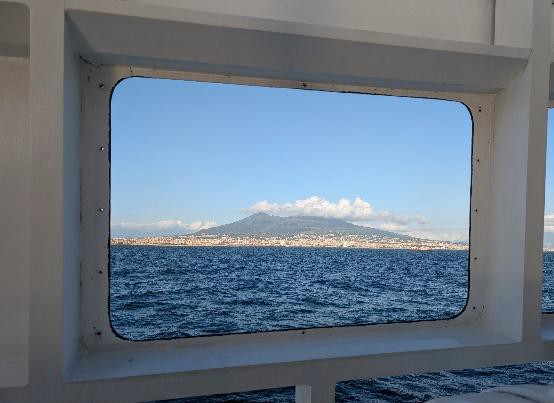
Figure 8: The view of Vesuvius from the ferry in Sorrento, which led to a lovely golden glow on the Sorrentine cliffs. I managed to jump on a minibus transfer for €2 to get from the Sorento port up to the station, easily allowing me to then get to Sant’Agnello to check into Hotel Club for the night.
I got up on Monday morning and completed an audit with the Hotel Club’s Manager before heading to Sorrento to complete audits with the Zi’ Teresa and the Ascot. I managed to sneak in a panino lunch in the Sorrento back streets between the Zi’ Teresa and the Ascot audits. I am happy to report that all three hotels reach the required level for us and STF!
Next up for me was taking the Circumvesuviana train to Pompeii, for my first time back since 2019.
It was probably the hottest day of the trip, so a great time be walking through the uncovered area that was Pompeii Archaeological Park, but I wouldn’t have traded that visit for anything. I was able to meet up with Dr. Sophie Hay and have a catch up since meeting her during my time at the BSR in 2017. After that, and with only a few hours left before closing, I hiked my way around the site to see as many of the recent openings as I could – the restored House of the Ceii, House of Menander, House of the Lararium of Achilles, the platforms over Insula dei Casti Amanti, House of Marcus Lucretius Fronto, House of the Vettii, House of the Silver Wedding, the new Thermopolium, and the House of the Small Fountain. They were all spectacular in their own ways, but the insula dei Casti Amanti and the House of the Vettii were both absolutely top notch! The level of restoration work that has gone into the frescoes in the House of the Vettii is incredible, some of them look brand new! Having been herded out of the Antiquarium as they were closing the site up, I took the train back to Sant’Agnello and grabbed a pizza margherita for dinner and a few pieces from a Pasticceria for dessert.
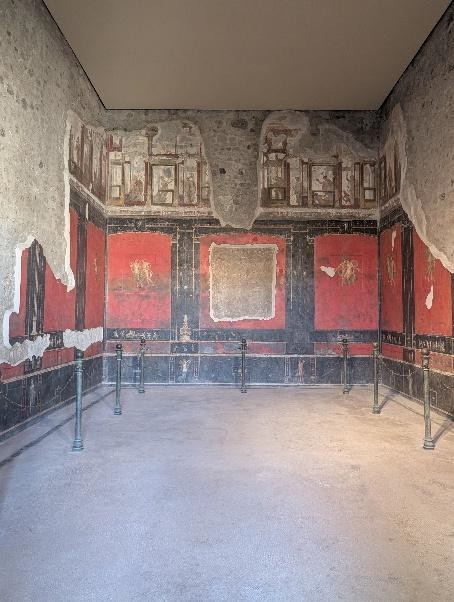
Figure 9: Room of the Cupids in the House of the Vettii, Pompeii
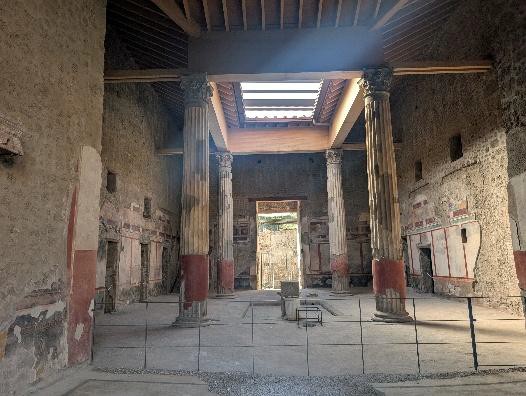
Figure 10: Atrium of the House of the Silver Wedding, Pompeii
Tuesday morning rolled around and that meant I was off to Capri! I was really looking forward to this visit as I had been reading up on the Capri Archaeological Museums’ Island of the Caesars permanent exhibition since it reopened last year. As my predominant Roman interest is in the early empire, I was psyched to see it! Having pre-booked my tickets I just had to check with the ticket booth as to the berth number and then queue for a bit to get on my boat to Capri, which was full of tourists. I wonder if Ischia and Procida get the same numbers?
Capri itself is bloody expensive, as those who have visited will testify. I got off the ferry and decided the best way to do it was to walk up the Piazzetta, as I couldn’t be bothered to wait for a train or the funicular. It was cloudy and a wee bit muggy, so walking up proved to not be the smartest choice, fifteen minutes of mostly sharp stairs later I was at the Piazzetta, and in desperate need of refreshment, stopping just outside the Piazzetta I grabbed a granita, for €9! So much money for a cup of lemon flavoured ice! Anyway, moving on, I had to shuffle my way through Capri’s narrow streets with the crowds of other visitors to reach the Giardini di Augusto and follow the path down to the Certosa di San Giacomo. Like with the Villa Jovis, the ticket for the museum is pay in situ, and students should be free with school letter. From the entrance where you purchase the ticket you have to follow the corridor round (past the Museo Diefenbach) until you reach the courtyard and then the Museum entrance is to your right, and you should be able to see the banners either side of the door for it.
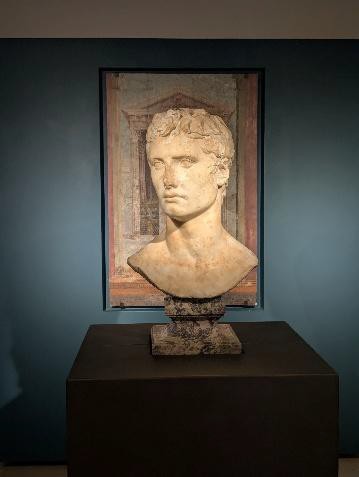
Figure 15: Bust of Octavian, Capri Archaeological Museum
The Museum itself is utterly fantastic! There’s only about 150 pieces in it, but it is laid out thematically, including one that featured a lot of pottery that as entitled ‘At Lunch with the Princeps’. My favourite room was probably the one with the family tree of the Julio-Claudians and busts of most of the major players. The best shot however, is this one from early on in the exhibition (Fig.16). Finishing up at the Museum I started to hike my way towards the Villa Jovis, stopping for lunch, of course I had to have a Caprese, and given the muggy heat, it also gave me a nice break from the hiking uphill. Once I’d finished my lunch, my drink, and paid the bill, I set off again for Villa Jovis. I ended up bumping into a couple of English ladies on the way up as we both stopped at a split in the path where signs told us to go one way but Google Maps advised the other. They were there as part of a wider holiday (I actually briefly bumped into them again at Naples airport), so I ended up giving them a rough explanation of the wider history once we’d made it up to the Villa and were going round it.
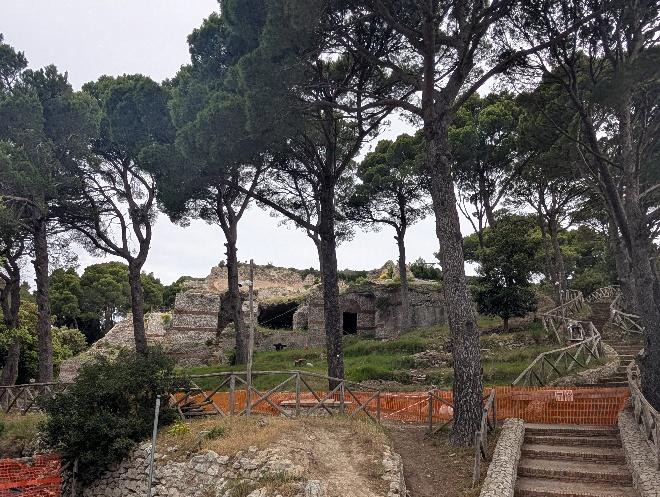
Figure 16: Villa Jovis from the base
The Villa Jovis itself appeared to be under ongoing restoration works, there were lots of temporary fences and dug up earthworks on sites with new piping being laid. The current route around the site does miss out several large sections of the residence, and that meant not being able to see the information panels and signs that are on display, which is a bit of a shame, but the site is still impressive in its scale and I liked the touch of the painted tiles on the reception building that said ‘Sperlonga and Capri United by the Sea and History’ (but in Italian, obviously, see Fig.17).
They also had goats wandering around the site! No surprise given the island’s name, but still! After a brief stop at the Ignacio Cerio Museum at the Piazzetta to see the small Roman collection there (including a head. of Livia) I headed back down to the port and waited for my ferry back to Sorrento. The rain had started but it was a smooth journey back. Once I’d docked back in Sorrento I walked up to Piazza Tasso and onward to the hotel (the Circumvesuviana timing would have got me to Sant’Agnello about the same time), picked up my luggage, and took the Circumvesuviana to Pompeii.
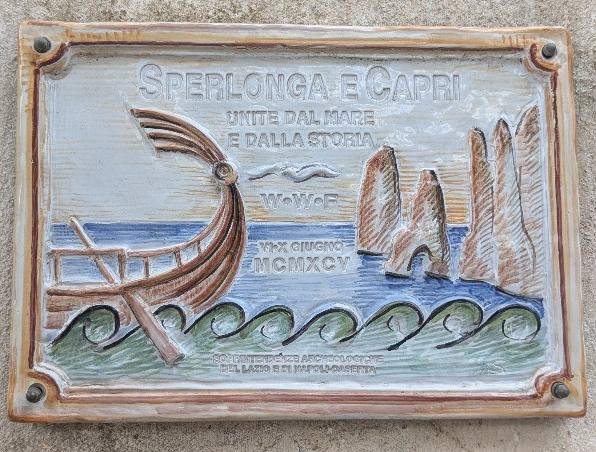
Figure 17: The sign showing the relationship between Sperlonga and Villa Jovis
Arriving in Pompeii I had the 10-15 minute walk from the Circumvesuviana station to the Hotel del Sole, which was a nice walk along the Porta Nocera side of the Pompeii site for part of that, and had checked in, I was off again walking through the modern town of Pompei to the Hotel Amitrano to complete their audit. I know schools usually prefer staying in Sorrento for the things to do once they are back from the sites, but Pompei has several gelateria’s, shops, and other bits and pieces to do (one of which I’ll come on to later), and the central piazza, outside the Sanctuary of Beata Vergine, is huge. Audit completed at the Amitrano, I headed back to the del Sole as I had heard good things about their on-site restaurant, and those things were absolutely spot on. Granted, I didn’t have the set menu that groups would have, but we have also heard good things about those. I went for a supplì for starter, a main of porcini mushroom, guanciale and parmigiano cheese gnocchi, and a Lapillo Pompeiano for dessert. I think the dessert is the only one I’ll need to explain – it consisted of vanilla bavarois (Bavarian cream), cocoa ladyfingers, black cherries, dark chocolate mousse and vanilla whipped ganache. YUM!
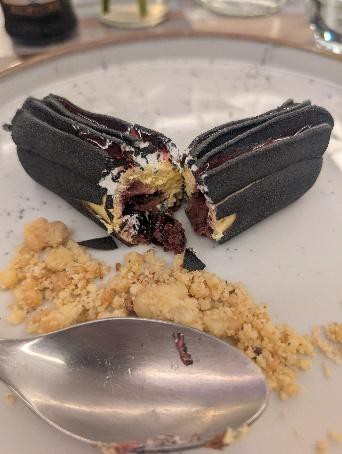
Figure 11: The Lapillo Pompeiano
Having finished dinner and packed up, I got a good night’s sleep before completing the audit for the del Sole the next morning, the manager and staff were very helpful in that process. I walked through Pompei to get to the mainline train station for my train to Naples. On the way I saw several pieces of street art and at the back of Piazza Bartolo Longo there was even a map of the local ones, so perhaps, if you are staying in Pompeii, one evening activity can be finding all of Pompeii’s street art. The train to Naples ran smoothly and I took one of the shuttlebuses from outside the station to the airport, which took around 20 minutes for less than €10. Once through security as Naples airport I got myself some food for lunch from the various restaurants and eateries inside the terminal and then met up with a friend from university and her husband who were on the same flight as I was.
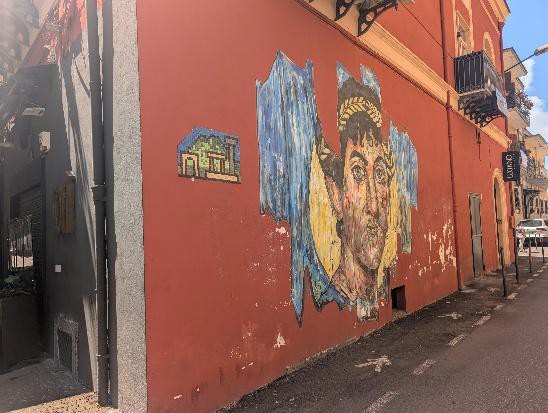
Figure 12: Street Art in the modern Pompei
They’d been in Sorrento with her family (and at Pompeii the same day as me) whilst I had been in the Bay, but we hadn’t been able to meet up. It was good to have a catch up since the last time I had seen them was while I was in Rome in 2019. Our flight back went smoothly, and after a long journey home (using every method of transport – planes, trains and automobiles, plus a ferry), I got home on the Isle of Wight at about 23:00 having landed at around 17:45. With over 115k steps walked, just shy of 3500 photos taken, 5 hotel audits completed, and several sites checked off my list, it was very successful trip!
Below is a small blog from my recent visit to Rome and Venice in July and August 2025. We spent a week covering the ancient sites, streets, shopping and food to get a full experience!
Day 1:
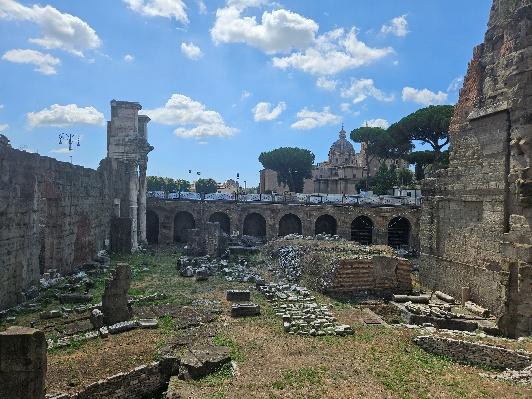
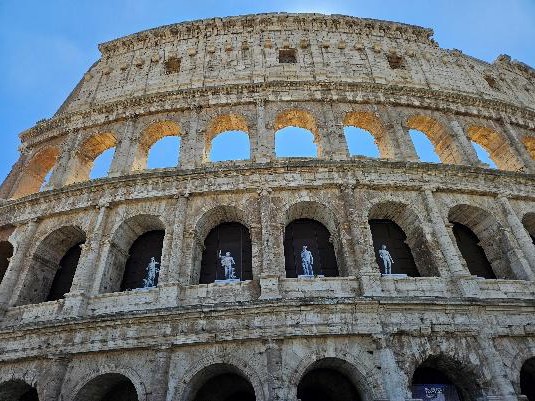
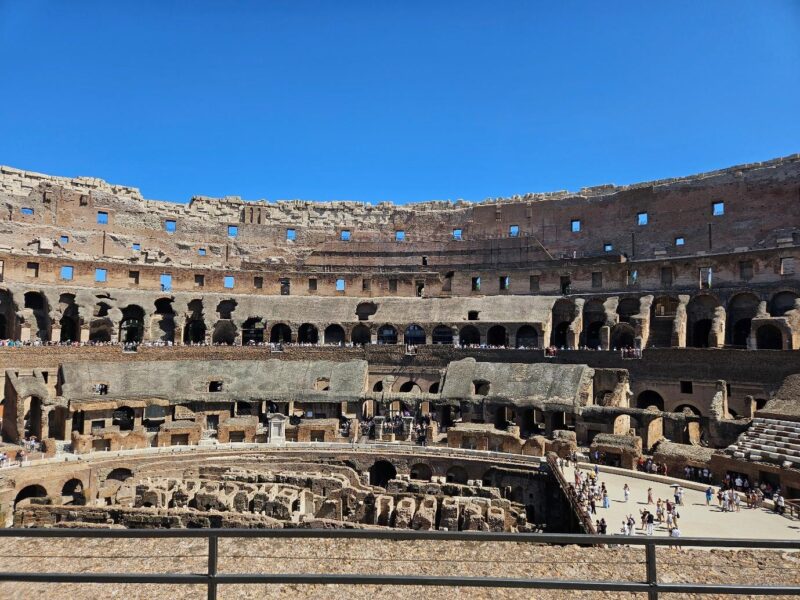
Today we visited the Colosseum which was full of hundreds of years of Roman history. It was extremely beautiful but extremely crowded. It looked unreal and something that I’ve only seen in pictures. I was so lucky to see it in real life. After that we got some lunch at a nearby local Italian restaurant it was amazing and the food was delicious the staff were extremely kind too.
We then wandered round the streets looking at some local shops and browsing. The highlight of the day though was the golf cart tour it was very fun and interesting. The tour guide was quite helpful and he gave a very nice tour of all the monuments , we visited lots of beautiful sights. We also went inside the Pantheon a dome which has a circular opening at the top which allows sunlight and rain water to enter in the building! It was an amazing experience. We then made our way back to our hotel and ate dinner it was yummy ●
Day 2:
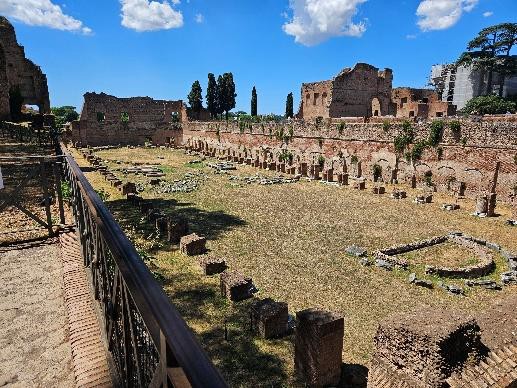
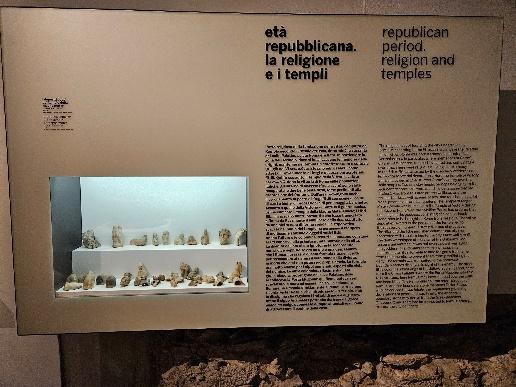
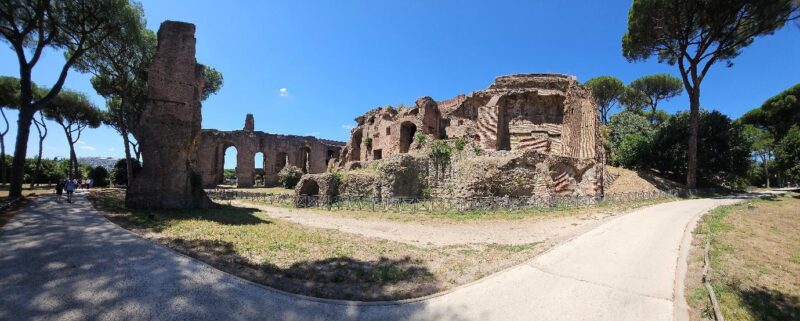
Today we started of our day by going to the Roman Forum and Palatine Hill. It felt like going back in history looking at all the ruins and the views were stunning .
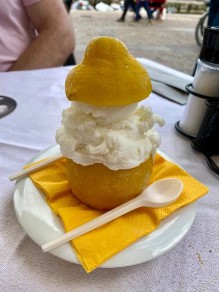
The museum had so much history in it and it felt like stepping back in time. Afterwards we went to the Galleria Alberto Sordi a small shopping mall with only a few shops but the architecture was gorgeous!! Then we walked around the city streets and bought a lemon sorbet that was inside a lemon! It was so sour and sweet at the same time , then we bought a tiramisu cake and it was the best one I’ve had!! We ended the day doing some shopping and then having dinner in a restaurant. The food was delicious. After dinner we returned to the hotel!! ●
Day 3:
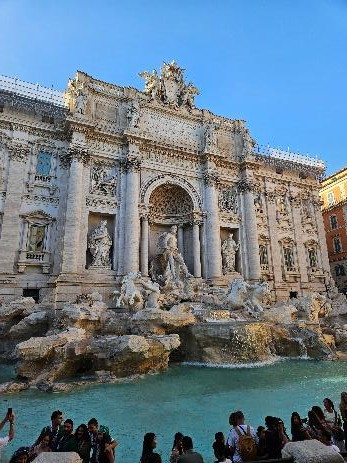
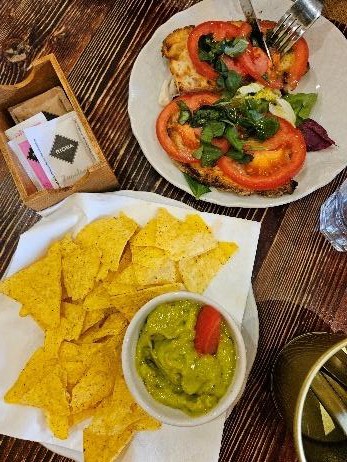
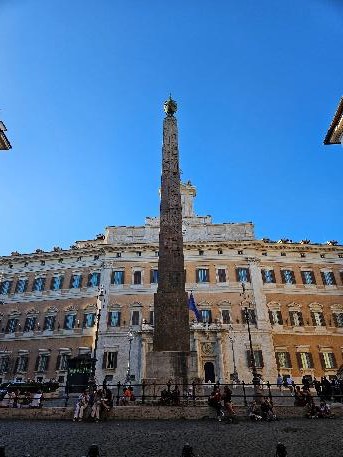
Today we started the morning off by having breakfast in the hotel buffet and the going to the swimming pool for a few hours which was really nice and relaxing! We then got out of the pool and sunbathed and then we went back to our room to have some lunch which was delicious as usual. Then after a while we got ready to go see the Trevi Fountain which was stunning and felt so peaceful. Then we walked to Piazza Navona a lively square which was charming.
After we headed to the Spanish Steps which was gorgeous it felt magical!! We also headed into a few shops. To end the day we went to a restaurant for dinner and enjoyed our day. ●
Day 4:
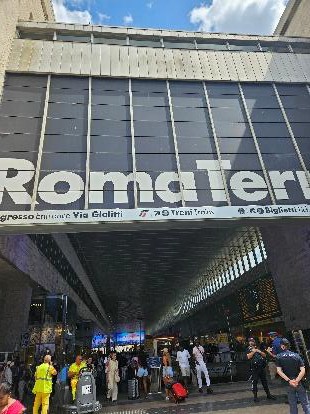
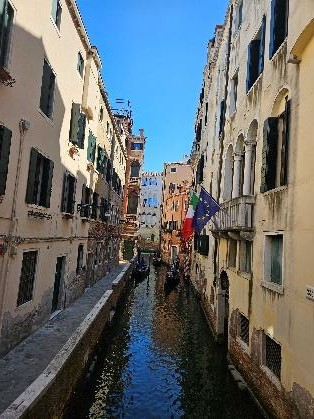
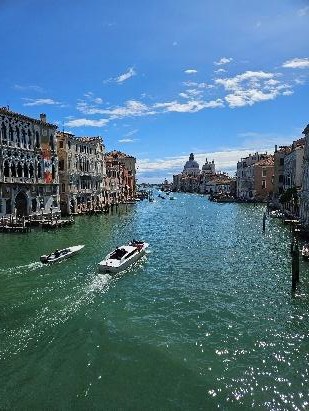
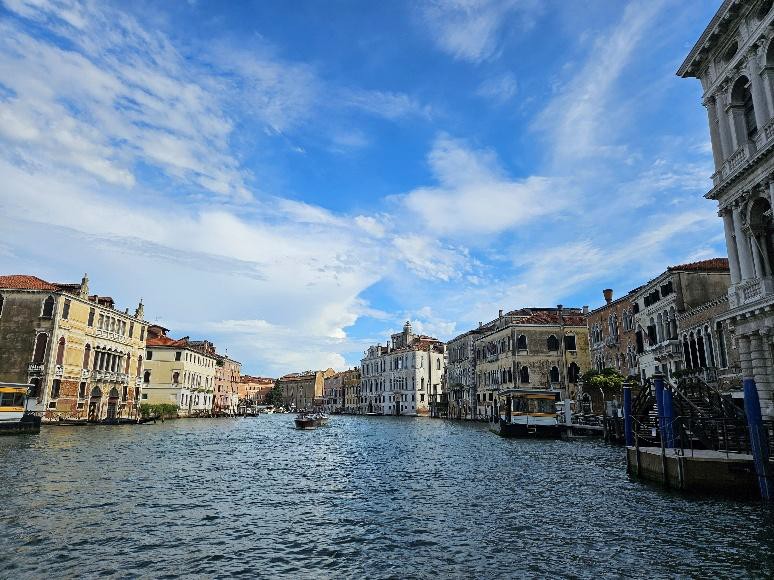
Today we started the morning heading to the train station and got on a train to Venice! The journey was approximately 3 hours. Before we got the train we bought some pizza which was delicious. When we reached Venice we got a taxi which we expected to take us to our hotel but the taxi had dropped us to a boat station instead! And we were stranded with so much luggage but then we realised we had to get a boat to our hotel!!
After we arrived we checked in and put our luggage in our room and got ready to go out for dinner. Dinner was delicious as expected. We then roamed the streets of Venice and the city is surrounded by water, it was beautiful. We then headed back to the hotel and chilled!!●
Day 5:
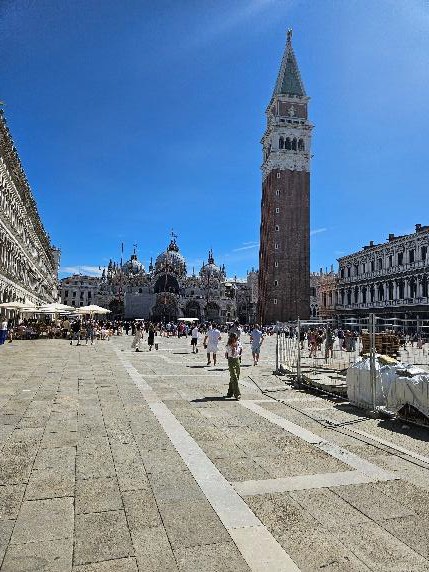
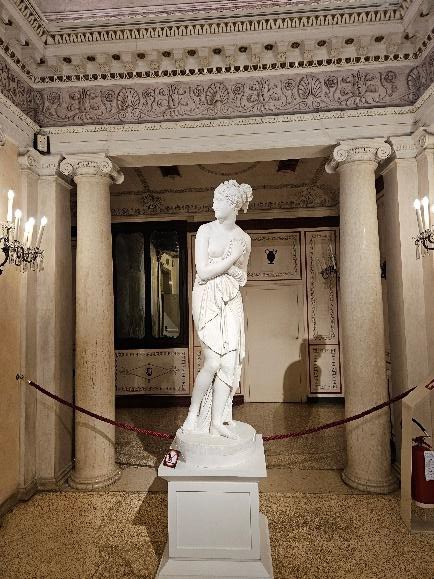
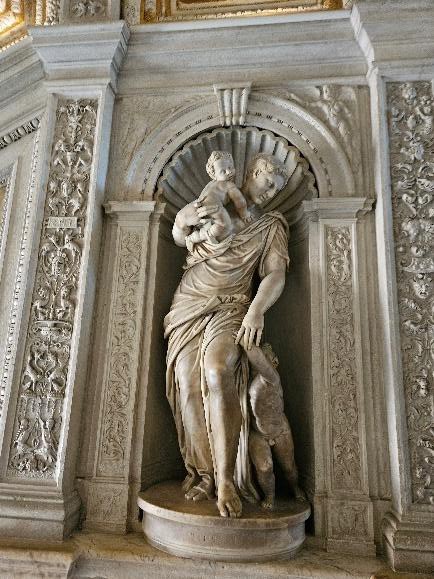
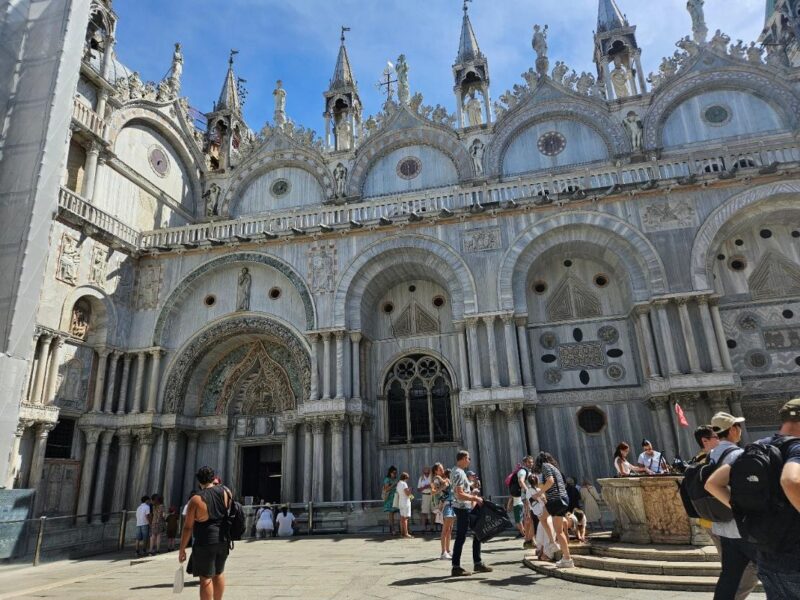
Today we started the morning by going down to breakfast in our hotel. Then we walked our way to a city square in Venice as they don’t have any taxis. First we explored a place called Biblioteca Nazionale Marciana it was very historic. We also saw Saint Marks Basilica from the outside which was stunning. And we also saw Saint Marks Campanile which was also very beautiful and interesting. Then we had lunch in the city square at a restaurant which was surrounded by noise which was surprisingly comforting. We then went inside Saint Marks basilica and it was unreal it looked like ai and we took some pictures it was really calming too. After we walked around the city doing some shopping and ended our day by having dinner near the water. ●
Day: 6
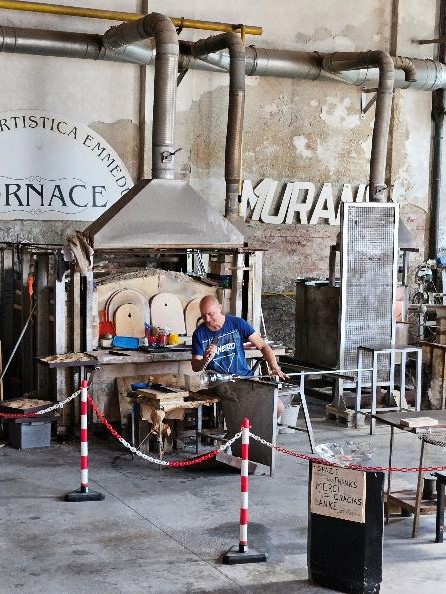
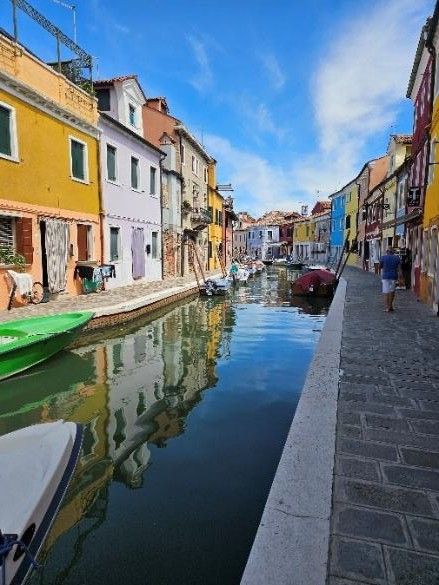
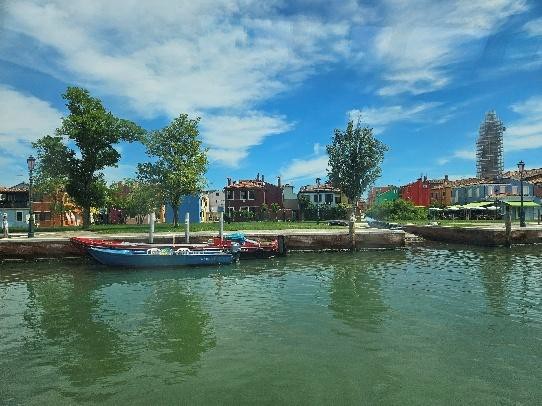
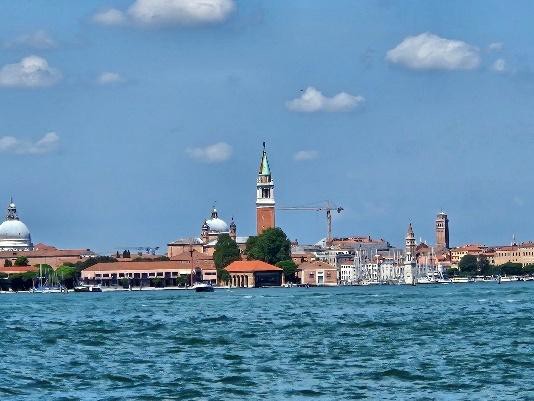
Today we started off our day by having breakfast early because we had a boat to catch. After breakfast we walked towards a boat stop like a bus to catch a water bus to another stop. We had to wait a while but finally the water bus came. We then got another boat and this boat was a water tour which showed us two islands called Murano and Burano. We first visited Murano where we watched a guy make glass which was really cool he made a vase which exploded! But then he made a really cool horse. After we looked at the glass shop and bought some stuff. Then we went back to the boat and went to Murano which was a long ride but there we just explored the city and got ice cream we only had 1 hour in the island but that was enough because it was really hot!! Then we made our way back to the boat and came back to the main city. After we got lunch and went to the main shopping streets which was super fun!! We walked a lot and did lots of shopping and then got dinner. We then just walked around the city and had a Nutella pizza for dessert it was nice but interesting. Then we came back to the hotel and relaxed ●
Day 7:
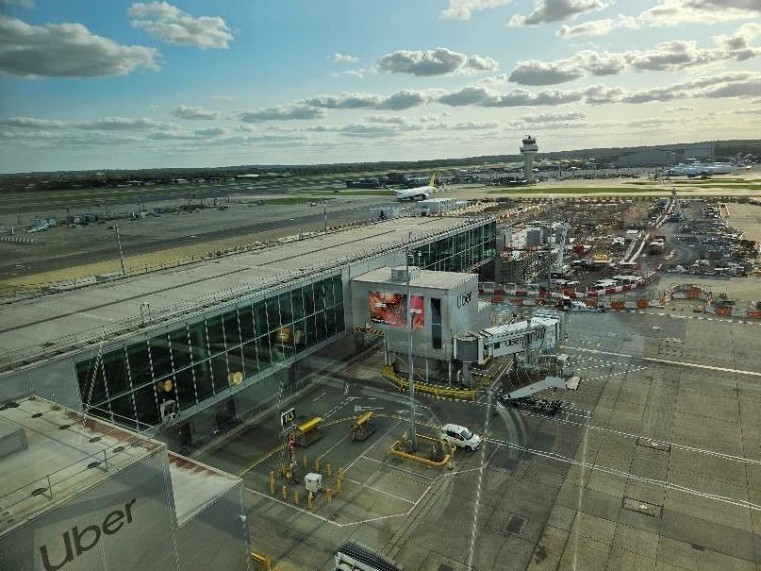
We had breakfast at the hotel, finished packing and checked out. From Academia, Venice we took a water taxi to the airport which was a nice experience (with our luggage) and quite comfortable as we got dropped off straight to the airport through the waterways. Once we were checked in we had lunch at the airport before we waived goodbye to Venice!
25 Year 12 Classics students from Emanuel School enjoyed an intrepid adventure to Sardinia over the May half term holiday, exploring its Bronze Age civilisation and visiting its dazzling white beaches, alternate with creeks and mysterious grottoes. We had various encounters with the fairies of the ‘domus de janas’ chamber tombs and the pink flamingos inhabiting Lake Molentargius.
A highlight was a boat tour to Neptune’s Grotto and around the Sardinian coastline, as well as spending well-earned time in the ‘natatio’, modelled on a traditional Roman bathing experience. Pizza, pasta and mocktails were lapped up in good measure, as we covered the length and breadth of the island with its vast array of flora and fauna.
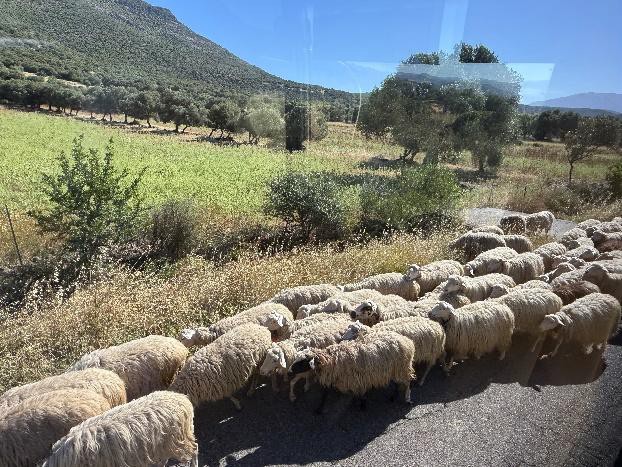
Read below for an account of our odyssey:
The trip began bright and early at Gatwick before the group descended on sunny Sardinia. Our first stop was to Nuraghe La Prisgiona, an apt start given the ubiquitous, conical stone towers (‘nuraghi’) dotted about the island, which prompted excellent discussion of their religious, military and/or administrative purposes. We were able to enter the nuraghe and students admired its beehive structure and ‘worker bee’-style compartmentalisation of the site.
We then visited the Tomba dei Giganti (Tomb of the Giants), a prehistoric tomb with a monumental façade, surrounded by myrtle trees and rolling rural landscapes.
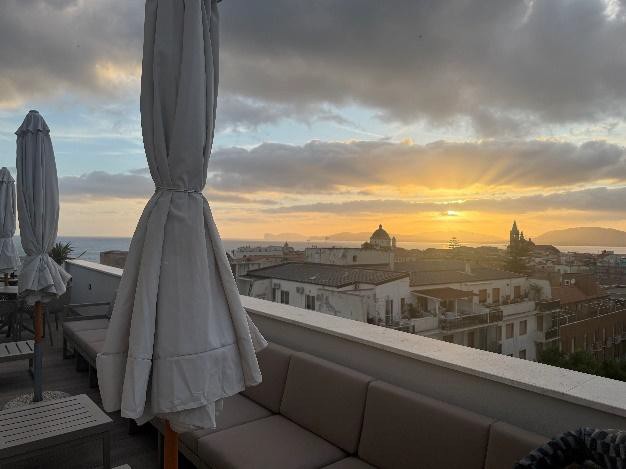
Before checking in to our excellent hotel, complete with rooftop bar and underground swimming pool, we enjoyed a walking tour around the cobbled streets of the old town (‘Alghero Vecchia’), with pit-stops at the Cathedral of Santa Maria and the defensive tower with ‘ballista’ protecting the seafront. There were various red coral displays given the content of the local museum, which prompted an enlightening discussion of Perseus’ use of Medusa’s head to create red coral in Ovid’s ‘Metamorphoses’.
We enjoyed a lovely meal of local Sardinian pasta at our hotel, before bedding down for the night, with balconies which looked out onto the sun setting over the coast of Alghero.
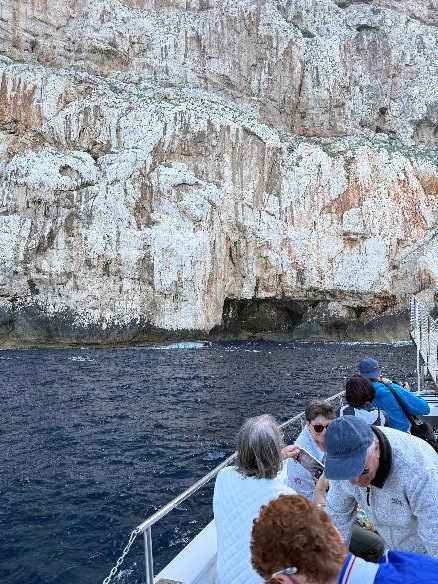
The second day began with a boat tour around the Sardinian coast – this was a terrific adventure with beautiful views of the rugged coastline with all its grottoes, rocky coves and hidden bays. We ventured towards Neptune’s Grotto, but alas, the god of the sea had roughened the waters and so the boat could not be safely moored. Like Odysseus at the land of the Laestrygonians, we made a
swift escape from potential danger, before arriving back at Alghero to enjoy a lovely lunch along the coast. There were so many excellent shops and restaurants, and students stocked up on various precious Sardinian stones, souvenirs and the obligatory bubble tea.
Next was a visit to the beautiful beach Platja del Llatzeret where students enjoyed paddle-boarding out to sea, sun-bathing and volleyball. This was a gorgeous beach and not particularly busy – one of the highlights of the tour!
We went back to the hotel for some drinks on the rooftop bar, and a dip in the Roman ‘natatio’, complete with jacuzzi and Turkish steam room.
One student commented, “The Sardinia trip was a wonderful balance between visiting amazing ancient sites and learning fascinating facts about the country and its ancient cultures. We had lots of fun exploring the different places we visited. My favourite part of the trip was hiking up a lovely trail to visit the tombs as well as seeing a stunning view of Sardinia!”
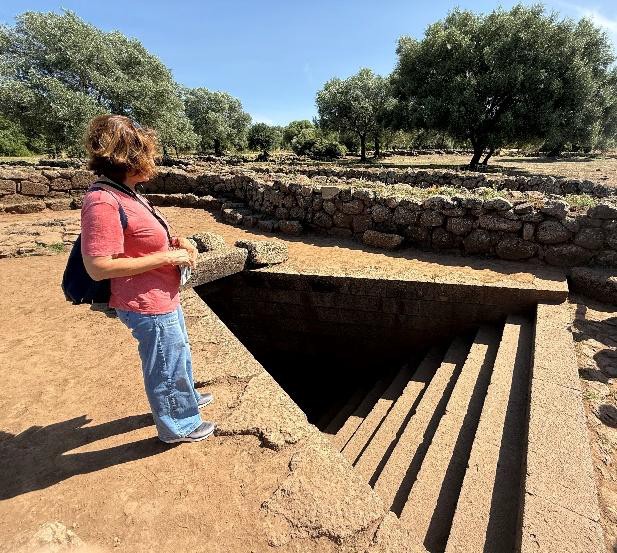
Day Three was a jam-packed day with various stops along the serpentine rural areas of Sardinia. First was a visit to the Santa Cristina Sacred Well, possibly linked to the water cults, and the site of astronomical observation to measure the celestial motions. An amateur astrologer was there making calculations when we arrived, a suitably classical cameo who reminded us of the bearded ‘astrologus’ of Cambridge Latin Course, Book 2. Students were fascinated by the age and design of the site, and asked lots of interesting questions about the function of the mysterious well.
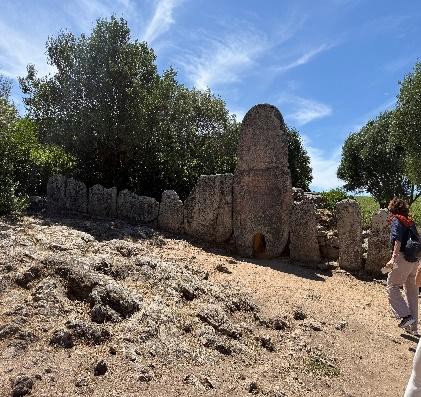
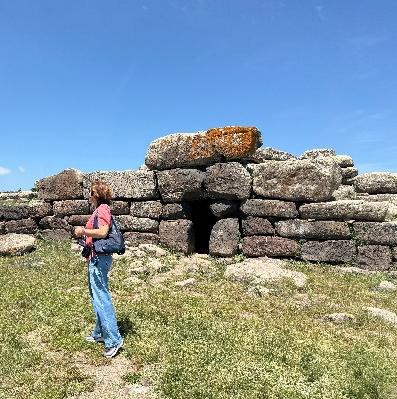
Next was a trip to the Giant’s tomb: Sa Domu ’e S’Orcu, a Bronze Age tomb constructed from vast basalt blocks, located in spectacular countryside amongst the mountains, and next door to traditional shepherds’ huts.
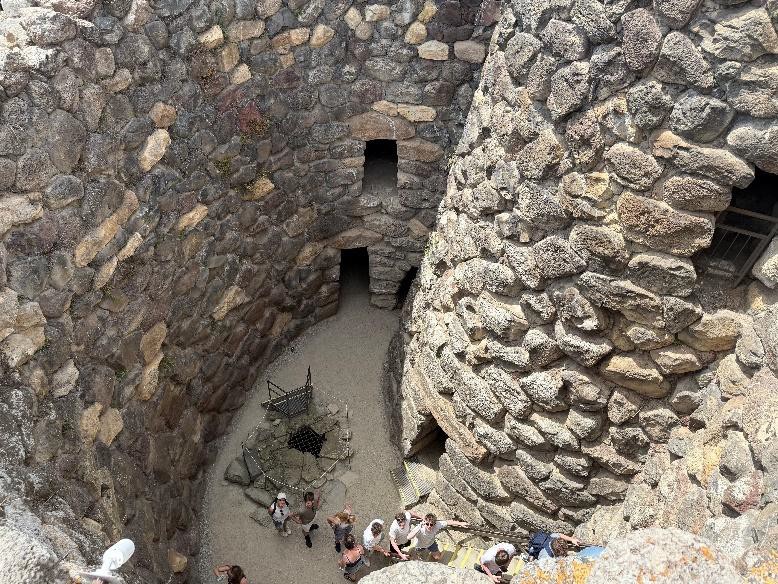
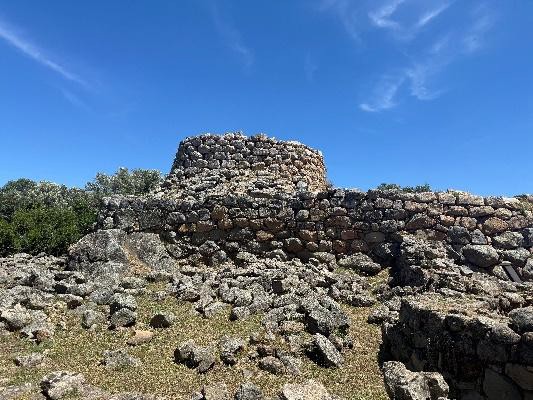
This was followed by a visit to Sardinia’s only UNESCO World Heritage Site, Su Nuraxi di Barumini, the best example of a nuragic complex, composed of multiple military fortresses, similar to a medieval castle. What was excellent about this visit was the chance to explore each nuraghe, involving a fair bit of climbing and corporeal contortion! You could see the niches and stairwells which would have connected the different floors of each tower and the central ‘tholos’. It was a tangible site which invited great discussion of the various cultures influencing and vying for control over Sardinia.
We then stopped off at windswept Monte Sirai with its funerary monuments and evidence of tophet (child burial), with low-ceilinged tombs which were very atmospheric, packed with sarcophagi and etched with cultic carvings, including an inverted symbol of the Punic goddess Tanit. This was an eerily claustrophobic place, variously compared by students and staff to the ‘The Blair Witch Project’ and the final scene of Verdi’s ‘Aida’.
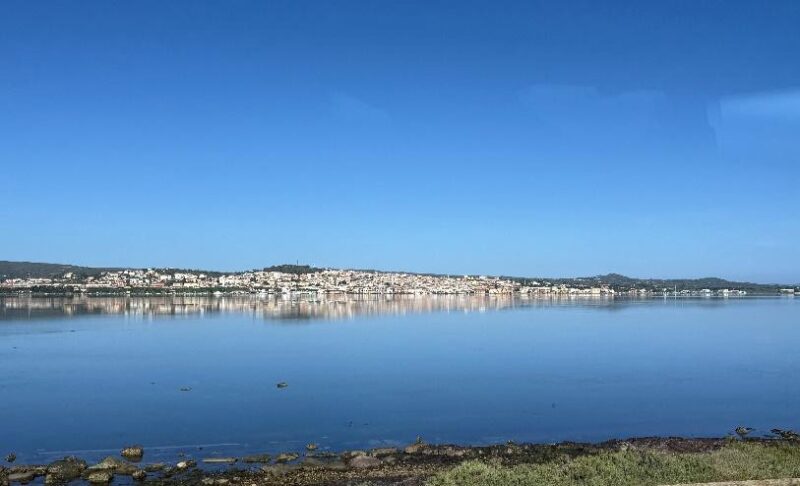
We then arrived at our hotel in Sant’Antioco, ‘the island within the island’ and the fourth largest within Italy, surrounded by reed-fringed wetlands, crystalline waters and families of nesting flamingos.
Dinner was a lovely pizza at a local trattoria before we bedded down in our second hotel, right by the seafront of Sant’Antioco.
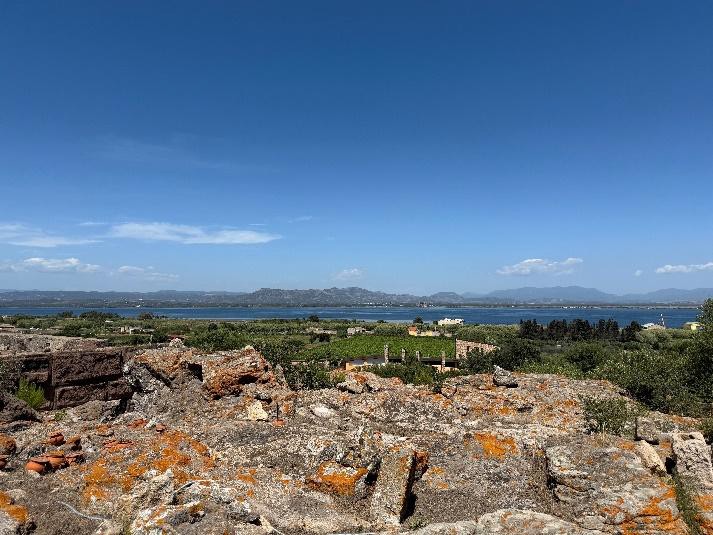
Day Four involved a hike up Montessu Necropolis, complete with around 40 rock-cut tombs or ‘domus de janas’ (house of the fairies). Once more, there were various thousand-year old carvings and the chance to enter the chambers, one of which comprised of skeletal-shaped openings, resembling hollowed-out eyes and a nose. A Sibylline guide accompanied us around the ‘domus de janas’, but then vanished, adding to the mysterious aura of the site. We looked out for the various fairies who are said to frequent the mountains – unfortunately, we were unable to summon them on this occasion.
Next was a guided tour of the Sant’Antioco Archaeological Museum, followed by a visit to the tophet and hypogeum, a warren of Punic chamber tombs which were converted into housing and used until the 1960s.
Dinner was another excellent pizza – a ‘Seneca pizza’ of capers, anchovies and olives – followed by time for some souvenir shopping and a game of football at a local park.
Our final day was a journey to Cagliari, via the Atilia Pomptilla Tomb (sometimes called ‘The Vipers’ Cave’ owing to its decoration). Our courier read a copy of one of the original poems inscribed inside, and we discussed its mythological allusions, as well as its links to our beloved GCSE Latin set texts.
We then visited the Cagliari Botanical Gardens, home to around 2,000 plant species, including ancient Roman cisterns and natural caves. Lots of these plants are endemic to Sardinia, and were nestled amongst gorgeous fountains and tropical plants.
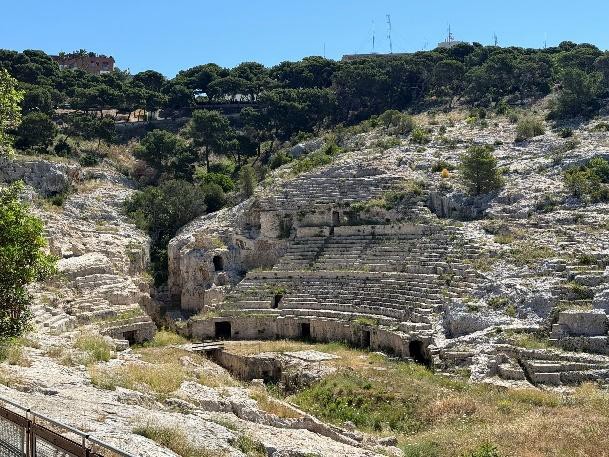
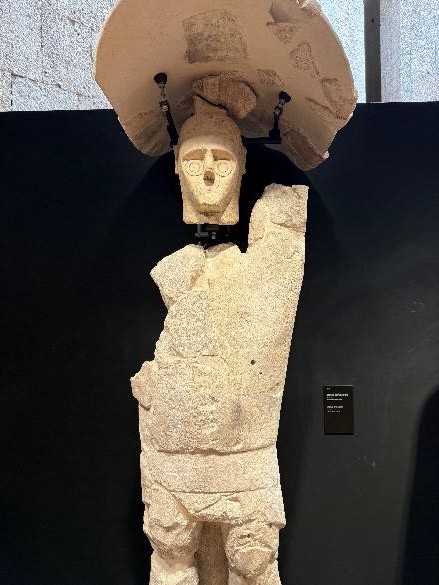
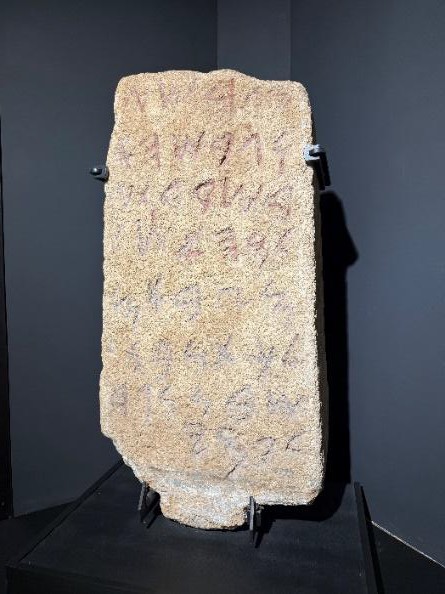
We stopped at the Cagliari Amphitheatre, carved into the rocks, and once home to the carnage of gladiator fights and public execution, before visiting the Museum, which contained the famous Giants of Mont’e Prama, the oldest ever statues found in the Mediterranean, as well as the Nora Stone which bears the first recorded reference to ‘Sardinia’. We also enjoyed translating the Latin on a Roman military ‘diploma’ and spotting busts of the various emperors.
Our final stop was at Poetto Beach, an 8km stretch of gorgeous white sand and crystal-clear sea.
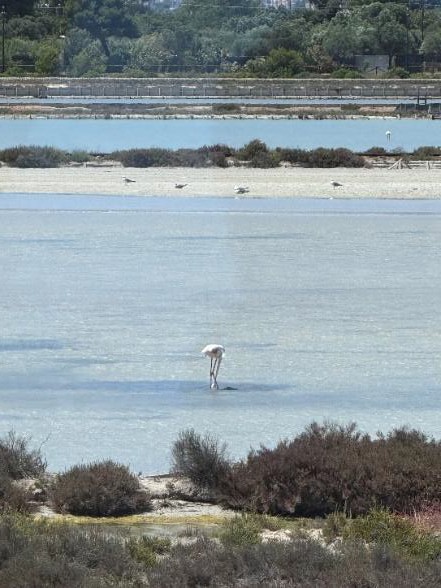
There were various cafés along the seafront where we tucked into a final meal, before departing for the airport via Lake Molentargius, a massive saltwater basin home to a group of pink flamingos. We bid them a fond farewell before jetting off into the night back to Blighty.
A final student concluded, “The Sardinia trip is a highlight of my time at Emanuel. A swathe of archaeological sites across the captivating island combined with a great group of people made for a scintillating school trip. I won’t even mention the breathtaking beaches!”
It was the trip of a lifetime, and thank you to the amazingly-organised Claudia Willocks and Hellene, as well as to our terrific courier Silvia and driver Fabio.
Until the next time!
Michael Morrison, Emanuel School
During a balmy weekend in August, the Hellene School Travel team came together to review the past academic year’s trips, to brainstorm new ideas for future groups, and generally to enjoy a catch up with one another! With Lingfield in Surrey as our base for a couple of days, we all met on Friday evening for (some!) drinks and a meal.
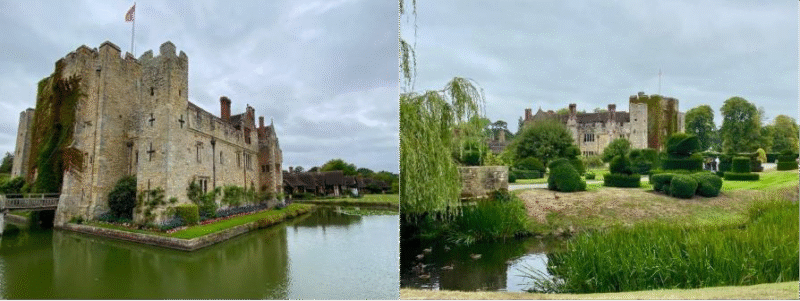
More formal plans were set in place for the next day. Our Saturday morning was spent exploring the regal splendour of Hever Castle in Kent. Originally constructed in 1270, the Castle is now a bustling tourist attraction (as we found out when we arrived just ahead of opening time and saw the crowd already gathered to enter it’s gates!); it’s most famous for being the seat of Boleyn family from 1462 until 1539, and it specifically served as the childhood home of Anne Boleyn
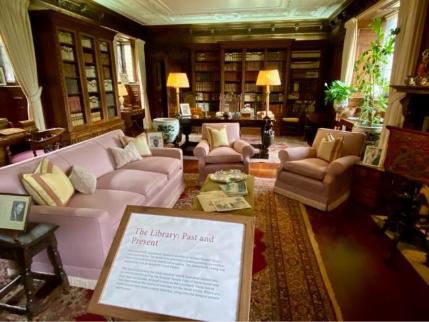
The Castle itself is surrounded by a moat and visitors are guided into the stately home by the whimsical animal-shaped trees surround it. Once inside Hever Castle, we wandered through the very apartments where Anne Boleyn and King Henry VIII once frequented. Many of the rooms are a blend of historical styles from the 16th and the 20th centuries, since the wealthy William Waldorf Astor bought the property in 1903 and made it his family home. Indeed, the Astors were especially respectful in their renovations to the property, as they were keen on preserving as much of the original building as possible, and their subsequent refurbishment focused on designs authentic to the Tudor period. Hence being able to still enter the house over a moat!
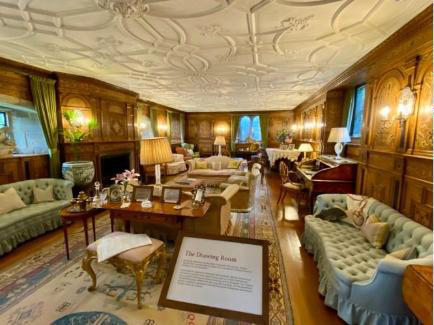
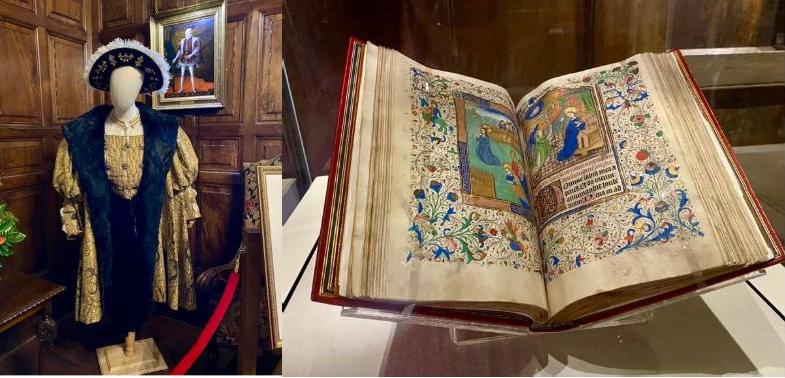
For the true Tudor history buffs, Anne Boleyn’s intricate prayer books – in which she signed her name and made little notes and inscriptions – were a particular highlight. And, for fans of a compelling BBC drama, the many costumes on display from Wolf Hall (2015-2025) were really quite impressive in terms of their detail and resemblance to the portraits hanging in the Long Gallery.
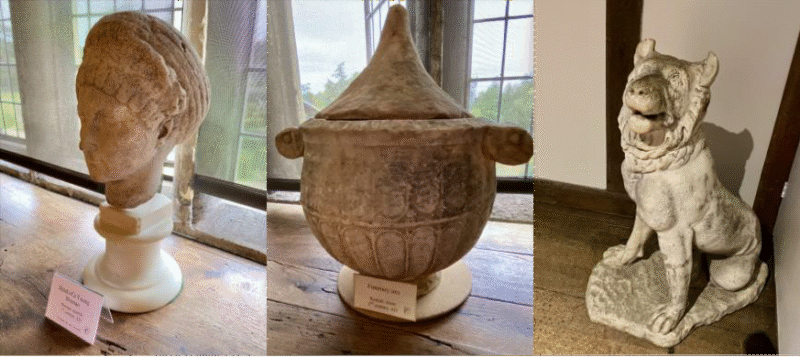
Since the Hellene team are, of course, most interested in the ancient world, we were were drawn to the Roman artefacts dotted throughout the house; there was a 1st century AD female bust, and a funerary urn from the 2nd century AD. But I loved the marble statue of a Molossian mastiff nearly hidden from view in the corner of a narrow passageway; a Roman copy of a Greek bronze original (isn’t that always the way, James!), the dog is often referred to as the ‘The Dog of Alcibiades’ because of it’s broken tail.
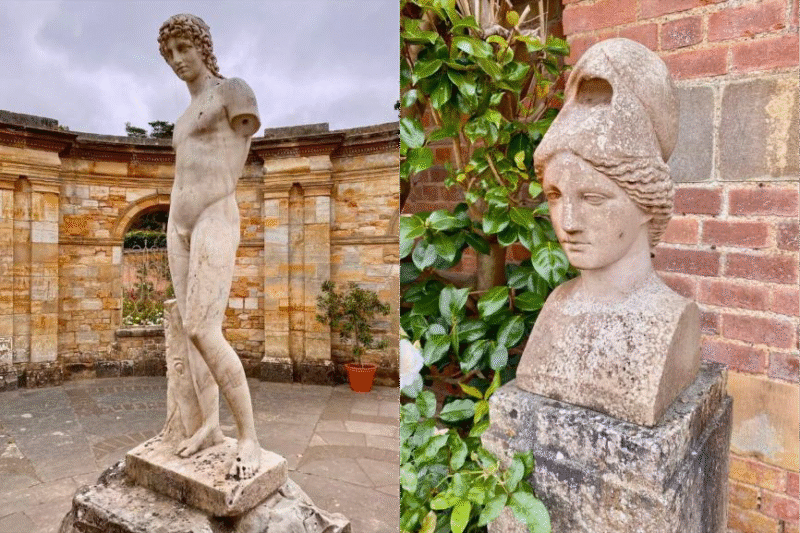
But, being Classicists through and through, the really exciting part of the visit actually lay outside the castle walls. The gardens at Hever Castle, stretching over 125 acres of land and with a life-size yew maze too, also include the aptly named Italian Garden. In amongst the gorgeous roses and long sweeping lawns, the so-called Pompeiian Wall sits on the north side of the Garden and contains several small bays off to the side, made especially to showcase the Astor’s collection of Classical sculpture which they had imported from Italy.
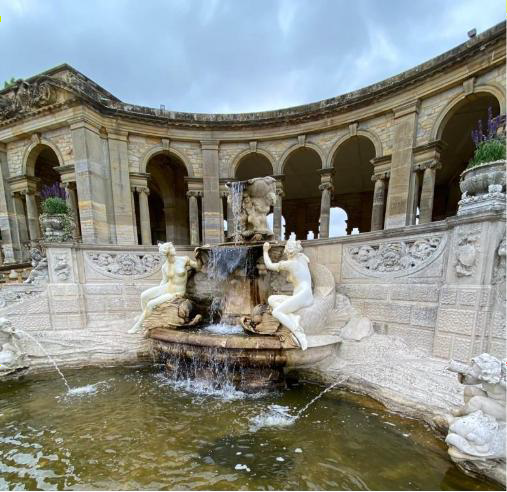
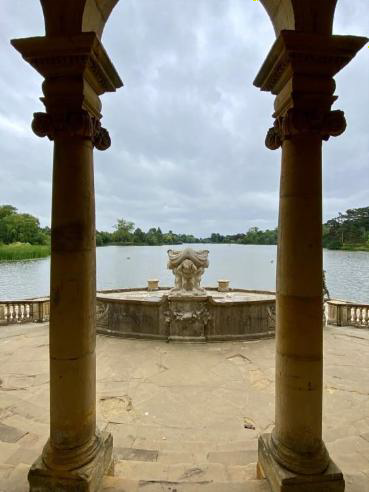
And, at the very end of the Garden, the monumental Loggia allows visitors to take in the views over a placid lake. Flanked by pillared colonnades, the elaborate balustrade steps lead to a paved area overlooking the water; there, the centrepiece is the marble Nymph’s Fountain – installed in 1908 – which was specifically inspired by the Trevi Fountain in Rome.
When we reluctantly left the beautiful surrounds at Hever Castle, we travelled to East Grinstead in Sussex for some more history (there can never be enough, can there?!). Here, we first passed by St Swithun’s Church; in the graveyard, a memorial stone has been erected for three Protestant martyrs who were burned at the stake in 1556, under the rule of Catholic Queen Mary. From there, we made our along the Medieval hight street, looking at where the prison and the gallows site once stood. Though there are a number of listed timber-framed buildings to see, one of the most notable Sackville College, which was built in 1609. The college was founded as an alms house and later became the birthplace of the hymn, Good King Wenceslas.
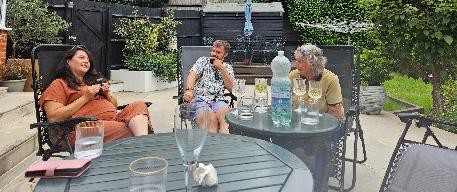
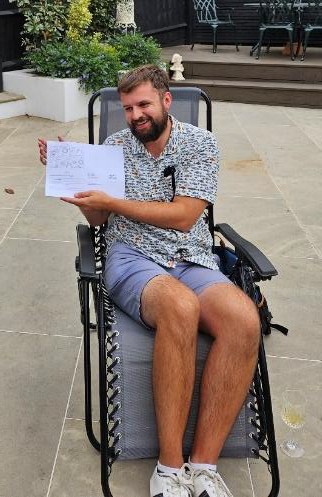
For the evening, we rested weary feet in the lovely surrounds of Sarah and John’s garden of their new home, and enjoyed an amazing BBQ together with a side of archaeological-themed games! James won the ‘Identify the Artefact Quiz’ and received an Amazon Voucher! Woo!
And finally, before we all went our separate ways once again, there was just enough time on Sunday to make a last-minute second-hand book purchase before visiting the Church of St Peter & St Paul in Lingfield for some Medieval (sorry, we’d already covered much of the Classical stuff nearby!) statuary.
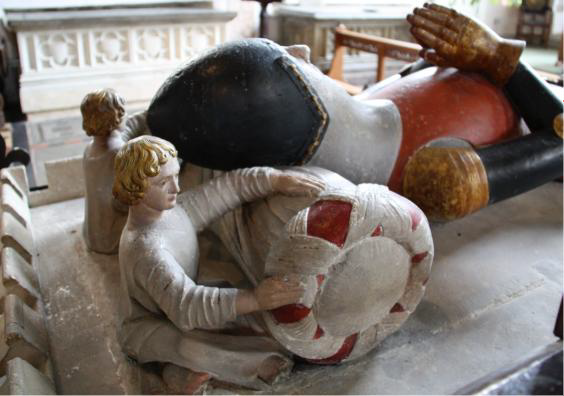
The Church is most well-known for its three table tombs, two complete with very detailed effigies. We spent a lot of time pondering – and certainly not arguing! – over the details on the impressive monument to the First Lord Reginald Cobham (c. 1295–1361); the building in which the tomb lies and indeed much of what can be seen of it today dates from early 1360, but the Church was considerably rebuilt and enlarged by the deceased’s grandson, another Reginald Cobham, in 1431.
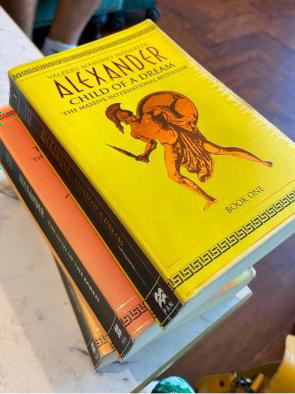 And with that, we said our goodbyes to one another after lunch and made our respective ways home – via car, train, boat, and plane! – ready to hit the ground running for the new academic year of group trips; all of us in the Hellene School Travel team are looking forward to many new adventures in the coming months…
by Dr. Kerry Phelan (@KerryLPhelan on X/Twitter)
I first went to Italy on a school trip in 2001. On the trip we visited Venice, Florence, and Verona. I still remember the thrill of visiting each new city but, back then, my interest in the ancient world hadn’t fully developed into the full blown obsession that it is now.
And so when my husband told me that he had to travel to Verona for work in September 2024, I jumped at the chance to join him for a couple of days. Not because I had any interest in attending Marmomac’s Exhibit on natural stone with him, of course, but because I knew that once I was there I could cajole him into visiting some ancient sites with me.
 To keep himself from suspecting any major Classically-themed digressions later in the trip, I did willingly attend part of the trade show on our first morning in Verona. It was held at Veronafiere exhibition centre, approximately about 3km from the city centre. Surrounded by vast conference halls, dedicated entirely to the stone production chain from the quarry to the processed product and packed with stalls selling every conceivable machine part and tool, I eventually managed to find one genuine point of interest at least.
That afternoon, we returned to the city and had lunch at a restaurant overlooking the Piazza Brà and facing the stunning Roman Amphitheatre. Obviously, that was my first proper port of call. Predating the Colosseum in Rome, the Amphitheatre was built in the first half of the 1st century AD, in the period which marked the end of the emperor Augustus’ reign and the beginning of Claudius’.

As one of the best preserved ancient structures of its kind, the Amphitheatre has been beautifully preserved and maintained over the last few centuries. It was constructed using white and pink marble which practically glows when the sunlight hits it – which, as you can see from my pictures, it was trying to do in between the rather ominous-looking clouds! The arena itself has huge wide corridors, fifty levels of seating, and underground tunnels, Unfortunately, it has lost most of the facade and only four of the arches from the outer wall remain standing.

Overall, it stands as one of the largest amphitheatres in Italy; its elliptical shape produces perfect acoustics from any stand point and it’s still in use as a modern entertainment venue. Because Claudio Baglioni was performing several live concerts at the Amphitheatre while we were there – if you don’t know him, pop him on your Spotify playlist! – our visit had to be brief so that the event could be set up for the evening.
Thinking that would be the ancient history-themed visit of our trip, my husband was relieved that it was so quick. After the Amphitheatre, we spent the afternoon wandering around the historic centre of the city, known as the Città Antica. Verona is super easy to see on foot. It also has plenty of choice in terms of shopping, and its streets are full to the brim with both locally owned shops and international ones. One of the main shopping areas starts just behind the Roman Amphitheatre in Piazza Brà and ends at Casa di Giulietta.


The Casa di Giulietta is probably one of the most famous places in the city of Verona. Though the building has medieval origins, and belonged to the Cappello family (and not Capulet!) in the 14th century, it came to be referred to as Juliet’s House in the late 18th and early 19th centuries and many visitors began to stop at the site. The famous balcony in the courtyard is the result of assembling marble remains of the 14th century that, until 1920, lay in the Museum of Castelvecchio.
 We managed to elbow our way through the crowds to see Juliet’s balcony for ourselves. There was quite a queue of people waiting the enter the Casa di Giulietta itself – for which the tickets are only available online – and presumably an even larger queue for those die-hard fans wanting to go onto the balcony itself. However, we were content with staying in the courtyard.
We then made our way towards the Piazza delle Erbe to stroll through its bustling market stalls and partake in some necessary souvenir shopping. There’s plenty of restaurants surrounding the square too, and we decided to stay here for dinner. We absorbed the wonderful atmosphere with its beautiful buildings, busy market and a constant stream of shoppers passing through. It was very easy to while away the evening by people-watching as the night drew in around us.
The next morning, we took the train to Peschiera del Garda to get the ferry across Lake Garda. My intention was to sail across to Sirmione and to drag my unsuspecting husband to a site that had been on my bucket list for quite some time. But my plans seemed to have been thwarted when, due to some strong winds that morning, all the ferries to the western side of the lake were suspended. With only limited access to the eastern side of the lake, we decided to visit Lazise instead, which was about 15-20 minutes to the north of Peschiera del Garda.
Arriving in Lazise, the first thing we saw were the stone fortifications of the medieval Lazise Castle on the shores of the lake. Although you can’t enter the Castle itself– it’s a private residence – you can stroll along the connected walls that weave through the historical centre.

We spent a couple of hours wandering around the town, even stopping for a lovely lunch on the Piazza Vittorio Emanuele II, and then headed back to the harbour. When we arrived, I was delighted to find that the ferry service had resumed to Sirmione. Success!! My sneaky trip to the archaeological site on Sirmione was back in play …

Finally on our way to Sirmione, my husband realised what I was up to when the site actually came into view from the ferry. Nonetheless, I dragged my now- grumbling other-half through the town and to the top of the peninsula to visit the largest and most well-preserved Roman villa in northern Italy. The villa is generally known as the Grottoes of Catullus; the Roman poet described the location as the most dear to him of all the islands on both lakes and seas (Catullus 31). Tradition has long associated the villa with Catullus himself, though its not likely that he was the actual owner.


The most recent archaeological surveys have determined that the villa was originally built during the reign of Augustus, in the last decades of the 1st century BC – early 1st century AD, and was subsequently abandoned between the 3rd and 4th centuries AD.


The layout of the villa is rectangular, and spanned three floors. The different floors were supported by substructures, that can be traversed as if porticos, and are partially exposed. There is also a large thermal bath system, built between the end of the 1st and the beginning of the 2nd century AD, with a hypocaust system.
By walking through the olive groves on the site, and looking between the walls of the villa’s remains, visitors are treated to incredible panoramic views over the lake.
There’s also a small but very lovely Archaeological Museum which displays the most significant findings from the past digs on the site. Inside there are many fragments of decorated relief stuccos, with plants and figurative elements, and the black and white mosaic floors taken from villa.


My favourite piece in the Museum was the beautiful marble head of the Dioscuro, dating to the second century AD. It is the only piece of sculpture that has survived from the villa and its gardens.
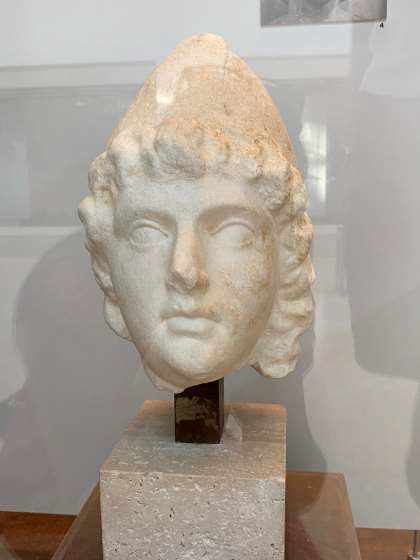
After spending most of the afternoon at the Grottoes of Catullus, we walked back into the town of Sirmione and took the next ferry to Desenzano del Garda. From here, we took the train back to Verona.


We had set aside time on the penultimate day of the trip to travel to Venice. This was relatively easy to do, and took about an hour and twenty minutes to get to Venezia Santa Lucia. We first made our way towards St. Mark’s Square. The square is surrounded by magnificent buildings, such as the Doge’s Palace, the Clock Tower and, perhaps the most impressive of all, St. Mark’s Basilica.

Afterwards, we headed towards other iconic landmarks like the Rialto Bridge, the oldest and most famous bridge in Venice. The bridge spans the Grand Canal and connects the districts of San Marco and San Polo. And its definitely worth leaving some time to wander around the markets right beside the Bridge.


Even though we only had a few hours there, it is easy to see how Venice enchants its visitors with its unique beauty, charm, and history. But, for me, I really enjoyed getting lost in its meandering streets and seeing sides to the city that were slightly off the beaten track.


The time that we had in Venice really felt like it whizzed by, and we had to return to Verona by train into the Porta Nuova station. We had an early flight home to catch the next day.
Ultimately, I can only hope that my sneaky stunt at Sirmione doesn’t hinder my chances of getting an invite to the Marmomac’s Exhibit next year …!
by Dr. Kerry Phelan (@KerryLPhelan on X/Twitter)
I’d never been to Turkey before and, to be completely honest with you, Istanbul wasn’t high up on my bucket list of future destinations. Of course I knew that there would be plenty to see for ancient history enthusiasts, and lots indeed for fans of modern history, but being a complete Grecophile through and through, I didn’t really think that Istanbul would have enough to really thrill me. Please do read on to see just how wrong I was …
The main purpose of the January trip was to carry out the necessary hotel audits of the accommodation that our future school groups would be using. Claudia and I also intended this trip as a general recce to get a better feel for what both teachers and their students would experience when in situ.
Our first proper day in Istanbul was the only rainy day that we had during the trip; how typical when we had a packed itinerary to explore most of the sites on foot! But, with the usual excitement of a visitor on their first day in a new city, it didn’t manage to dampen our spirits.
Our first stop in the morning was the Kariye Camii Mosque. Formerly the Chora Church, it was converted into a mosque in the 16th century during the Ottoman period and subsequently became a museum around 1945. In 2020, it was reconverted into a mosque and as such, suitable attire is required when visiting.


Being some distance outside of the historic centre of Istanbul (about a 20-minute drive or an hour-long walk) the small Mosque wasn’t very busy at all and this allowed us to view its exceptionally well-preserved Byzantine mosaics and frescoes without any jostling of elbows and iPhones. There are some stunning mosaics of Christ and the Virgin Mary, and really beautiful depictions of the life of Christ.

Next, we went to the the historic centre itself to visit the Basilica Cistern. And what an absolutely mind-blowing place! Originally built in the 6th century, this vast underground reservoir once supplied and stored filtered water for the Imperial Palace and its neighbouring structures. The Cistern boasts an impressive storage capacity of approximately 100,000 tons of water, and the 336 marble columns now stand as a testament to the utter grandeur of the building project. Upon descending into the dimly lit chamber, you are greeted by the sentinel-like columns that still stand guard over the pool of water glistening at their bases. A raised walkway winds through the Cistern, allowing visitors to explore the space and to try to dodge the random drops of water falling on your head from above.

It’s really quite atmospheric. One of the highlights for me was seeing the famous Medusa sculptures, one upside-down and the other sideways, set at the base of two columns. They certainly add to the surreal, otherworldly vibe in the underground chamber.


 From there, we walked to the Theodosius Cistern. Much smaller than its Basilica counterpart, it is in fact the older of the two; it is believed to be built during the rule of emperor Theodosius II (AD 408-450) based on its architectural characteristics. Inside the chamber, its 32 columns topped with Corinthian capitals support a vaulted brick ceiling. Since it wasn’t as busy as the Basilica Cistern, it felt more peaceful and eerier almost, as if you were closer to the history of the site somehow. That was the case, however, until the lasers started! A light show, projected onto the columns and walls, visually narrated both the history of the Cistern and Istanbul more generally through flashing pictures and thematic music. Lasting about 20 minutes, it was a bizarre combination ancient and modern technology in one site.
On the way to find somewhere for lunch, we walked through the Hippodrome of Constantinople, which now known as Sultanahmet Square. In spite of the rain, we managed to see the Obelisk of Theodosius I; it was erected by the emperor on the spina of the Hippodrome in AD 390, though it was originally made for pharaoh Thutmose III, who ruled Egypt from 1479 to 1425 BC. The hieroglyphics are surprisingly well-preserved, and celebrate an Egyptian victory after a battle on the Euphrates.
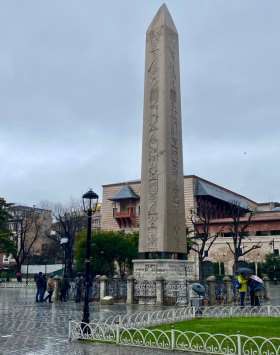

Of more interest to me, however, was the other monument on the spina: the Serpent’s Column from Delphi. It was probably brought to the Hippodrome during the reign of Constantine (AD 306-337). Initially part of a victory tripod, the Column was set up in the Sanctuary of Apollo after the Greek victory over the Persians in the Battle of Plataea in 479 BC. This bronze monument consists of three snakes twisting around each other to form the column. Three heads must have sat on the top, which have mostly been lost; only the upper jaw of one head is left, which can be seen on display at the Istanbul Archaeological Museum.
If you enjoy street food, then walking around Istanbul is an absolute delight! Simit is a Turkish baked pastry that is sold on practically every corner, with other trolley stands offering hot corn on the cobs.


We actually indulged in a more substantial lunch in preparation for our next visit of the day, the Topkapi Palace. The former home of Ottoman rulers for nearly 400 years, visitors can now wander around the rooms of the sultans and see the extravagant jewels on display at this large museum. The complex itself is enormous, and it certainly needed more time than we had actually allotted to it to fully explore its immense collections of robes, weapons, porcelain, manuscripts as well as other Ottoman treasures. One of the highlights for me was the Harem, which were the opulent private quarters where the sultan’s family and concubines lived.

The Treasury is another ‘must see’, showcasing daggers and swords encrusted with gems, an 86-carat diamond, and other jewellery that reveal just how much the sultans liked their bling! There’s also a collection of religious relics – for which you will need to wear suitable attire to visit – including Moses’ staff and Prophet Muhammad’s cloak.


Both Claudia and I especially enjoyed the views from the Topkapi Palace; it’s terraces overlook the Bosphorus Strait and gives its visitors offers prime panoramic vantage point to look out over the city. It’s the perfect place to end a visit to the Palace, standing where sultans once stood and gazing out over their empire. Since we didn’t get to see all of the rooms and collections within the Palace, it’s certainly somewhere I’d love to visit again in the future.
 Located in the outer courtyard of the Topkapi Palace, the Hagia Irene (Greek meaning ‘divine peace’) is the oldest church of the Byzantine Empire. Built in AD 337, Hagia Irene was constructed under orders of Constantine I, the first Roman emperor to convert to Christianity. And since it was never converted to a mosque after the Ottoman conquest – it was used as an armoury instead! – few changes were made to either its interior or exterior, and it remains the only surviving example of a Byzantine period church with a standing atrium. Today, the space is used a concert hall for classical music.
 The Hagia Irene was the second largest church in Istanbul after the Hagia Sophia. A five-minute walk away, the significantly more grand Hagia Sophia is one of the most culturally significant monuments in the city. It was first consecrated in AD 360 during the reign of Constantius II (originally known as Magna Ecclesia, ‘great Church’) but it was then converted into a mosque after Constantinople fell to the Ottoman siege in AD 1453; the building was subsequently turned into a museum in the early twentieth century, although it was transformed once again in 2020 when the Turkish government announced that the Hagia Sophia would return to use as a mosque. Tourists can now only visit the upper gallery, with the lower space accessible for praying for practicing Muslims.
The Hagia Sophia that you see today is actually the third version of the building: emperor Theodosius II replaced the first church in AD 415, and emperor Justinian had to rebuild the church in AD 537 after public rioting (the Nika revolts) demolished the structure. Today, the Hagia Sophia is at least as beautiful on the inside as on the outside, with age-old mosaics, murals and stained glass. A favourite thing for me within its walls was the Viking inscription on the marble parapets in the middle of the south gallery. The phrase ‘Halvdan was here’ is written on this inscription, which has been dated to the 9th century. The inscription is thought to have been carved by a Viking soldier serving in the army as a mercenary during the Eastern Roman period.
 Another ‘must see’, I think, is the Komnenos Mosaic, dated to the 12th century, depicting emperor John II Komnenos, his wife Irene, and their son Alexios. In the middle, the Virgin Mary is depicted standing with the infant Jesus in her arms.
After dinner, we took an evening stroll as far as Taksim Square in search of coffee and sweet pastries. Extending from Taksim, Istiklal Street is iconic for shopping with a huge range of local brands and international stores which remain open late. It’s bustling atmosphere and variety of street vendors were fantastic to see and it was the perfect way to end our first day in the city.

We had big plans for our second day: a day trip to Canakkale. Knowing that we were heading to the ancient site of Troy, I managed to get up that morning with something more akin to elation than effort after such a packed itinerary on the previous day! It was a long but relatively easy drive to Hisarlik (approximately 5 hours with a coffee stop en route).
 Unlike the day before, and seemingly blessed by the Greek gods, we enjoyed the amazing January sunshine as we made navigated our way around the site. At the entrance – in addition to the local gods on duty! – we saw the replica of the Trojan Horse.
Numerous excavation campaigns, spread over the past 140 years, have revealed many features from all the periods of occupation at the site of Troy.
It’s layout, and the explanations on site, make it abundantly clear that there were numerous building phases – nine cities in total – distinguished by their different styles of bricklaying and architecture.
The earliest settlement level in Troy is in the early Bronze Age, 2920-1700 BC (Troy I-V), and the site was inhabited continuously afterwards until the Rome period (Troy IX).

The Temple of Athena, found on the last layer of the city, is a unique monument that is identified with the city. This monument is made of marble and, although it was built c, 240-150 BC, it was renovated by emperor Augustus centuries later. Another highlight is the Odeion, which may have been erected in honour of Hadrian’s visit to Troy in AD 124, when the nearby tomb of Ajax was also likely rebuilt.

Homer’s Troy is city dated c. 1700-1250 BC (Troy VI). This citadel covered an area of 20,000 square metres. A massive tower, 11 metres wide, and 3 metres thick and named the East Tower, was built late in this period. Evidence of fire may support the fact that the site was taken by force; nevertheless, the archaeological evidence does show that the citadel collapsed and that there was nearly a complete break in habitation for perhaps 250 years after.
Personally, I enjoyed standing on the fortification walls and looking down over the so-called Troy V/VI Gate. The Trojan plain is in the distance; indeed, much of the configuration of Troy’s landscape is similar to what Homer describes in terms of the landscape in the Iliad.

 After I had spent far too much money at the on-site souvenir shop, we went for lunch in the port area at Canakkale – with a compulsory photo opportunity at the replica of the Trojan Horse used in 2004 film, Troy, with Brad Pitt and Eric Bana – and then we spent the remainder of the afternoon looking at hotels for our future school groups. The drive back to Istanbul that evening was certainly a quiet one after such a busy day!
The next morning and afternoon were spent carrying out more hotel audits in Istanbul – we visited at least twelve hotels – we’re nothing if not thorough! After a late lunch, we wanted to explore some more of Istanbul, and so we decided to risk temptation and set off towards the Grand Bazaar. While it was bustling with shoppers and tourists alike, it surprised me by being much less crowded than I expected. We strolled through the maze of shops, colourful ceramics, handmade rugs, and kaleidoscopic lanterns. The Grand Bazaar architecturally quite striking; this covered market is one of the largest and oldest in the world, with its construction dating back to the fifteenth century and ordered by sultan Mehmet II shortly after the conquest of Constantinople.
Less that a 10-minute walk away, the Spice Bazaar – also know as the Egyptian Bazaar – was built in the 17th century. Its market stalls are stocked full vibrant pyramids of spices, herbs, tea, nuts, sweets, and pastries. There’s so much to see – with plenty of vendors doing their utmost to draw you with free samples and tastings – that the whole experience is best described as wonderful assault on the senses.
As it grew dark, our feet didn’t feel quite weary enough from the day’s adventures and so we headed over to the Galata Tower. The Tower itself is impressive enough from the outside, but we were enticed inside by the promise of an impressive 360-degree view of Istanbul by night. And we certainly weren’t disappointed!
 A short lift-ride takes visitors up to the seventh floor – after which you have to climb two flights of stairs to the observation deck – and the top of the Tower does indeed have amazing views of the city: the iconic mosques, glistening glass skyscrapers, and the shimmering waterways of the Golden Horn along the Bosphorus.
The origins of the Galata Tower date back to AD 527, when a wooden tower called Megalos Pyrgos was built by the Byzantines. The current tower was built in 1348 by the Genoese as part of larger fortifications (mostly lost now). Over the centuries, it has served the city in terms of military defence, fire detection, as a prison, and as a meteorological observatory. The museum inside the Tower also has a very small but interesting collection of Roman artefacts!


We walked back to our hotel via Istiklal Street again and Taksim Square, taking in the last of the night’s lively atmosphere.
On the last morning, we had sufficient time to squeeze in one last crucial visit before our respective flights back home that evening: the Istanbul Archaeological Museum. For me, this visit what the absolute pinnacle of the whole trip; I could’ve written this entire blog just on the artefacts that I saw within the Museum!
 The Museum itself is an impressive one: the displays are modern and well- planned, with a low lighting scheme which serves to highlight the importance of the objects themselves. I really liked the setting but, because of the dim conditions, reading and photographing some of the explanatory signs was sometimes tricky.
 For me, some of the best pieces include a larger-than-life marble head of Sappho, found in Smyrna (Izmir), which is a 2nd century AD Roman copy of a type belonging to the Hellenistic period.
Of course, I had to seek out the fragment of the bronze serpent head from Serpent Column, which was discovered near Hagia Sophia in the mid-nineteenth century.

In spite of my incomparable love of Demosthenes, it was a treat to see (yet another!) bust of Alexander the Great. Dating from the 2nd century BC, this depiction was found in the lower agora of the city Pergamon and is thought to belong to a statue of either Alexander himself or a god/hero depicted in his likeness.
But my favourite of all – and entirely worth a flight to Istanbul in its own right! – was the so-called Alexander Sarcophagus. Made of Pentelic marble, the hunting and battle scenes decorating the sides have been made with stunning features.

The battle scene on one of the long sides depicts the Battle of Issus of 333 BC between Alexander and the Persians. Rather than belonging to Alexander, who is depicted on the Sarcophagus with his trademark lionskin, it thought to have belonged one of his commanders, Abdalonymos, the last king of Sidon. The Sarcophagus was discovered in 1887 by Turkish archaeologist, Osman Hamdi Bey, when excavating the underground royal necropolis at Sidon in Lebanon. Overall, it’s very easy to see why the carving is regarded as one of the most exquisite examples of Hellenistic art ever discovered; the detail of the figures and the animals are astonishingly realistic.

Ultimately, I spent so long videoing the Sarcophagus and taking multiple pictures of it from every possible angle that Claudia thought that I had gone into hiding so as to miss my return flight and have longer in the city!
It really surprised me just how much I enjoyed this brief visit to Turkey. Truly, Istanbul is a destination like no other; the city is sprawling and exciting metropolis in which continents meet and cultures combine. From the churches and mosques, to the palaces and the countless street carts, to the bazaars and the trendy high-end shops,
I really loved the exciting contrasts of ancient and modern found all around the city. And I’d certainly go back again tomorrow – if the bosses would let me!!