

Reconning the Renaissance.
I’ve been to Florence before, when I was living in Rome and working for our local agents at the time. My parents went there for a holiday so I took the Italo fast train up to Santa Maria Novella station and spent a sunny but cold November day with them, strolling around the centre and visiting Boboli Gardens. This June familiarisation trip was a little different in pace to that day however!
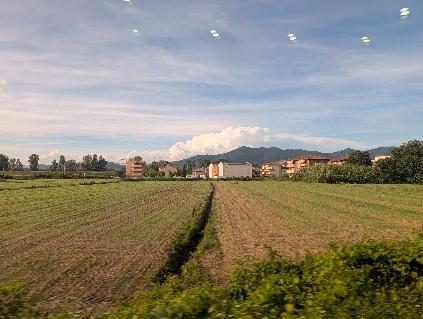
Figure 1: View from the Pisa- Florence train
I took a nice early ferry and then train up to Gatwick from the Isle of Wight, got up to Gatwick for around midday and flew out to Pisa, landing after 17:00 and making my way to Florence via the Pisa Mover shuttle from the airport to main station and then a train from Pisa Centrale. No issues with the flight or the transfer, no complaints about the Pisa Mover shuttle or train from Pisa to Florence, and there was something quite pleasant about pootling along the Tuscan countryside full of yellows and greens in the late afternoon/early evening light.
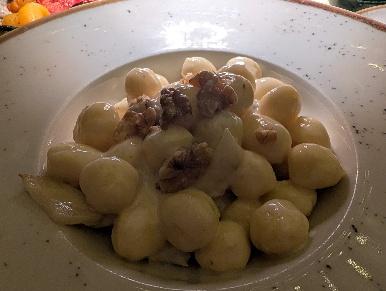
Figure 2: Gnocchi for dinner
Arriving in Florence at Santa Maria Novella, it was around a 15 minute walk north to the Hotel Donatello on the northern side of Piazza della Indipendenza, where I would be staying for the trip. Having unpacked and spoken with Charlotte to let her know I had arrived safely, I then headed out to dinner. After a little bit of searching online, I had found the Osteria deli Medici, the peak of Florentine naming! Their gnocchi with blue cheese, pear and walnut sauce was so good, and it kicked the foodie part of my trip nicely. I paired it with grilled mixed veg and followed it up with a tiramisu, both just as tasty as the gnocchi.
After dinner it was time for a stroll past Basilica di San Lorenzo and up to Santa Maria del Fiore, Florence is a very walkable city, you are easily within 30 minutes walking of one major site or another. Having got my videos and photos for to overlay Ezio’s Family song on for the ‘gram, I returned to the hotel and turned in.
On my walk back to the hotel I did find the (first of many) cooking classes and a mask decorating class, good options for school groups looking for extra-curricular activities.
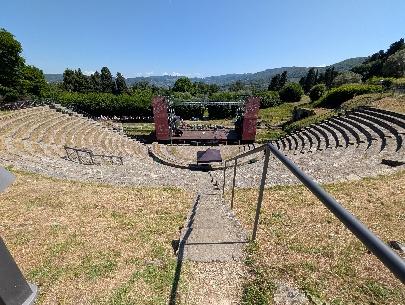
Figure 3: The Roman Theatre at Fiesole
Day 2 started with a walk to Piazza della Libertà to get a bus to Fiesole, my bus was either 10 minutes late, or 5 minutes early, but either way, it wasn’t long before I was in Fiesole. A charming hilltop town that has Etruscan origins as the 7th Century BC town of Vipsul. Several Etruscan remains survive, including a large section of walls and temple. Vipusl (or Faesulae as it was then known) was conquered by the Romans in the 3rd Century BC and the town was then destroyed by Sulla in the Social War in 80 BC. Sulla rebuilt it and filled the town with veterans. The Roman remains in Fiesole include the Theatre and Baths, as well as a portion of the finds in the on-site museum. The museum has a good mix of Etruscan and Roman finds of all sorts; inscriptions, reliefs, statues, tombs, and pottery (including this chonky boy in Fig 4).
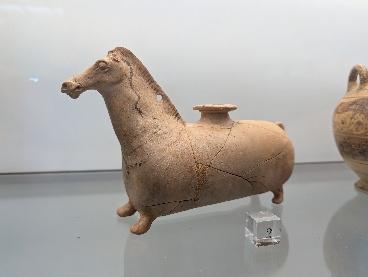
Figure 4: A bottle in the shape of a horse
Having spent over an hour exploring and photographing the remains and museum, with a backing soundtrack of schoolchildren singing (practice for a summer event), I hopped back on a bus down to Florence and headed to the Mercato Centrale for lunch. Now, I will happily recommend the Mercato Centrale in Rome for a lunch stop, but if Florence’s one is always as busy as it was when I stopped by, there’s no chance I’d recommend it for groups, given the mass of people and the layout being a little maze-like, groups would get split up easily. I grabbed a speciality panini from one of the stalls and then headed outside to eat it in the sun. I briefly stopped for a drink and some fruit at one of the small markets in the Piazza San Lorenzo to try and round out my lunch, before I visited the Basilica. Rome has spoiled me for churches and basilicas, and I say that as an avid atheist. Every church in Rome, even the small ones, are covered head to toe in marble and art and colour.
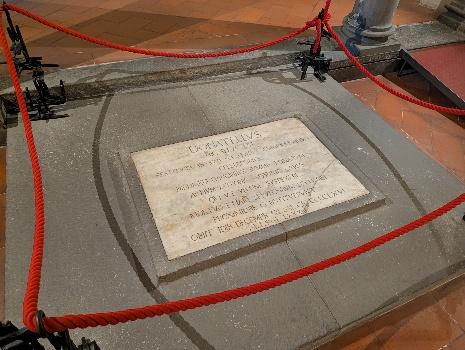
Figure 5: The tomb of Donatello
Florence’s by comparison (except with the Duomo’s dome and the Medici Chapel) are grey and plain inside, not what one would expect from the powerhouse city of the Renaissance, home to the powerful sponsors of art, the Medici. As you can guess, I wasn’t sold on San Lorenzo, but to see Donatello’s tomb was nice (though nothing of the tombs in Santa Croce, which I’ll come back to later).
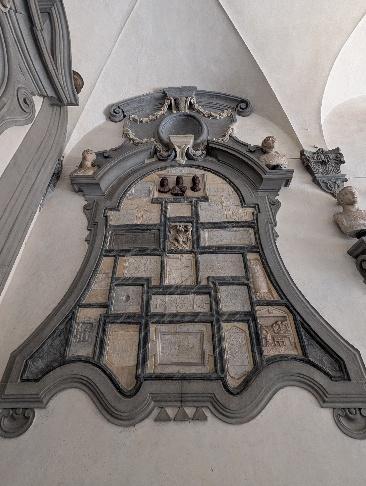
Figure 6: The Roman inscriptions in the courtyard of Palazzo Medici Riccardi
After San Lorenzo, I popped across the piazza to visit Palazzo Medici Riccardi which has a courtyard full of ancient busts, fragments of sculptural reliefs, urns, sarcophagi and inscriptions inside eight large frames, as well as the so-called Marble Museum which features originals and copies of busts of various Roman emperors and other personalities. Both of these collections were from the Riccardi family who bought the property from the Medici in the 17th Century, just over 200 years after the Medici had had the Palazzo built in 1444. After exploring the parts of the Palazzo that were most relevant to me, I quickly whipped round the rest of the Palace, with its lavishly decorated (I’m going to be using this phrase a lot I fear) rooms, including the Galleria degli Specchi (Mirror Gallery), which were as full as art and colour as one would expect.
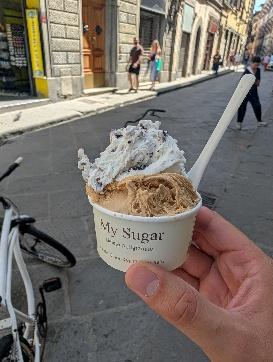
Figure 7: Obligatory gelato picture
On my way to my hotel auditing appointment at Hotel Bonifacio I did swing by My Sugar Gelato Artigianale, as recommended by my Lonely Planet guide book and practically inhaled it in an attempt to keep cool (helped by it being delish!)
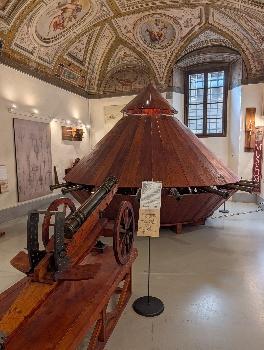
Figure 8: A model of Da Vinci’s tank
Hotel auditing done, I headed over to the Leonardo Da Vinci Museums and flipped a mental coin as to which one to visit, giving my chosen one a quick recce, exploring the inventions of the famous Florentine, and having a go with some the interactive exhibits. Either of the museums would be a good stop for any groups studying science, design tech, or general history.
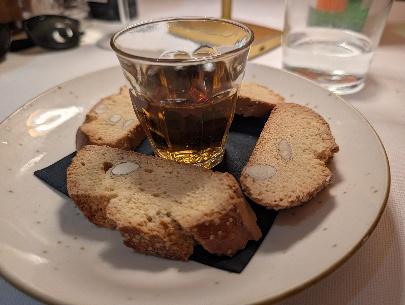
Figure 9: Cantucci with Vin Santo
Having retreated to my hotel to lie in front of the aircon and cool down for a couple of hours, I eventually had to choose a dinner. Now, within Google Maps I have several different lists saved, the first is Ancient Sites and Museums I want to visit (over 1200 at last count), another is ancient sites and museums I’ve been too (over 300), and the last is restaurants from Stanley Tucci’s Italian food shows – both Searching for Italy and Tucci in Italy. Across the two shows, Mr. Tucci visits Tuscany twice and so I had several options to choose from. For my second night, I went with Osteria Belle Donne and sliced beef with rocket and parmesan. I’m not a big meat eater, but that was a wonderful dinner. Having checked what food was eaten at the restaurant on the show, it turns out it was the Cantucci with Vin Santo, which as someone who enjoys Italian sweet treats, I also ordered. It was so wonderfully sweet and wentdown very quickly.
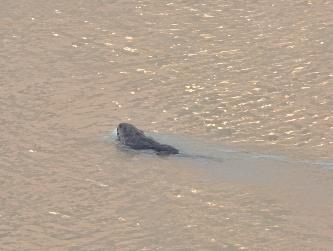
Figure 10: A nutria swimming the Arno
To walk dinner off I headed towards the Arno, stopping at Chiesa di Santa Trinita for a quick photo where Assassin’s Creed II’s title scene occurs. Whilst walking along the Arno, I did spot a Nutria swimming across the river.
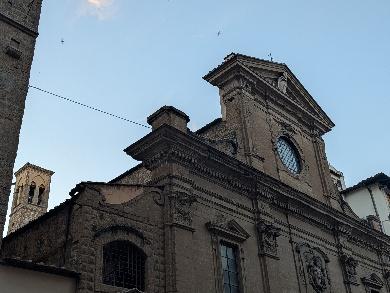
Figure 11: Santa Trinita to satisfy my AC geek
I walked down to Ponte Vecchio and onto the most famous bridge in the city before turning around and heading back towards Piazza della Signoria, where I
could see Loggia dei Lanzi and the Fountain of Neptune (the latter had been under restoration on my last visit) before coming across a street performer as he finished his penultimate song and started on ‘Bella Ciao’ which was received very well by the gathered crowd. I then returned to my hotel to retire for the night.
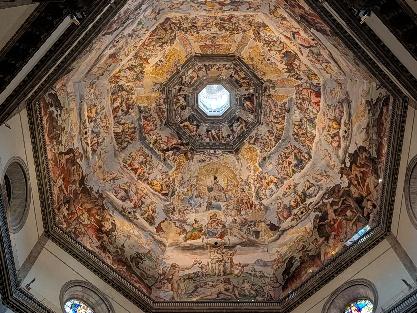
Figure 12: Il Duomo’s Dome by Brunelleschi
Up nice and early (for me) on day 3 to get in the queue for the entrance to Santa Maria del Fiore, I went for the standard entry
rather than the dome climb. I arrived at Il Duomo at around 09:40, it opens at 10:15 and the queue was already the width of the façade and around to the campanile. However, the staff moved us to the other side the monument to keep us out of the sun and in the proper line. I entered Santa Maria at around 10:55 and left by 11:05, as I hadn’t paid to do any of the extras – the Brunelleschi Pass gives access to the Dome, Bell Tower, Baptistry, Museum, and Santa Reparata, The Giotto Pass has the same minus the Dome and the Ghiberti Pass has the same as Giotto minus the Bell Tower. As mentioned earlier with regard to San Lorenzo, the inside of Il Duomo was rather plain and scant of decoration expect for at a few altars and the interior of the dome. Even from ground level though, the dome was stunning!
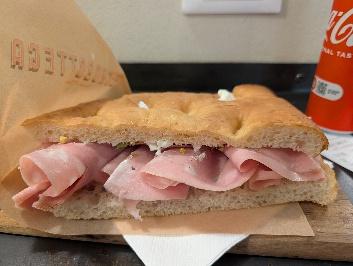
Figure 13: My schiacciata lunch
Walking towards Palazzo Vecchio for my next booked visit, I passed another cooking class and then the House of Dante, which is a visitable museum, as well as the Oratorio dei Buonomini di San Martino which has some lovely fresco work in. A few streets away from the Piazza dell Signoria I stopped at a sandwich shop called Retrobottega for a schiacciata (local Tuscan focaccia sandwich), opting for the Bombola which had mortadella, chopped pistachios, homemade ricotta mousse and lime zest in it. Very tasty! A quick and easy lunch a few steps from Florence’s centre.
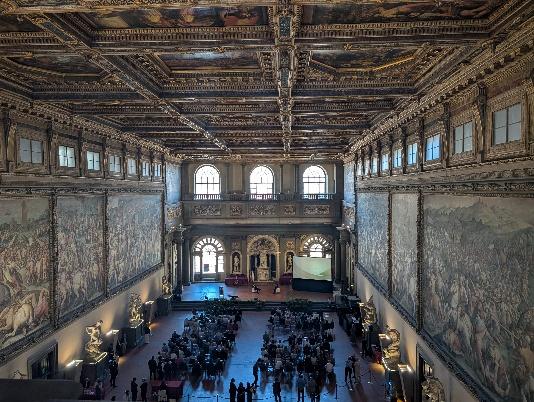
Figure 14: The Great Hall of Palazzo Vecchio
An early lunch eaten, it was time to enter the Palazzo Vecchio, unfortunately the Roman Theatre beneath is only visitable on the weekends, and I was there on a Tuesday, so no Roman ruins for me. The Palazzo Vecchio is the town hall of Florence, it was home to the Signoria government of the city between the 13th and 16th Centuries. When the Medici came to power, Duke Cosimo I de’ Medici moved his seat of power to the Palazzo, then renamed it from Palazzo della Signoria to Palazzo Vecchio when he moved across the river Arno to Palazzo Pitti. From the courtyard, I climbed the stairs to the Great Hall with its grand frescoes of scenes from the wars with Siena and 16th Century statues of six of Hercules’ Labours. The visitor route from there flows through lavishly (there it is) decorated rooms known as the Apartments of Leo X, the Apartments of the Elements (these include rooms named after the Roman gods), the Apartments of Eleonora, and the Apartments of the Priors, finishing in the Loeser Bequest. The Palazzo Vecchio is so utterly drenched in art, which becomes a theme for the rest of the day.
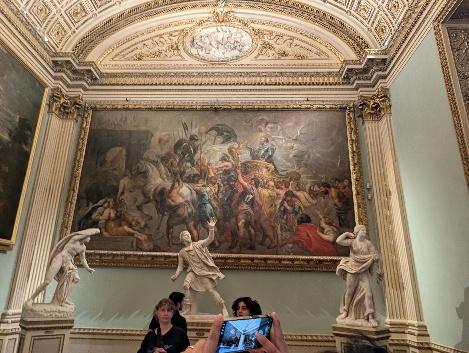
Figure 16: A section of the Niobid Room at the Uffizi
I walked another couple of streets away from the Piazza after leaving the Vecchio to find a drink and some pastries for the extra energy and then sat in the shade near the entrance to the Uffizi, as that was my next stop. Even with that extra drink and a breather in the shade, by the time I’d climbed the stairs along with the throng of other visitors, I was feeling a bit light headed. Not helped by my desire to rush around and see as much as I could within the hour and forty-five minutes I had between my entry at 14:00 and when I had to gather at the Vasari Corridor at 15:45 for my entry to that. I wasn’t sure how much ancient sculpture was in the Uffizi, just that were a few rooms that had sculpture in, and that some of the collection had been moved to the Vasari Corridor. The large U-shaped gallery visitors walk into at the top of the stairs from the entrance was packed with Roman busts and statues, and there were a few sarcophagi in the entrance halls, as well as bust and statues as you climbed the stairs. The Tribune room had a few pieces in – including the Venus de’Medici, but there was such a queue for it that staff were telling people to leave the queue and look around the rest of the gallery, so I just snapped a photo through the open door as I walk past. There was also the Cabinet of Marbles that had a few pieces in, though I believe a lot of the works in there were casts, and the Niobe Room which was dedicated to statues of the Niobids in various poses as they were struck down by Artemis and Apollo, with a large horse statue in the centre. Before heading to the next floor I made sure to see Botticelli’s Birth of Venus and a few other pieces, as well as stepping out on to the panoramic terrace and buying a water from the café there to rehydrate myself.
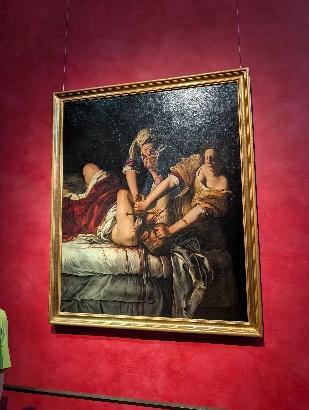
Figure 15: Judith and Holofernes by Gentileschi
That was all the ancient artwork until I entered the Vasari Corridor, but there were certainly some paintings I wanted to see on the next floor down, and so I was happy to spend some time checking out Artemisia Gentileschi’s Judith and Holofernes, Caravaggio’s Medusa and Bacchus as well as other paintings by Van Dyck, Titian and Tintoretto to name a few artists.
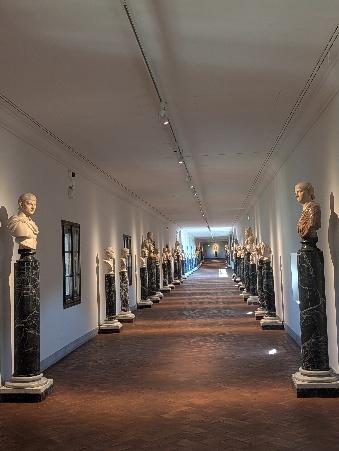
Figure 18: The Vasari Corridor across the Arno
There was a small group of us for the 16:00 Vasari Corridor visit, and it is guided by staff from the Gallery. They gave a quick explanation of the corridor itself then escorted us along it, stopping to point out areas of interest, such as the large windows over the Arno at Ponte Vecchio, the corner as it passes around the Mannelli Tower , and the (now closed off) loggia access at the Chiesa di Santa Felicita. The main straight of the Corridor as you cross over the Arno river was lined by ancient busts each side, some had names inscribed in the bases, but aside form that there were no information panels. I don’t know if it was because I was in a smaller group, or that it hadn’t been open very long, but getting to walk the Corridor did feel like I was part of something very exclusive.
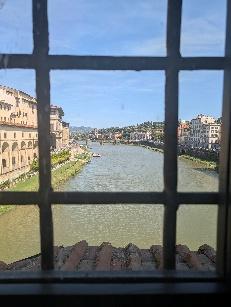
Figure 17: Looking out over the Arno from the Vasari Corridor windows
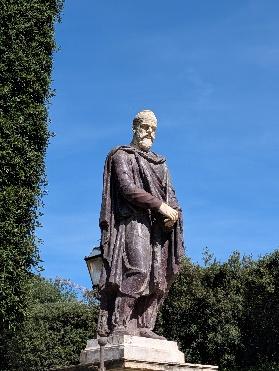
Figure 19: Roman Barbarian at the exit of the Boboli Gardens
The Vasari Corridor ends in the Boboli Gardens, as visitors exit at the Grotto del Buontalenti and then walk up into the Palazzo Pitti courtyard, which means walking past the Roman barbarian statues at the exit to the Gardens. As we exited at the Grotto, the painted decoration of a tortoise with a sail attached was pointed out to us, upon my enquiring about this design choice it was explained that this was Cosimo Medici’s interpretation of the Augustan phrase ‘to make haste slowly’.
I had been hoping to visit the gift shop in Palazzo Pitti, as I hadn’t been able to visit the Uffizi’s to see if they sold a Gallery Guidebook, but the one in Pitti’s courtyard it was closed. There was a temporary one on the first floor of the Palazzo, so I bought an entry ticket and made my way up, to find it was smaller with probably less stock in, so I sacked that idea off and just followed the Palazzo route.
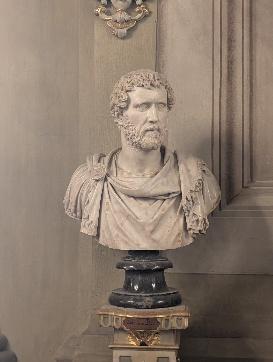
Figure 21: Bust of Antoninus Pius in Palazzo Pitti’s Galleria Palatina
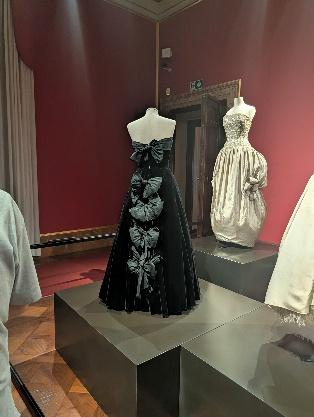
Figure 20: One part of the Fashion and Costume Museum at Palazzo Pitti
The first few rooms on the route were full of Roman statuary, part of the Galleria Palatina, so I was all happy. Then came the lavishly decorated rooms, walls covered in frescoes or framed paintings, ceilings painted with heavenly scenes to make the rooms feel taller. Like in the Palazzo Vecchio, there were plenty of rooms named after the Greco-Roman gods and myths – The Iliad Room, The Education of Jupiter Room, Roome of Ulysses, Room of Prometheus and so on. Can’t fault any of those rooms at all, wonderful decoration, exquisite paintings and art, but on building three of this, I was getting gallery fatigue. We would of course make sure to space out these large galleries within itineraries so that students don’t end up feeling the same. There were several ancient busts in stairways, including an Antinous and a Septimius Severus that didn’t have information cards or panels. Before finishing in the Pitti, I made sure to visit the Fashion and Costume Museum and the Modern Art Gallery, for groups that are looking more at the History of Art or Fashion. Covering over a century of ladies fashion, the former of these two museum spaces was a quick visit for me, and some of the dresses were interesting, while the latter covered works from the 18th Century up to fairly modern day, though I have to admit to speed-walking through it by the end.
Figure 22: The entry board for Ferragamo Museum
One last Museum for the day, then I was done, so I headed across Ponte Vecchio to the Salvatore Ferragamo Museum. I spent some time inside taking photos of the shoes and information panels on the famous shoemaker. This would be another good space for any students of Fashion or Textiles, there are even connections with cinema for Media Studies students.
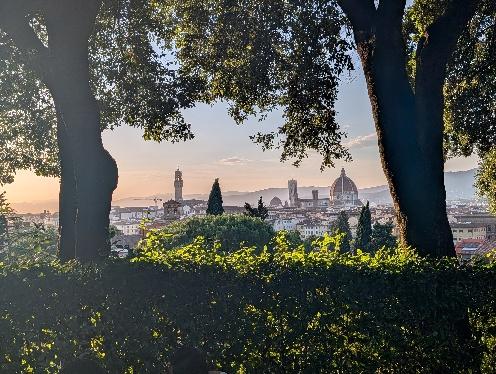
Figure 23: A photo of Florence from the way down from Piazza Michelangelo
Exiting the Ferragamo Museum I headed back across the Arno and explored the southern side of Florence, with a brief stop for a drink and some cicchetti at a place called Bulli e Balene, before heading eastwards to check out the view over Florence from San Miniato al Monte. It was going to be a longer walk than ideal at that time of day, so I also picked up a gelato at Cantina del Gelato for my (mostly uphill) walk. Exiting the walls of Florence at Porta Miniato I followed the road up to the San Miniato Terrace and the steps leading up to the (closed) abbey gate and perched myself there while I caught my breath and had a drink. The view over the city was stunning, and there were several photoshoots going on (by the looks of it a wedding shoot and a couple of romantic holiday ones). Whilst I was on the terrace, there was a proposal next to me, which was roundly applauded by all of us up there. I hope my sweaty self didn’t ruin their any proposal photos they had organised! After recovering from the climb I walked down to Piazza Michelangelo where every other person in Florence appeared to also be! Grabbed a few photos there then headed all the way backdown to street level and stayed on the south side of the Arno for my dinner choice.
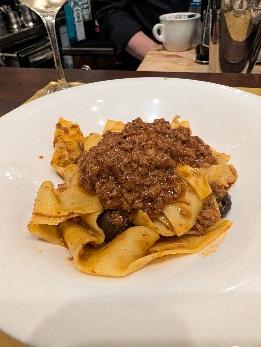
Figure 24: My wild boar pasta dinner
Inspired by Stanley Tucci again, I queued at Osteria del Cinghiale Bianco, and managed to get a seat at the bar for a dinner of pappardelle with wild boar ragù followed by tiramisu profiteroles. Both of these were ridiculously delicious, and I wish I had a photo of those profiteroles! Before returning to the hotel and collapsing on my bed.
Another early start on Day 4 as I got up and out to the Florence Archaeological Museum, getting there so early it hadn’t opened! After
waiting around for 10 mins or so after it had opened, and still 15 minutes before my ticket time, I entered and started to explore. I must have been the only visitor in there for the first hour or so, as I saw no-one else until I was on my way out. The museum is currently undergoing some renovation works, so the Roman Courtyard and the large open space in the centre with replica tombs are both closed, the Cameo gallery also seemed to be closed, though there are digital collections available for those via touchscreens.
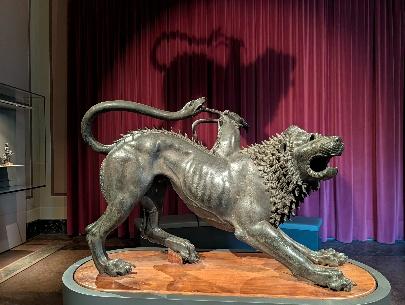
Figure 25: The Chimaera of Arezzo at the Archaeological Museum
The current route around the Museum starts off by the gift shop and then you walk through the incredibly large Egyptian collection, one of the largest in Italy behind the one in Torino I believe. The Egyptian collection runs from the earliest dynasties to late antiquity, and then the next section features cases of bronze statuettes and mirrors as well as the Bronze Statue of the Haranguer, dated to around 100 BC from Perugia. In this space you will also find a closed room
with sarcophagi in, and the highlight of the museum’s collection – the Bronze Chimaera of Arezzo. Both the Chimera and the Haranguer are masterworks in bronze, though the snake’s head was restored into the wrong position in 1785. The Chimaera was discovered in 1553 in Arezzo and was immediately whisked away to Florence. The Etruscan inscription on the right foreleg indicates that it was sacred, and offered to a deity.
The numismatic room came next, and I like coins, so plenty to see in there. My inner magpie, and outer ancient coin collector was very happy to see the various ancient coins alongside the more modern ones.
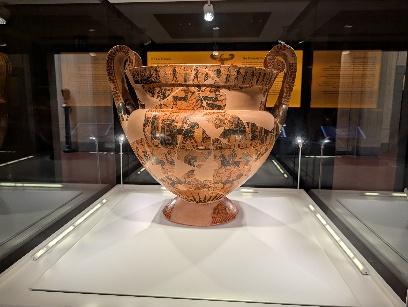
Figure 26: The François Vase at the Archaeological Museum
The collection continues on the next floor up, which is full of Etruscan and Greek sarcophagi, votives and pottery – with highlights including the François Vase and the Sarcophagus of the Amazons. There is a small Greek and Roman bronze collection in the museum which features the Leghorn Torso (apparently a place and not just a Looney Tunes character) and the Medici Riccardi Horse Head amongst smaller bronzes. The Minerva of Arezzo has a cast in the museum, as the original is now in Russia, and there are also several bronze heads of emperors including a so-called Trebonianus Gallus.
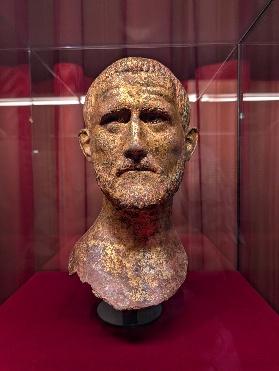
Figure 27: The head of Probus in the exhibition
Interestingly, the Icone di Potere e Bellezza exhibition, which was supposed to finish in April was still on. Running in partnership with the museum in Brescia it has seen several of the bronze heads from Brescia be on display in Florence and the Idol of Pesaro sent to Brescia to stand alongside the Winged Victory there. The heads of Septimius Severus, Claudius Gothicus, Probus and Venus are the ones on display in Florence shown alongside coins and cameos depicting them too. There’s also a display case for Symbols of Beauty and Power which include a bronze eagle’s head from the Augustan age, and a 16th Century base for the Idol of Pesaro.
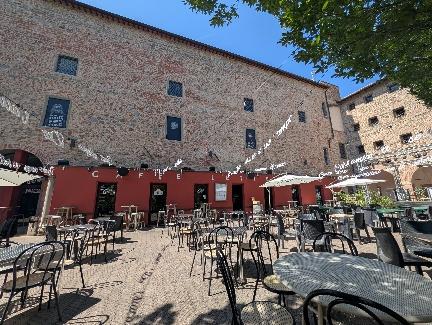
Figure 28: The café in Le Murate, set in a repurposed prison
Finishing in the museum, I walked eastwards to my next hotel audit, stopping off to check out the Mercato delle Pulci and Mercato Sant’Ambrogio on the way, the former a flea market, the latter the older and smaller version of Mercato Centrale. If it wasn’t a little out of the way, I would recommend find lunch bits for groups there. I also stopped for a drink at the Café Letterario in Le Murate, a converted prison that now serves as a social hub and housing.
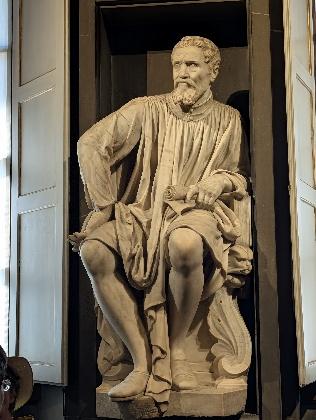
Figure 29: Statue of Michelangelo in Casa Buonarotti
My last hotel audit done, I was off back towards the centre. My first stop was Casa Buonarotti, the house of the family and descendants of Michelangelo. I was pleasantly surprised to find it had a room full of ancient artefacts, and there were others on display in the small courtyard. These pieces had been collected by Michelangelo the Younger and Filippo Buonarotti from their own excavations. The rest of the museum space were rooms dedicated to various drawings and wax models of Michelangelo, a galleria dedicated to the life of the great artist depicting scenes from his life, the family’s collection, the painting by Tiberio Titi of Michelangelo’s bust being placed on his tomb, and a collection of documents and objects given to the Casa Buonarotti on the occasion of the fourth centenary celebrations of Michelangelo’s birth in 1875.
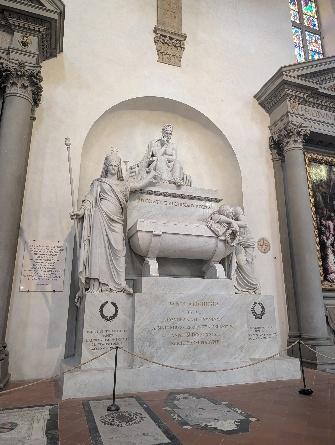
Figure 30: The tomb of Dante in Santa Croce
After another brief schiacciata stop, this time not far from Santa Croce, I made my way into the church, to be pleasantly surprised by the amount of decoration in there compared to San Lorenzo and Santa Maria. However, the most impressive part of Santa Croce were the tombs of notable Italians, I won’t pretend to know who they all were, but I know Machaivelli, Galileo, Rossini, Michelangelo and Dante, and despite not being overly spiritual, did feel touched to be in the same place as these historical figures.
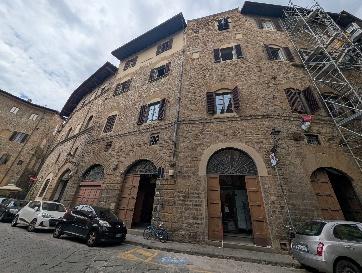
Figure 31: the curve of the buildings where the amphitheatre once stood
As I now had a bit of free time, I walked around the circumference of the site of Fiorentina’s amphitheatre, now completely buried and only visible by the floorplan of the buildings which sit on top – vey much like the Theatre of Pompey in Rome. This included a walk past the Serial Killer Museum, which I don’t think would hold any relevance for groups, unless they are studying psychology or criminal studies.
A quick stop at Gelateria dei Neri where I thought I was ordering gelato flavours but they were pure cream, very thick and sweet! I had a caramel flavour and a pistachio flavour, with some chocolate gelato to make it easier to digest.
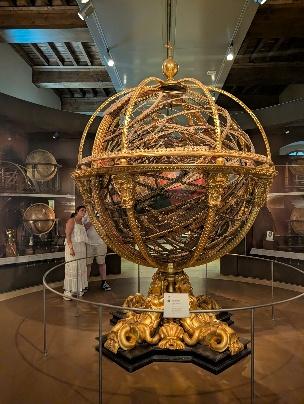
Figure 32: An armillary sphere from the 16th Century
Next up was a quick visit to the Museo Galileo where I saw a whirlwind history of science; from globes, telescopes and clocks to biology and chemistry. Another good option for non-classical students, perhaps particularly those of maths or science.
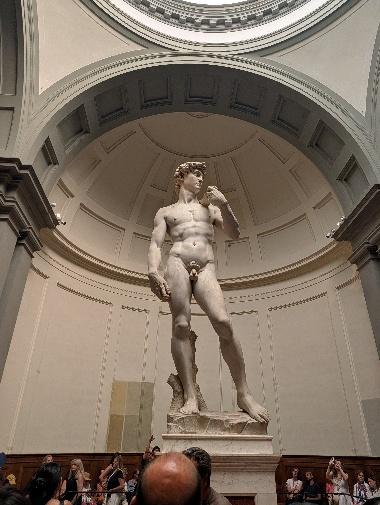
Figure 33: Michelanegelo’s David
After a quick stop back at the hotel to cool down and take some more photos for the audit, my last visit in Florence was to the Galleria dell’Accademia to see Michelangelo’s David. While there are plenty of other works in the Galleria, let’s face it, visitors are only there for the masterpiece. There is something about the statue, perhaps it is the scale and the detail, but it is striking, standing at the end of the corridor, rising above the crowds.
After exiting the Galleria, I walked through Florence’s centre, tried one of the famous wine windows (though cheated with a Spritz), and had a tasting platter and a smoked mozzarella for dinner, with a peach semi-freddo for dessert.
A gentle walk back to the hotel afterwards to pack ahead of my early start the next day.
Day 5 was another early start, with a hotel walkaround with management for photos to go with their completed audit, and a quick walk to Santa Maria Novella for the 09:09 train to Lucca.
As with most trains in Italy, it was a fairly smooth and easy ride, though it was on a strike day (this’ll come back to haunt me later). Arriving in Lucca by train means arriving outside the city walls, so there’s a short walk either through the gates in the walls at ground level or climbing up and over the walls near the Cathedral. Despite having my suitcase with me I was following the crowd and therefore opted for the latter. I had booked to store my suitcase at a café via the Bounce luggage storage website, having used it in Naples last year on my recce trip. Bag dropped of it was time to explore.
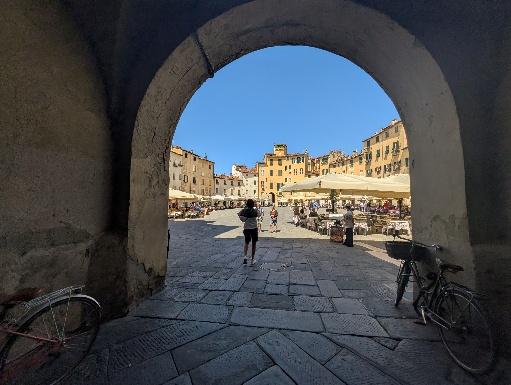
Figure 34: Entering Piazza dell’Antifeatro
First place to head was the Piazza dell’Antifeatro to see the site of the Roman arena that has been converted into a public square full of restaurants and surrounded by apartments. A few pieces of the ancient structure remain embedded in the walls, though I would love to have a dig around in the basements of the surrounding buildings!
I decided to go on a little stroll around Lucca to see what else I could find, as I figured I had until 15:00 when I had to head to the train station. I headed over t
Piazza San Michele to see the outside of Chiesa di San Michele al Foro, which marks the location of the Roman Forum in Luca (as it was known to the Romans). Just north of the Piazza is the Domus Romana which I was under the impression was only open on weekends and it was a Thursday, though their website now says different. After walking through the Piazza I continued down to Piazza Napoleone before looping around and climbing up the medieval Torre delle Ore, one of the two surviving towers in the city (Torre Guinigi) is the other).
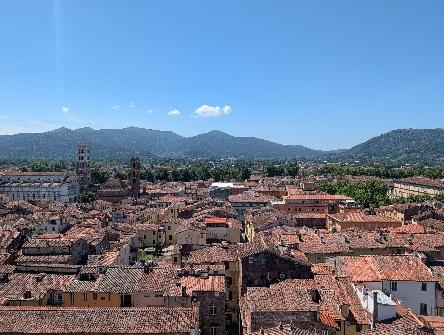
Figure 35: View from the Torre del Ore
The view from the top was fantastic, giving a exceptional view over the entire town and even over towards Pisa airport. The information panel at the top explained about the one of the streets below – Chiasso Barletti has its own undiminished dignity, preserved intact over the millennia since, the time in 56 BC when Caesar, Pompey and Crassus held a “famous meeting in which two hundred senators and people of considerable military and political importance took part” (Gugliemo Lera, Lucca, citta da scorpire, Maria Pacini Fazzi publ.1975).
Luca, of course, being the spot where the First Triumvirate fixed their breaking alliance and give themselves more control over the Roman Republic.
Heading back to Piazza dell’Antifeatro for lunch, I picked L’Angolo Tondo and went for the Roasted Tuscan pork, red pepper cream, courgette, pine nuts and grilled peaches. Another delicious meal in Italy, though that’s never a surprise!
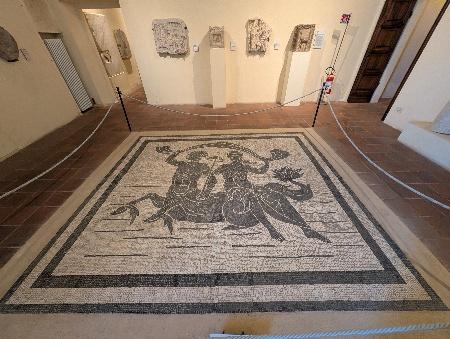
Figure 36: The mosaic and some inscriptions in Museo Nazionale di Villa Guinigi
Lunch all finished I headed east to the Museo Nazionale di Villa Guinigi close to the city walls to take a look a the ancient collection there. The ancient collection covers the Etruscan and Roman periods, as impressive as these are, with several inscriptions and a mosaic in the Roman section, they only make up a small part of the Museum’s collection. The collection extends to the late antique and medieval periods, then extends into the religious paintings up until the 18th Century. Walking back through Lucca afterwards I came across the Via del Battistero which serves as the street of antique dealers, which included one dedicated solely to Napoleon (not unexpected given his sister was given rule over the region when Napoleon converted the Republic into a monarchy).
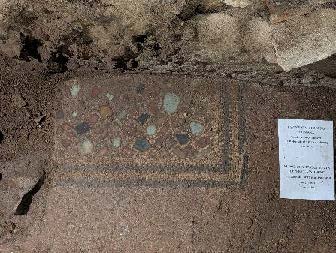
Figure 37: The cocciopesto floor in the archaeological area under the church
Having spotted something on the information panel in the Villa Guinigi Museum I made my way to the Chiesa dei Santi Giovanni e Reparata which has a visitable archaeological area underneath, as well as a Roman
sarcophagus in the main church area. This archaeological area contains remains dating back to the 1st Century BC, including a column from the Roman Baths of the 2nd Century AD, cocciopesto mosaic flooring from a Roman Republic period house, 7th Century Lombard tombs, 12th Century baptistry floor, the mosaic floor from the first church built in the 5th Century, 12th Century graffiti depicting the legend of St. Reparata, the base of a medieval tower, and the melting tanks for the church bells for the 12th Century church. A lasagna of history!
It was time to collect my bag, chug an ice tea, and head over to the train station, where the strike was in full flow. All trains to Pisa and Florence were cancelled, including the one I had booked for. The only train running to Pisa was delayed by about 40 minutes and was sat at the platform, so using my best Italian I managed to ask station staff if I could board it with the ticket I had bought for the later train.
Side note here – you cannot buy a train ticket in Italy online within 5 minutes of the train’s schedule departure – which is what had stopped me buying tickets for the one running train.
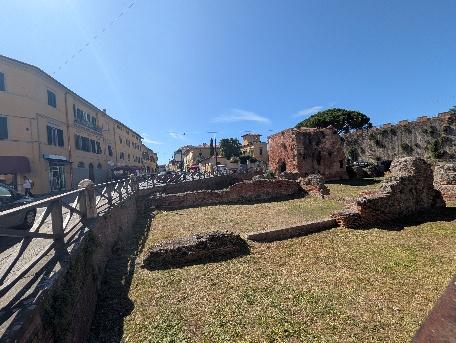
Figure 38: The Baths of Nero in Pisa
So, with a heavy delay I was eventually on my way to Pisa, hopping off at the stop closest to the Leaning Tower, to say I had seen it. Like with Il Duomo in Florence, if you truly want to experience the Tower and the rest of the monuments in Piazza dei Miracoli – Museo delle Sinopie, Museo dell’Opera el Duomo, Cathedral and the Camposanto – one has to purchase a ticket. There are currently 7 different possible ticket combinations. Moving swiftly on, I worked my way over to the Baths of Nero, which is the only surviving part of Roman Pisa left standing, and isn’t even from the time of Nero, but more likely Domitianic. Heading south I stopped for a while in Piazza Martiri della Libertà to sit in the shade before trying to get into the Gipsoteca di Arte Antica dell’Universita di Pisa to discover that there was some kind of talk or conference going on there so I chose to not enter. At this point I chose just to walk towards the train station and try to find somewhere to get some food. I managed to get a Chicken Caesar salad in the Piazza Vittorio Emanuele II to fill me up a bit as I’d have to be checking in to the airport around dinner time and a 21:30 flight.
Unfortunately, the Museo delle Navi Antiche di Pisa was only open in the mornings, so I hadn’t be able to visit it. Somehow on my route walking around I hadn’t been able to see any of the central Piazzas or shopping streets – the Piazza dei Cavalieri and Corso Italia, so I wasn’t overly impressed with the city, though I’m sure it has a lot more to offer than what I saw!
The Pisa Mover from Pisa Centrale station to the airport was on time and all fine but unfortunately my flight was delayed by just shy of an hour so it was just before midnight when we landed, luckily I had grabbed a few slices of airport pizza (my first pizza of the trip) whilst waiting for my flight. I sped through Gatwick to get checked in and asleep as quickly as I could.
‘Our Sicilian Honeymoon’
Between the 11th and 17th of May, my wife and I were in eastern Sicily for our honeymoon. We decided to stick within Europe for our post-wedding break, and where better for sun, sea and classics than Sicily?
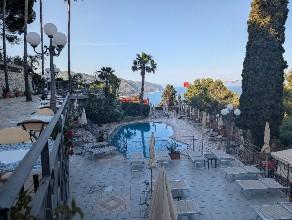
Figure 1: Hotel Ariston Pool and Terrace
We were based at Hotel Ariston in Taormina, sat on the hill below the Greco-Roman Theatre. Taormina really is one of the most beautiful towns in Sicily, gorgeous views all around from every viewpoint! We had agreed a split between relaxing, activities and day trips. It was looking like gorgeous weather all week, and we had planned for – staying poolside on arrival day, Catania exploration on day 2, cooking class and boat trip on day 3, Reggio-Calabria trip on day 4, Isola Bella and an evening opera show on day 5, and then a wine tasting on Etna an Taormina’s Greco-Roman Theatre on day 6, before a morning flight home on day 6 (the curse of living on the Isle of Wight, you need so much longer to get home).
Hotel Ariston’s pool was deeper than first expected (2.4-2.7m), but it was nice to relax next to on arrival day after our early flight and warm transfer up from Catania. Taking a stroll into Taormina that evening, we grabbed the first of a many gelati, and dinner in town, before returning to the hotel for bed.
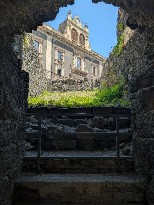
Figure 2: The view from the amphitheatre of Catania
Getting to Catania was pretty easy via public transport. A quick journey on the local bus down to Taormina-Giardini station, then about a hour on the train. As you would expect of the second city od Sicily, it was chaotic and busy, and with the train station being near the coast there was a slight walk, through some rather rough areas, to the centre around the Via Aetnea. Catania’s ancient past survives in a few places –
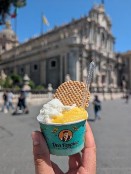
Figure 3: Gelato and the Duomo
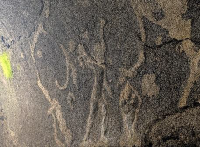
Figure 4: The remains of the Achilliane Baths Stucco
The Amphitheatre, several bath houses and the Greco-Roman Theatre and Odeon. I was under the impression that the amphitheatre was just viewable from above, but it turns out you can walk down into it and around the remains, so we did! First ancient site in Sicily ticked off! After that it was down the Via Aetnea. After a short sit by the elephant fountain to eat our gelato and drink some water, we headed into the Duomo. Charlotte likes churches and I like cold buildings when its 30 degrees!
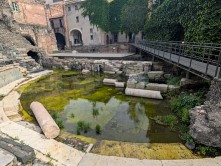
Figure 5: The orchestra of the Theatre
The main sites in Catania are grouped together across 3 tickets, so our Duomo entry fee also covered entry to the Terme Achilliane, which are a small, excavated section of Roman baths beneath the Duomo. The Terme were quite cool, in both senses of the word, with a central vaulted room and several channels running to it. On the vault were the remains of stucco decoration, you could just make out putti and vines. Our last stop in Catania was the Greco-Roman Theatre and Odeon. Tucked away behind a row of buildings, the size of the Theatre surprised me, especially knowing there’s an Odeon tucked away behind it too! The strangest part of the Theatre is the orchestra now being underwater as a stream bubbles up in it. It was a rather late return back to Taormina so instead of going out to dinner, we enjoyed the hotel’s buffet for dinner (though perhaps we should have noted what the cost was per person).
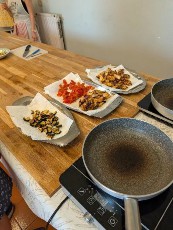
Figure 6: The caponata being prepared
We were up and out at about 09:00 the next day to make our way to Porta Messina for the cooking class, where we were joined by around 6 other couples, predominantly American. After a quick visit to the fruit and veg market and the butchers, we headed to Chef Massimo’s villa to cook up a large lunch. We prepped all the food in one big go, with a couple of water breaks, before sitting down to eat. The first course was a caponata along with a ricotta and tomato salad and ricotta-stuffed courgette flowers, we mad our own maccheroni pasta and the sun-dried tomato pesto that accompanied it, then meatballs wrapped in lemon leaves and braised branzino for the main course. It was lovely! All so tasty and we stuffed ourselves on each course before remembering that there was more food to come. Once we’d had our fill, we had to rush off to return tour hotel, get changed and take a taxi down to Naxos port for our boat trip up and down the coast. This was Charlotte’s honeymoon highlight, we spent two hours on the boat, in the glorious sunshine, going up the coast from Naxos to Spisone beach via Capo Taormina, Isola Bella, Lover’s Cave, Blue Grotto, Elephant Rock, and more.
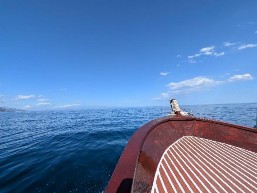
Figure 7: Sea and sky from our boat
The sea and sky blending together in a glorious shade of blue. There was even time for a prosecco and swimming stop on Mazzarò bay (though Charlotte and I were the only two to go in the water). Once we had returned to Naxos we took the bus back to Taormina and headed out for dinner and an evening stroll.
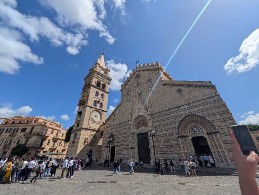
Figure 8: The Duomo of Messina
Day 3 was a fairly early start as we took the bus back to the train station and pootled up the coast to Messina, where we had some brief time to check out the outside of the Cathedral there, with its’ large astrological clock before we took the ferry across the Strait of Messina to Reggio-Calabria. We strolled the length of the town stopping in a few places for lunch, before returning to the northern part to visit the Archaeological Museum. And why did I divert our honeymoon from Sicily to the mainland you may ask? Why did I drag my patient wife away from the pool and beaches to visit a museum? Why, the Riace Bronzes of course! The absolute highlight of the museum (which was altogether very good and split across 3 floors) are the bronzes. These 5th Century BC statues were found in the sea in 1972, and whilst we still don’t know much of the details surrounding them, they both stand around 6 ft 6 inches standing in the contrapposto style, with the eyes of statue A made of calcite, teeth of silver, and lips and nipples of copper. It is assumed that they carried spears and shields and wore helmets or wreaths that have all since been lost.
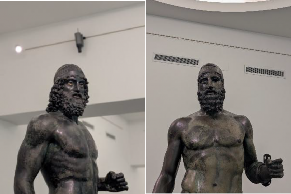
Figure 9: The Riace Bronzes
After taking over 1000 photos in the museum, and killing my phone battery, we made a quick stop at a tech shop to buy a cable for my power bank before heading to the coastline to see the statue of Athena Promachos before strolling up the sea front and back to the port for our return ferry.
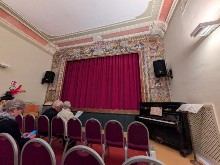
Figure 11: The Nazarena Theatre stage
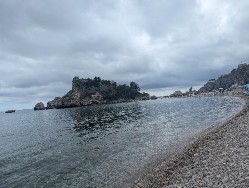
Figure 10: Isola Bella comes over all grey.
Friday came around and it was going to be our beach day at Isola Bella followed by our pool day back at the hotel, one long relax of the honeymoon. Whilst we managed to sit at Isola Bella for a few hours, suddenly (and rather rudely) the clouds came over and it got all grey. We tried to tough it out for as long as we could, though there was no change, so we headed back to the hotel pool for an hour, still waiting on the good weather to return, before giving up , grabbing spritzes from the hotel and reading our books on the terrace whilst we waited for the evening to come around, at which point we got dressed up all fancy-like and headed out to the Tetro Nazarena for an operas and arias show, which was a great performance by the flautist, pianist and tenor.
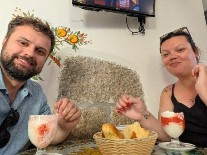
Figure 12: Granita & brioche at Bam Bar
Saturday was supposed to be our day at the Etna vineyard, but there was a train strike, and we were planning on using the trains to get closer to the vineyard before getting a taxi. In the end it wasn’t the trains that let us down, but the buses. I guess as buses were being used to cover the trains, no buses that could have got us closer to Etna were running, we were waiting at the bus station for about 45 minutes and nothing departed apart from those going direct to Catania airport.
So, we cancelled our wine tasting and headed into Taormina, we started with a visit to Bam Bar for their granita and brioche bun (made famous on the TV show White Lotus) – a wonderfully tasty and cooling treat to start our day in town.
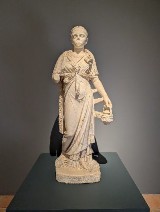
Figure 13: A statue of a young priestess of Isis from the exhibition
We certainly wolfed them down! The weather was much more on-brand on the Friday, so we popped into a few shops to stay cool and buy souvenirs, before Charlotte headed back to the hotel to get ready to go to the pool, and I had a quick whip round the ‘Da Tauromenion a Tauromenium’ exhibition at Palazzo Ciampoli, an exhibition that was date to finish in November 2024, but was still going as a rolling exhibition. After returning to Charlotte and the hotel pool we stayed there for a bit, soaking up the sunshine and floating in the water, before climbing up to the Greco-Roman Theatre – if you ever do this trip, never go up and over the hill via the stairs from the coach park, always go around to Porta Messina and then climb the slope, much easier on the legs!
Figure 14: The view over the Greco-Roman Theatre to Etna
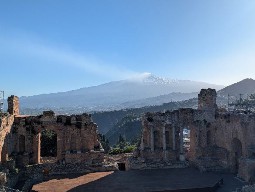
Figure 14: The view over the Greco-Roman Theatre to Etna
The wind really picked up as we reached the theatre, and you could see dust devils everywhere, but the view over to Etna was unmatched. Sitting in the sun on the cavea of the theatre really made us appreciate the time we’d spent in Sicily and the majesty of the place. There was something almost liminal about it. We swung by our favourite eatery from the week – Cisterna del Moro – for dinner and then grabbed some gelato on the way back to the hotel to pack ahead of our 7:30 pick up on Sunday morning.
Figure 15: Our happy selves sat in Taormina Theatre
My Macedonian Mission – Kings, Christians, and a lot of bling!
by Dr. Kerry Phelan (@KerryLPhelan on X/Twitter)
One of the necessary responsibilities – perks? – of my job is travelling to Hellene’s destination countries and carrying out the regular in-person audits of the hotels that we use for our school groups. And in May 2026, Thessaloniki was my main port of call.
While I was chatting with one of the hotel staff after one such audit there, she asked me about my first impressions of Greece’s second largest city; I gushed enthusiastically about falling in love with Thessaloniki, and indeed the wider Macedonia area, and she replied by perfectly encapsulating her home city as being ‘Athens light’. And that summed it up perfectly; a smaller, stylish and more relaxed alternative to Athens, Thessaloniki is an urban gem for those in search of a destination that combines ancient history, art, spirituality, and gastronomy.
But let’s start at the beginning. Convincing my husband to accompany me on my recon trip to northern Greece was easy enough – any excuse to escape from the usual weather back home! – but what proved to be more challenging was convincing him of the need to hire a car and not only chauffeur me around (no, I’m certainly not brave enough to drive in Greece!) but to actually come along with me to one essential landmark after another; this took far more nagging than it ought to have done!
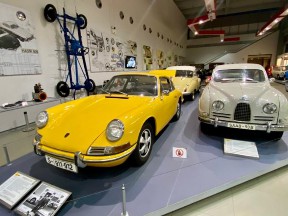
For the Macedonian mission to begin, we had to be at the airport at an ungodly hour since our Ryanair flight took off just after sunrise; on the plus side, of course, that always leaves time on the first day to squeeze in some visits. And so, on the way from the airport to our hotel in Thessaloniki, we stopped off at the NOESIS Science Centre & Technology Museum (approx. 15-mins from the airport by car). The Technology Museum is divided into three main exhibits: Ancient Greek Technology, Classic Cars, and the Technopark. For me, of course, I most enjoyed exploring the hall of Ancient Greek technology; displaying brilliant reconstructions of the hydraulis, Archimedes’ Screw, the Antikythera Mechanism, Ctesibius’ Water Clock, and Ptolemy’s Astrolabe to name just some of the highlights.
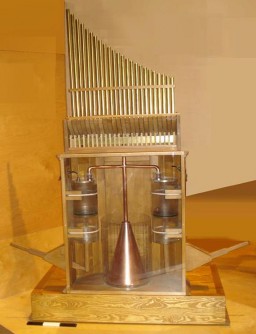
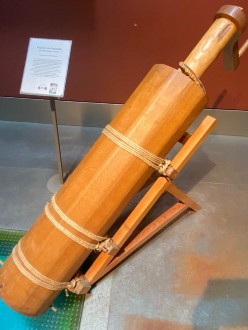
It’s a compact exhibit and has some information cards in English (though not many, and so it would be worth taking the 360 tour of the hall before visiting with a non-Greek speaking group of students!). My husband, however, was more impressed by the Classic Cars on show. And, surprisingly, I must admit that we both actually enjoyed the physics experiments in the Technopark; there were many hand-on tests and examples for visitors to try for themselves, from electricity to magnetism, mechanics, and even optics. While this exhibit is very generally aimed 8-15 year olds, it was clear to see from other visitors also that it was actually quite fun for students and adults alike!
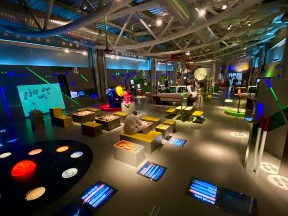
Moreover, NOESIS is home to an impressive Science Centre too, which has numerous screening on offer with a mix of Greek and English language presentations (as such, planning in advance would be a must); unfortunately, we didn’t have enough time to watch either an astronomy show at the Planetarium or a 3D movie in the Cosmotheatre (it was a feature on dinosaurs that day), nor to experience one of the spectacles in the motion Simulator – by this stage, we were starting to feel the effects of that very early start! But I would certainly recommend just a brief visit like we did, or even a full day there for those with younger children; it certainly offers something a little different to do when travelling to or from the airport.
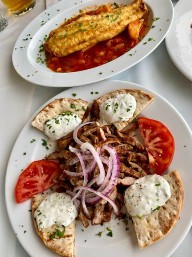
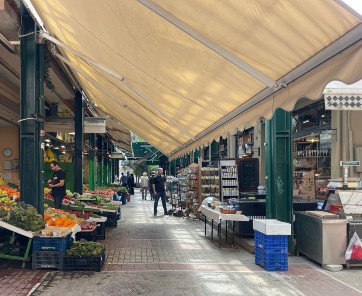
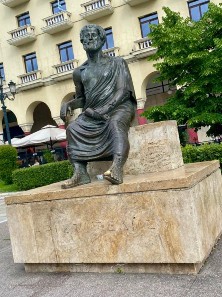
After checking-in to our hotel – and a brief power nap! – we set off that evening to explore some of nearby attractions. First we headed towards Athonos Square; this is a small but very vibrant market area which is now a popular stop for foodies, given the abundance of traditional tavernas and cafés serving original Greek dishes and trendier street food. In addition to the eateries, stalls selling fruit and vegetables are mixed in with cobblers and artisan crafts and jewellers; it was lovely to stretch our legs, and just meander through the narrow paved streets of the market, taking in the bustle of both shoppers and hungry tourists. Less than a few minutes away, Aristotelous Square is one of the most famous spots in Thessaloniki; sitting on the waterfront, this grandiose space was designed by French architect, Ernest Hébrard, in the early 20th century to mimic the sophistication of traditional European architecture. Named, of course, in honour of Aristotle – who is honoured with a statue there – at one end, this central Square is formally flanked by the Electra Palace Hotel and Olympion Cinema, and the other overlooks the Thermaikos Gulf; the remaining sides surround its visitors by shops, restaurants and bars and, as such, it’s a great spot to eat, take in the sea views, or just enjoy some people-watching from the many public benches dotted around. There, we enjoyed a meal – what the guy sitting on the next table assured us was the best Greek fast food in the city! – before walking back to our hotel.
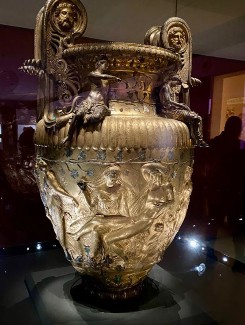
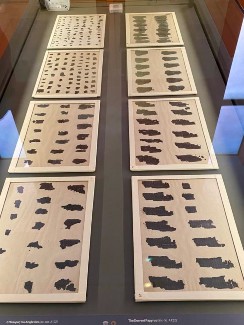
On our second day, I led my husband on a jam-packed walking tour of Thessaloniki; I wanted to squeeze in a much as possible, since I had a full itinerary to explore more further afield for the rest of the trip. Up first was the Archaeological Museum of Thessaloniki, one of the largest museums in the country and the central museum of Northern Greece. Its immense collection covers the history of Macedonia from Prehistory until Late Antiquity. I could easily dedicate this entire blog to all the thrilling pieces that we saw (but I fear that Sarah might already want to enforce strict word limits to my future blogs!), but some of the more notable artefacts include the Derveni Crater, an incredibly sophisticated example of 4th century BC metalworking. It used as a depository urn for the deceased’s ashes in one of the Derveni Tombs, and its gold hue derives from its physical composition: bronze and a large quantity of tin. Its elaborate decorations constitute a hymn to Dionysus and the main side of the vessel depicts his wedding to Ariadne. Likewise, seeing the carbonised remnants of the Derveni Papyrus, found on top of the covering slabs of one of the Tombs, actually gave me goosebumps. The main part of the text consists of a prose allegorical-philosophical interpretation of a theogonic poem, written in dactylic hexameters and ascribed in antiquity to the mythical poet Orpheus (it was likely written by the Athenian, Euthyphron, a contemporary of Socrates, who is known from the work of Plato); it’s an invaluable ancient text – its often referred to as the oldest European ‘book’ – that offers a glimpse into ancient Greek philosophical and religious thought.
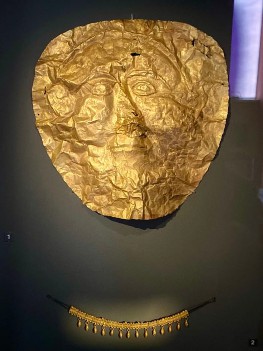 The final example is Gold Death Mask from the cemetery of Sindos (which contained over a hundred and twenty graves); while men were buried with their weapons and armour, this Mask belonged to a female grave from about 510 BC, and thus singled out the deceased as a very distinguished person.
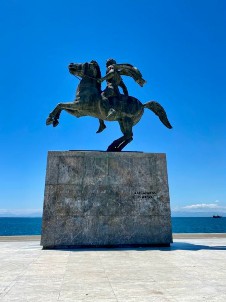
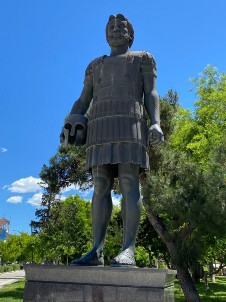
From the Museum, we walked to the Monument of Alexander the Great and Bucephalus. The duo dominates Thessaloniki’s Nea Paralia, and has been (understandably) one of the city’s most photographed sights since it was unveiled in 1974. Less than 5-mins away, and with considerably fewer tourists vying for the most instagrammable picture, stands the Monument of Philip II. A bigger draw – shame on them! – is certainly the White Tower, which is located just across the road from Philip’s statue. Built in the 15th century, the Tower became a prison under the Ottomans, it is now a museum and iconic landmark for visitors to Thessaloniki.
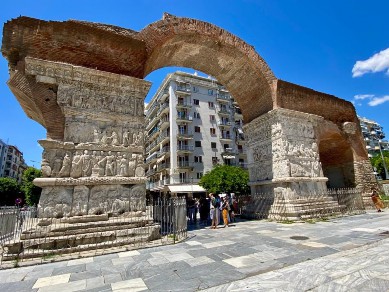
Leaving the waterfront and heading back to the urban heart of Thessaloniki, we went next to the Palace of Galerius. Galerius chose Thessaloniki as the eastern capital of his empire, and this required a massive building project: including the Palace, Basilica, baths, Octagon, and Aspidal Hall. Though the Palace complex and the Apsidal Hall were both closed on the Monday that we visited, much of the remains of the Palace complex can be seen from perimeter fence. The nearby Arch of Galerius is much better preserved than the Palace remains; it was built in honour of the victorious emperor when he returned to Thessaloniki (around AD 306) after the wars against the Persians. It’s now one of the few remaining examples of Roman imperial relief art in Greece.
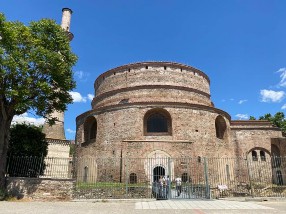
The Church of Agios Georgios – know more widely as the Rotunda – is located close by to the Arch. Built around AD 300, it was originally part of the imperial complex, mostly likely as a temple dedicated either to the Cabeiroi (chthonic deities) or to Zeus. In its sixteen centuries of existence, it transformed from a pagan monument to a Christian church, and then to into a mosque. In spite of the continuous changes in its use, the monument always kept its characteristic circular shape.
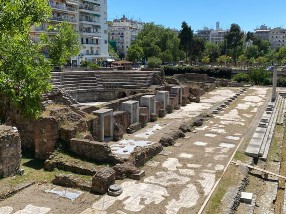
Unfortunately for us (well me, I suppose, as my husband was happy enough to have one less museum to visit!) the Museum of Ancient Agora was closed due to ongoing renovation works. And so we decided to explore the nearby Basilica of Agios Dimitrios. Because of his status as patron saint of Thessaloniki, this Basilica is perhaps the most important early Christian monument in the city; according to tradition, Agios Dimitrios was imprisoned at the Roman bath house and martyred with a spear in AD 303, and a small church was built over the saint’s tomb. Centuries of renovations and rebuilds ensured the status of the Basilica remained important pilgrimage centre throughout the Byzantine Period, and Christian worship was still permitted in a small area of the building even when it was converted to a mosque under the Turkish occupation.. Now, visitors can descend the stairs that leads to the underground Crypt of the Basilica, part of the original Roman baths. There is a small exhibition dedicated to the worship of the saint and the history of the church is on display. It mainly includes Byzantine pottery, sculptures, coins, and inscriptions.
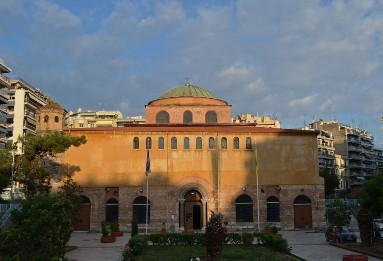
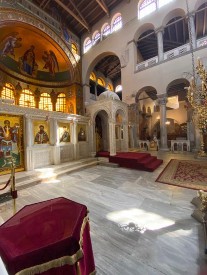
Our final stop was the Church of Agia Sophia, , which served as the metropolitan church of Thessaloniki throughout much of its history. Based on its architecture and decoration, the building was probably erected during the third quarter of the 8th century AD, and replaced an earlier church dedicated to Agios Markos which was likely destroyed by the great earthquake of AD 618 and the fire that followed. The present-day Church bears the shape of a Greek cross with a dome on top; the tower on the northwestern corner was a Turkish addition.
That evening, we walked to Ano Poli – Thessaloniki’s ‘city above the city’ to have something to eat. We stopped at Tsinari, a charming part of the Ano Poli, with a more traditional vibe. The few tavernas there quickly filled with tourists and locals alike as we finished our meal and dragged our tired feet back to the hotel.
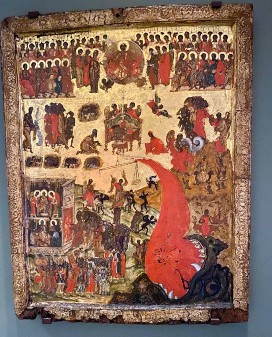
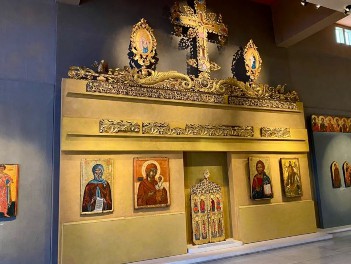
 After completing a full accommodation audit after breakfast, I rejoined my husband and we went to the Museum of Byzantine Culture. Within its eleven large galleries, all aspects of the Byzantine and post-Byzantine culture, with most artefacts from Thessaloniki itself. Moving from one room to another, the displays transition from late antiquity to Byzantium (icons, murals, mosaics, early Christian tombs, and artwork) and expound the consolidation of Christian culture, funerary practice, worship, and everyday life.
One icon that really stood out was the Last Judgement; there was so much to look at in the imagery but demons drifting the many sinners towards the mouth of Hades was hard to tear your eyes away from.
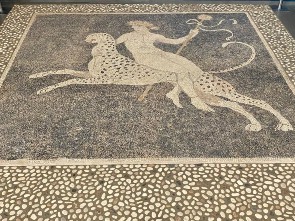
Afterwards, we set off from Thessaloniki towards Pella (approx. 50-mins drive by car), the capital of ancient Macedonia and the birthplace of both Philip II and his son Alexander the Great. We were keen for a coffee break, and opted to do the Museum first, rather than the site, and it worked out to be far better in this order. The Archaeological Museum of Pella (approx. a 20-mins walk from the site) has a magnificent collection on display; these are laid out in a number of distinct sections, featuring finds from private homes, public buildings, religious sites, tombs and the palace. For me – as with most other visitors, I imagine! – the elaborate mosaics were the most remarkable of all.
The Dionysus Mosaic, for example, was part of a pavement of the so-called Dionysus House (325-300 BC) and the details are exquisite. The scene has the god seated on the back of a panther; the god’s head, hands, and feet are delineated with lead wire, and white fired clay was used in the areas of his eyes and curls.
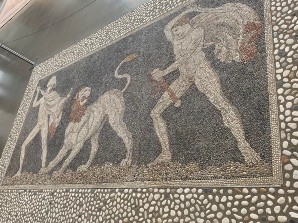
Moreover, the nearby Lion Hunt Mosaic depicts the moment when two huntsmen, one on either side of the lion, are about to strike the animal; it’s multiple colours (black, grey, white, and red) render it immediately striking, while capturing the movement of the lion moving forward but looking backwards, with his front paw stepping over the foot of the man drawing back his arm on the right.
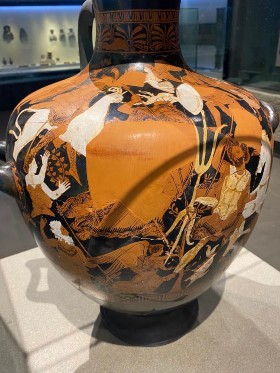
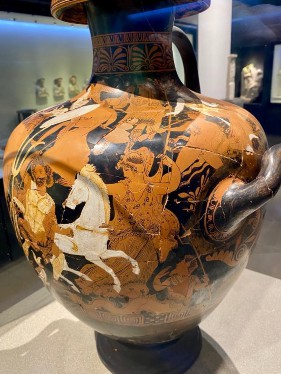
One final piece worth noting has to the red-figure Attic hydria (used as an urn in the cemetery of the agora at Pella) represents the contest between Athena and Poseidon for the honour of naming the city of Athens. Ascribed to the workshop of the Pronomos painter (late 5th-early 4th century BC), Nike is depicted as being about to crown Athena’s olive tree, with Zeus and his lightning bolt hovering nearby.
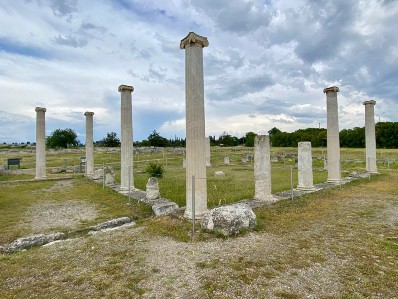
To be honest, I could have spent all day at the Museum but the next stop was a visit the Archaeological site for Pella (for which it’s necessary to purchase a separate ticket, FYI). Overall, the structure there might be a little underwhelming to those who have travelled extensively around other ancient sites– there’s little to see on the surface at the site, and the overgrown pathways made it trickier to navigate coherently – and there’s little archaeological remains to actually see on the ground. But for me, as a particular admirer of Alexander the Great (and, as my students would attest, an even bigger fangirl for Philip II!) the visit to the site was non-negotiable. And, I found it to be incredibly evocative; now, this may also have been due, in part, to the fact that my now-grumbling husband had opted to sit in the car with the air conditioning blasting (the late afternoon sun was relentless and the site has little shade), and that I actually had the site pretty much to myself. Visiting the Museum first certainly provides context for the subsequent site visit and would help visitors get a sense of its significance.
The site comprises of the agora, the impressive Dionysus House (the largest house in Pella) with its standing columns, other residences, Sanctuary of the Mother of the Gods and Aphrodite, public archives and baths, and potters’ quarters. The agora is particularly interesting; it was built in the last quarter of the 4th century BC – covering approximately 7 hectares, or 18 acres – but was likely destroyed in an earthquake in the 1st century BC, yet a wealth of finds from this specific area attest to its size and multiple uses in terms of manufacturing, administration, and commerce.
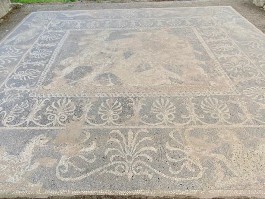
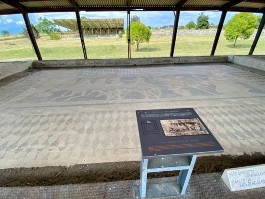
 But the main highlight must be the Helen House (325-300 BC); named for the in-situ mosaic depicting her abduction by Theseus, and another representing the 13
Amazonomachy. Both the sunshine and the roofed structures under which the mosaics are preserved made it more difficult to see the details of the pebbles – unlike the museum where the lighting was much better – but it was certainly a treat to view them in the context of the House itself.
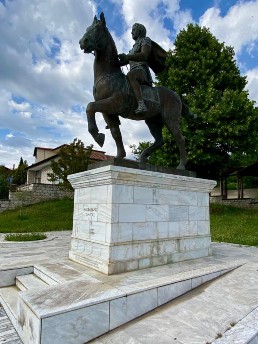
The Palace of Pella (approx. a 20-mins walk from the Museum) only opens at weekends – I could’ve cried! – so I only got to peek through the fence at it. There was further disappointment in that, as we drove into the centre of the modern town at Pella, there was nothing open (no shops or restaurants, not even a stall selling the usual touristic tat!). We did see some local roadworks in the area that might have been disruptive for visitors but, given how quiet both the museum and the site actually were that day, the eeriness of the town might have been due to lack of footfall. Still, it was worth passing through just to get a snap of the (yes, another!) Alexander and Bucephalus statue on the main square.
Day 4 was a busy one. Our first stop was Amphipolis (just over 60-mins drive from Thessaloniki) to visit both the site and Museum, and indeed the famous great Lion statue on the west bank of the Strymon river. The stunning Archaeological Museum of Amphipolis is home to a range of artifacts from the Athenian colony of Amphipolis and its surrounding area, essentially transitioning through the city’s Classical, Hellenistic, Roman and Early Byzantine (7th century AD) periods. Details about the archaeological finds are well-documented on the Museum walls and supported by frequent references to ancient literature; for example, information on the evidence of the wooden bridge that connected the city with its harbour – and the iron-cased wooden piles of which it was made – is pleasantly corroborated by a quote from Thucydides’ account of the Battle of Amphipolis (422 BC).
 I was delighted to finally see the Sphinx of Kastas, which was first unearthed in 2014; archaeologists found the intact head of one of the two sphinxes who guard the entrance of the Kasta Tomb (which dates to the last quarter of the 4th century BC). The marble head, slightly damaged on the nose, wears a polos and fine band on her head, while her curls falling on her left shoulder. Traces of a reddish colour still remain on the Sphinx’s head.
Across the road from the Museum, we explored the extensive site (currently free to visit) where excavations have uncovered considerable stretches of the city’s monumental walls, gymnasium, sanctuaries and a number of private buildings; the most impressive is the late Hellenistic dwelling with frescoes.
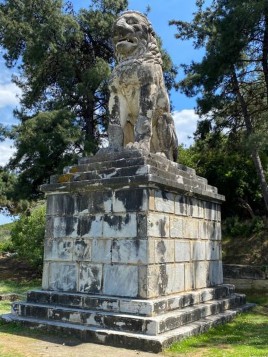
 The Lion of Amphipolis, a 4th century BC monument set up in honour of the admiral Laomedon from Lesbos (an important companion of Alexander the Great). Originally, the structure was made of limestone and sat atop a square base surrounded by a colonnade of Doric semi-columns; the anatomical details, such the veins on the Lion’s body, are astounding but the story of the initial discovery of some of its parts in 1912-1913 – with more found in the 1930s – give further weight to its symbolism and legendary status.
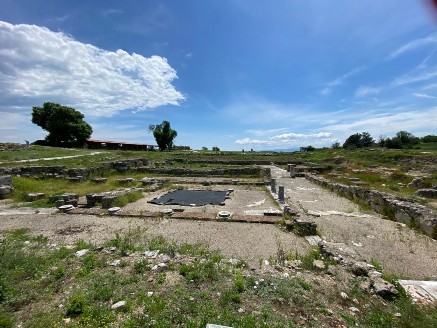
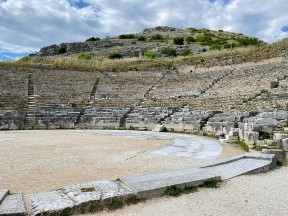
 Next up was Philippi (another 60-mins drive away), a UNESCO World Heritage site. The site itself was probably one of the busier spots that we visited on this trip, but it wasn’t heaving with tourists like major sites in Attica and the Peloponnese. The large site is characterised by three distinct layers of Hellenistic, Roman and Christian (Byzantine) occupation. Originally, just a colony founded 360 BC, Philip II conquered the city and named it after himself; he ultimately added a wall around the city and built an acropolis. One of the few elements still visible from Philip’s reign is the Theatre – the first structure after entering the site via the main gate – and which still dominates the area just below the acropolis. Originally built in the 4th century BC, most of what stands today is the result of Roman renovations (and the restored theatre is still used for the annual Philippi Festival that usually takes place in July-September). Augustus re-founded Philippi as a Roman colony, and he reshaped the Greek city with new public buildings, Forum, bath houses, temples, and even public toilets. The remnants of the existing Forum were built during the reign of Marcus Aurelius (AD 161-187), and visitors can walk around its huge open square surrounded by columns.
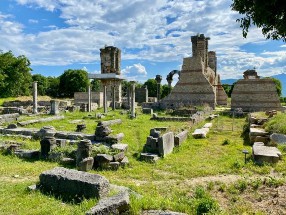
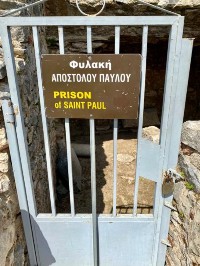
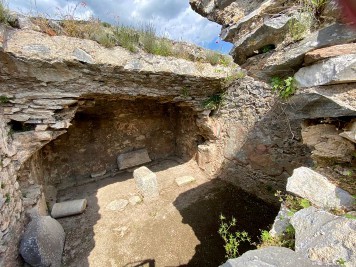
But most of the people exploring the site were taking pictures of one spot in particular: the the Apostle Paul’s ‘Prison’. St. Paul visited the city in around AD 49 and he baptized the first Europeans here and founded the first European Christian church in Philippi. The ‘Prison’ isn’t actually a prison at all, but an underground reservoir but the story of St. Paul’s public flogging and imprisonment at Philippi ensured that this spot became a place of worship and was decorated with frescoes.
Without much shade on the site, I left my wilting husband at the café, beside the main entrance, with a lovely outdoor seating area (and a cooling misting fan) while I walked to the neat little Archaeological Museum of Philippi, situated at the edge of the site. The ground floor exhibits most of the historical and visual material (inscriptions, sculptures, vases, coins, and jewellery) of the city of Philippi and its region from the prehistoric period until the end of Roman antiquity. On the upper floor, there is a presentation of the Christian city (inscriptions, architectural pieces, and mosaics) from the Early Christian period, through the city’s decline in the 7th century AD, and up until its complete abandonment after the Turkish conquest of the late 14th century. The collection is not very large, but there are some splendid pieces:
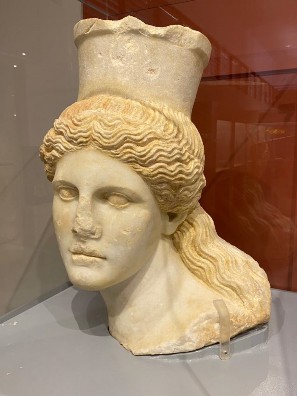
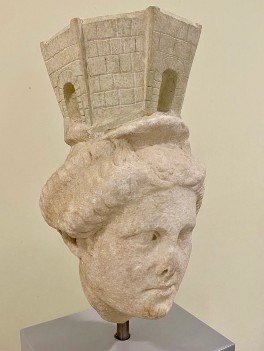
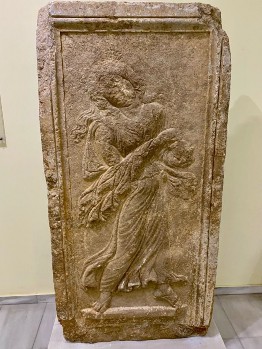
An unusual piece was the head of a priestess, connected to the Goddess of Luck of the City of Philippi (older studies claim this head belongs to the personified Goddess of Luck herself), with the crown representing the walls of the ancient city. It dates to period of years of Philippi being under the rule of the emperor Hadrian (AD 117-138). Another one that stuck with me was the Dancing Maenad from the portico of the stage building of the Roman Theatre (2nd century AD). She belongs to the followers of Dionysus; she is shown dancing feverishly with her hair loose about her shoulders, both her peplos and her cloak trail after her, and she carries a severed head in her hands.
The archaeological site of Aigai, its Tombs, and Palace is situated in the centre of modern Vergina (approximately 50-mins drive from Thessaloniki). First, we headed to the renowned Museum of the Royal Tombs, which is located within the town. On my bucket list for a very long time, I was ecstatic to be able to see Philip II’s tomb. The tomb itself was first discovered in 1977 and the subterranean Museum was built (in the early 1990s) directly over it to preserve them in-situ beneath the reconstructed Great Tumulus.
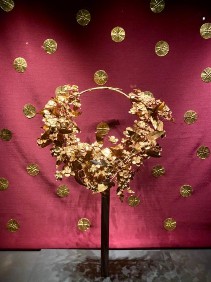
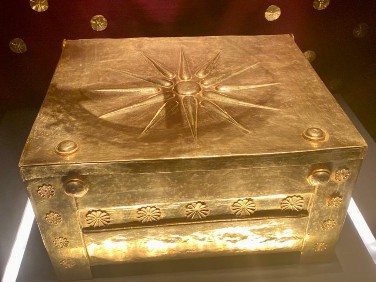
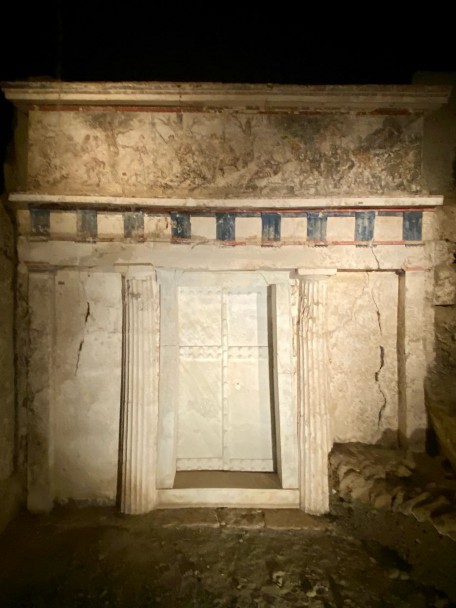 Inside the deliberately darkened corridors, we were dazzled by the wealth inside the royal tombs; gold material evidence is usually among the smaller collections of finds at most Greek museums but, here, there was extraordinary amount of bling at every turn. The gold gleamed from multiple display cases; examples like golden myrtle wreath of Philip II’s wife, that was laid on top of the gold and ivory couch of the antechamber, and the shimmering larnax (adorned with the star of Vergina) that contained the bones of the young royal wife, the Thracian princess Meda. I could list so many more pieces but it’s safe to say that the ostentatious display in Philip II’s tomb is nothing short of mesmerising!
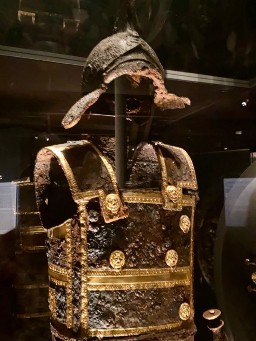
Philip’s suit of armour was also trimmed with gold; his iron helmet bore an embossed head of Athena, while golden lion heads button up the cuirass and stand as royal symbols. His shield, again embossed with lions and numerous Nikes on the interior, is exceptionally impressive on the exterior side: it was coated with gilded stucco in such a way that it seemed to be made of gold from top to bottom; at the centre, a gold and ivory representation of a Greek warrior vanquishing an Amazon likely depicts the tragic clash of Achilles and Penthesilea. These stunning treasures, alongside the finely crafted silver and bronze vessels, other weaponry and jewellery, vividly illustrate the opulence and craftsmanship of the ancient Macedonians.
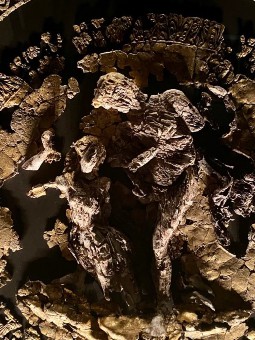
After stopping for in the town for a refreshing pomegranate juice – I guess that means I’ll be back for another visit then, right? – we continued walking up the hill towards the Palace, visited the Theatre that was site of Philip II’s assassination in 336 BC. The Theatre of Aigai, one of the largest theatres of the Classical period, was abandoned in the mid-2nd century BC.
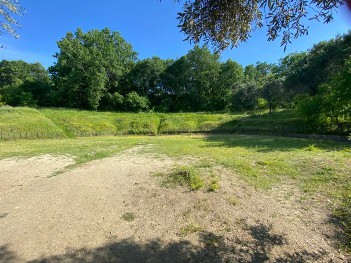
While the ticket for Polycentric Museum of Aigai officially includes the Central Museum Building, the Royal Tombs, the Theatre, and the Palace of Aigai, we were surprised to find that the solitary guardian on duty wasn’t interested in checking tickets; I expect that this will change in the near future, as new stations and facilities have been recently built close to both the Palace and the Theatre sites (and with a café/shop set to open beside the Theatre). Like at Pella, we were the only ones visiting that afternoon and, as such, we could enjoy the whole site to ourselves.
The Palace of Aigai is simply stunning. Built as part of Philip II’s great building programme, this basileion stands as the largest building of classical Greece – housing banqueting halls, a sanctuary to Heracles Patroos, a library/archive, and a palaestra – but it was destroyed in the middle of the 2nd century BC, after the Roman abolition of the kingdom. With ten columns on south and eleven on the north, the two stoas on the façade of the Palace were the first fully developed two-storey stoas in Greek architecture. Several of the palace’s massive Doric colonnades had been restored with a combination of original and replicated blocks, and some of the intricate mosaic floors also survived. The view was also wonderful; a vast portion of the Macedonian plain was visible from atop the hill.
For me, the Palace was my favourite visit of the entire trip (Philip’s Tomb was a close second …).
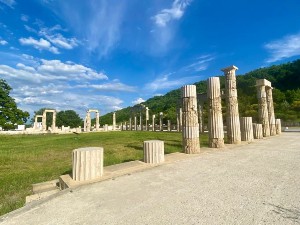
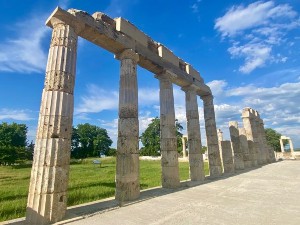
Lastly, we visited the Central Building of the Polycentric Museum of Aigai, which is located a short way out of town, (approximately a 5-mins drive away, along the main road). Inaugurated in December 2022, the Museum retains a fresh and contemporary vibe both in terms of its modern architecture and even more so in its display of artefacts. Unlike the atmospheric darkness of the Museum of the Royal Tombs, the Central Building offers an expansive light-filled space dedicated to the broader archaeological findings of the ancient city of Aigai. The display dedicated to the Queens of Macedon – in particular the golden grave goods and bridal veil of the ‘Lady of Aigai, the wife of Amyntas I, who died at the beginning of the 5th century BC – were especially dazzling. This Museum was truly a sensory overload.
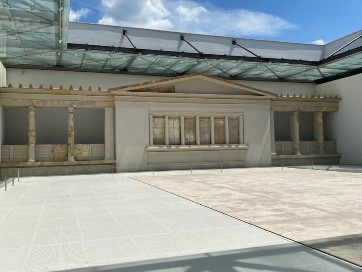
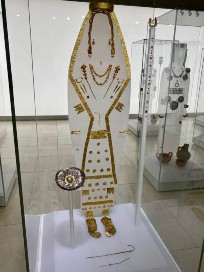
If all of that wasn’t enough, we decided to finish off the day with a visit to Mieza (approximately a 40-mins drive from Vergina); specifically, the School of Aristotle, the idyllic, park-like area – surrounded by lush vegetation and flowing springs – where the young Alexander was tutored by Aristotle. With some help from Plutarch (Life of Alexander, 7.4) to set the scene, I got goosebumps visualising Alexander and his companions walking on the grassy terrace to take their seats on the stone benches carved along its sides.
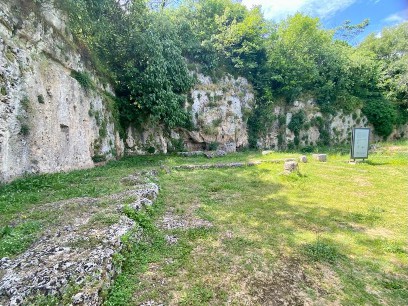 The site, also known as the Nymphaeum, is also home to numerous small caves, thereby making it an ideal place of worship for the Nymphs; originally used as a stone quarry in the 4th century BC, it seems clear that the site had become a sanctuary dedicated to the Nymphs in the later decades, with the addition of a portico and monumental gabled entrances to the caves.
While in this area, I couldn’t pass on the opportunity to visit the Theatre of Mieza. Archaeological research has produced three distinct phases in its construction, and the earliest dates from the late Classical/early Hellenistic period. After the middle of the 2nd century BC, a new Theatre with a stone stage was built, but it was likely smaller than the Hellenistic one; this version had partially collapsed after an earthquake by the 2nd century AD, but repairs were made to the stage and supporting walls added to the bedrock, keeping the Theatre in use until at least the 4th century AD. The Theatre’s current state remains impressive because the extensive restoration project that was completed in 2014.
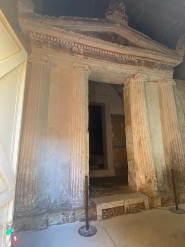
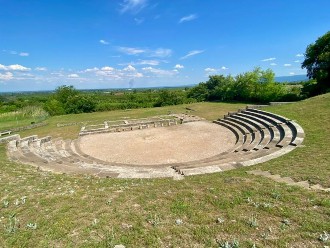 Lastly, we visited the two Leykadia Tombs in the area, both dated to the early Hellenistic period; the so-called Tomb of Judgment, and the Tomb of Anthemia. Ranking amongst the largest Macedonian tombs yet to be discovered, the former takes its name from the spectacular fresco on its façade, a scene that depicts a Macedonian soldier being escorted by Hermes Psychopompus to face Aeacus and Rhadamanthus, two of the three judges of the Underworld. The sole depiction of this subject that we know of in ancient art, it refers to the scene in Plato’s Gorgias where Zeus describes appointing his three sons – Minos is missing from this depiction.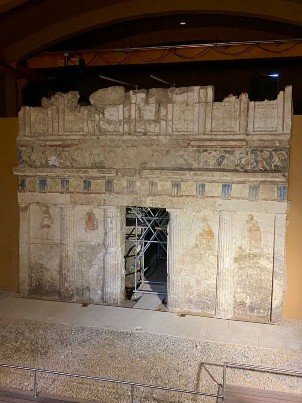
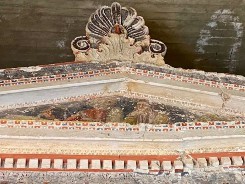
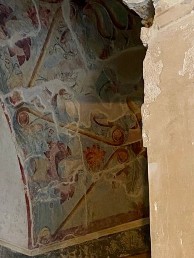
Normally, only the Tomb of Judgment is open for visitors but the guardian at the site very kindly offered to take us the short walk away to the locked Tomb of Anthemia. Also known as the Tomb of Palmettes, it was named for the flower that features prominently in its artistic design. It was built, like the Tomb of Judgement along the ancient road that connected Mieza with Pella. On the pediment’s tympanon, there is a painting representing a mature couple on a banqueting couch, and equally striking is the fresco on the ceiling of the antechamber with floral branches and water flowers.
After an early morning hotel audit on Day 6, we drove to Dion (approximately a 60-mins drive from Thessaloniki). One of the features that makes Dion stand out most from other archaeological sites is its proximity to Mount Olympus and the natural beauty of the grounds in which the ancient remains stand. Many people visit Dion as much for the flora and fauna there (maybe not the mosquitoes though) as for the archaeology. For me, it was a necessary inclusion on our trip because Dion was home to the temple of Zeus where Alexander the Great made a sacrifice before departing for Asia.
Lots of school groups here when we arrived but the vast size of the Archaeological Park (spanning a total of 150 hectares, or 1,500 acres) meant that it didn’t feel busy or indeed crowded. Dion is most noteworthy for its many Hellenistic and Roman sanctuaries: the Sanctuary of Demeter (the earliest Macedonian sanctuary known to date, from the late 6th century BC) Sanctuary of Isis (which is almost submerged in water as the site frequently floods), the Sanctuary of Asclepius, and the all-important Sanctuary of Zeus.
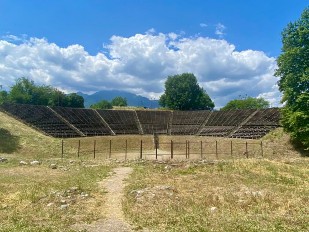
The Hellenistic Theatre is located to the west of the west of the temple of Demeter. It was built on the slope of a natural hill, and most likely dates to the reign of Philip V (221-179 BC); now only the hollow of the original construction is preserved. Research suggests that the Theatre was probably abandoned sometime after 168 BC after the structure started to degrade. Modern wooden seat were recently installed wooden for approximately 4.000 spectators and, every summer, the the Olympus Festival is held here. The Roman Theatre is located near to its Hellenistic counterpart, and dates from the 2nd century AD; it’s smaller and was built on flat land, but now only a few of the estimated twenty-four benches are currently preserved.
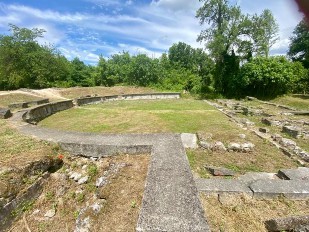
One of the most significant structures in the Park is the Villa of Dionysus. It was built around AD 200, behind a row of shops and workshops and next to a bath complex. The Villa has a courtyard with an ionic peristyle and a well that led to the tablinum. The most impressive room in the building is the squared banqueting hall, the floor of which was adorned with a multicoloured mosaic depicting the god Dionysus and thereby lending his name to structure.
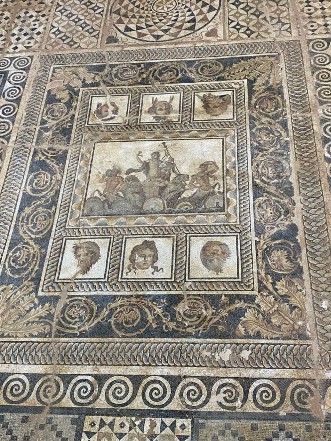 A short distance away, in the town of Dion itself, is the Archaeological Museum of Dion (for which it’s necessary to purchase a separate ticket to that of the Park). One of the two Museum building was purposely built to house the massive mosaic of the Triumph of Dionysius, which was only discovered in 1987 and fully restored in 2015. The mosaic depicts the god Dionysus in a commanding pose, riding in a chariot pulled by sea panthers; above and below this scene, theatrical masks are on display in honour of the god’s connection to drama. The contrasts between the colours in both the waves and in the mythical creatures is especially beautiful to see in person.
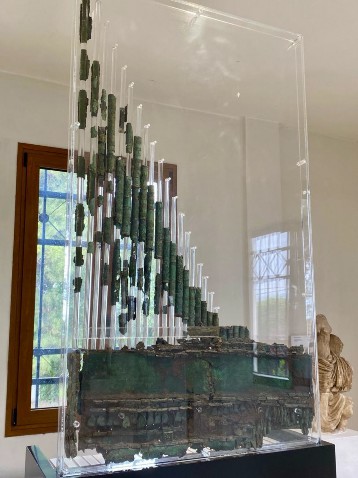
The second Museum building contains a lovely collection of the material evidence found at Dion and a few other sites around Mount Olympus. One of the most striking artefacts was the Hydraulis of Dion, discovered in 1992 by archaeologists working on the inside of a 2nd century AD building that they believed to be a metal/stone workshop. The rows of bronze pipes and plaques assured them that they had uncovered a musical instrument known as a hydraulis, but one which was constructed in the 1st century BC. It stands as the first such instrument discovered in Greece, and the oldest example ever discovered. A forerunner of the church organ, it’s remarkably similar to the reconstruction that we saw on display in the NOESIS Science Centre & Technology Museum.
 When driving to Dion and indeed walking around the Archaeological Park, the connection Mount Olympus was ever present. After the Museum, we opted for a closer look. Olympus is the highest mountain in Greece at 2,918 metres (9,573 feet) and its location – so close to the Aegean Sea – gives it a unique climate that often leaves the peak shrouded in clouds and frequented by storms. On our drive along the winding roads up towards the Holy Cave of Agios Dionysios, we experienced this firsthand. Just as we set of on foot to find the Holy Cave (where the saint lived as a hermit ever since his arrival at the mountain in 1542), Zeus mocked our lack of preparation with relentless downpours – Dion had been lovely and sunny, and so coats and the all-important-umbrella had be relegated to the car boot – mere minutes into our little hike to find the Cave. The trees and foliage on either side of the dirt path that we were following did nothing to shelter us from his divine derision and – I’m sorry to say – we had to abandon our mission and retreat back to the car. We had a little more luck with the nearby Old Agios Dionysios Monastery, and managed to take a brief walk around the crumbling site of the original 16th-century fortress-like structure – which was destroyed by the German troops in 1943. Built at an altitude of 900 metres, and devoted to the 29
Holy Trinity, it appears that some restoration works are being carried out to preserve the site but it does resemble a building site in places as a result. Even though this part of the trip had been a bit of a washout, the views up and down the slopes of Olympus were entirely worth it – and I only rolled my eyes once when the clear skies returned as soon as we were back at base level.
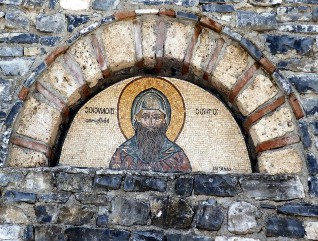
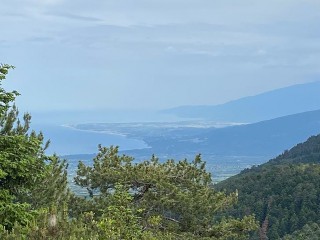
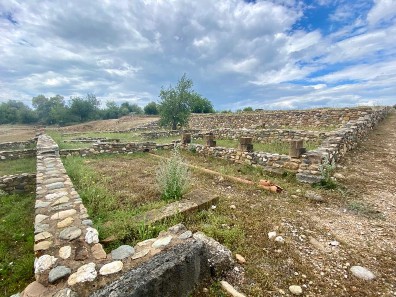
On our penultimate day in northern Greece, I had one final stop planned on our itinerary, and that was Olynthus (approximately a 60-mins drive from Thessaloniki). The remains at the site of Olynthus provide a unique chance to wander through the residential streets of a classical Greek city; indeed, the foundations on the site offers the best evidence there is for Greek houses of the late fifth and early fourth century BC. It is clear to see from the grid-like remains that a large area of new housing had been deliberately planned in rectangular blocks, with wide parallel avenues intersected by vertical streets.
Some houses had beautiful mosaic floors, which stand among the oldest Macedonian examples dating from the late 5th to early 4th century BC. One example shows the Bellerophon on a galloping Pegasus, thrusting a spear at the Chimera; the black and white pebbles lend a dramatic flair to the aerial combat scene.
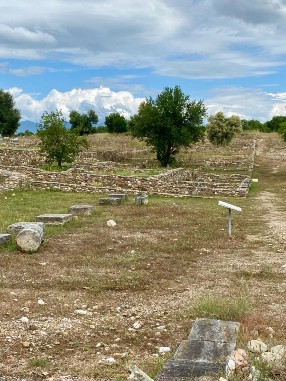
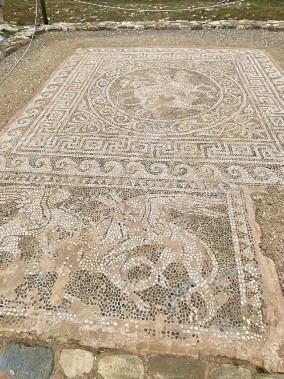
The site can be tricky to navigate as there are so few information boards; as such, advanced preparation is essential before visiting (or potentially consider hiring an archaeological guide). That being said, the tiny on-site Interactive Museum does a good job of escorting visitors on a virtual walk through the streets of Olynthus with its innovative digital exhibit. Using 3D reconstructions and augmented reality for the purposes of storytelling, it was an interesting way to add some context to the complex site. While we were there, children, teenagers, and adults alike watched the videos and explored the digital collection of the artefacts that were uncovered on the site.
As a treat for our weary feet, we took the rest of the afternoon off and drove down to Kassandra peninsula of Chalkidiki; my husband didn’t require much persuading for this stop! We pulled in at Sani, a beautiful location close to Nea Fokea. With views like this, I couldn’t think of a better way to end our trip. 31
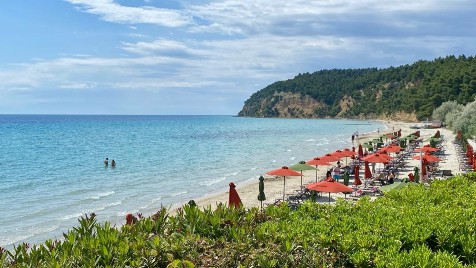
Our flight home was at midday and so we had little time to see anything else (and there were so many more places on my list!) on the last day, given that we had to return the hire car first. But I guess that only means that I have to go back again (right, Sarah?); I mean, I did drink the pomegranate juice …
I write this, the final blog of my 8-day Turkey adventure from Istanbul to the Lycian coast, on the streets of that famous tourist hotspot of Kalkan, enjoying, it must be admitted, a bit of a final ‘Brit abroad’ evening, watching the Champions League final with an Efes!
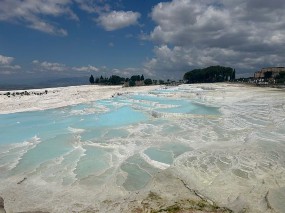
The beautiful Travertine terraces of Pamukkale
I last wrote as I pulled into Hotel Anya beneath the dazzling travertine terraces of Pamukkale. If you haven’t seen them before, these are gleaming white limestone cliffs that sit above the village, at the top of which is the sprawling Hellenistic / Roman city of Hierapolis. Having enjoyed another lovely authentic Turkish meal at ‘Mom Eve’s’, in which son waits tables while (presumably eponymous) mum and grandmother cook, I got a good night’s sleep, before heading to the south gate of the site for an early entry at 9AM (the same gate serves both the terraces and the site at the top). Up until then I had not really encountered a queue worth its name on the trip, but here for the first time, I needed to queue for about 30 minutes before getting in. I was definitely right to get there early; by the time I departed that afternoon the queue looked nearer the hour-long region.
Anyway, ascending the travertines is quite the experience, something that no guidebook can really prepare you for, but it should come with a couple of warnings. In order (rightly) to protect their iconic gleaming white shimmer, you are not allowed to walk them in shoes – and not all of the ascent is smooth – indeed ascending some of it is quite a painful experience. The ascent is also busy, narrow, slippery and steep, but not dangerous if taken slowly – just not for those who like to stay on terra firmissima! As you go, you can paddle in the first rank of the basins, which get an ever-more heavenly shade of blue as you get further up.
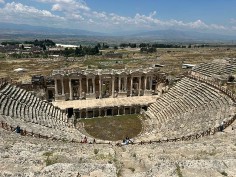
The theatre at Hierapolis.
Once at the top, you get a wonderful view over the best of the basins, before you can turn to enjoy the vast site of Hierapolis. This is your classic Hellenistic / Roman metropolis, featuring a wonderful theatre, and all sorts of agorae, stoae and religious buildings. There is also a very decent museum with a particularly fine collection of sarcophagi. One thing to bear in mind when visiting this site is that, because of the ‘insta-worthy’ terraces, it gets extremely busy – indeed it was busier than Ephesus – and on account of this, queues at the kiosks are long. So bring enough of your own water – for the first time on my trip, I had to go waterless for a pretty hot and sweaty hour! One can pay an extra fee (not much – about 10 euros) to swim in the ancient, naturally heated ‘Pool of Cleopatra’, which I did, and would say is just about worth it as a one-off experience! Bear in mind also that what goes up must come down; if you park at the south gate (as I did), you have to de-shoe and descend the travertines, which, by this time for me yesterday – thirsty and with sore feet – had somewhat lost their initial wonder. If one is more interested in the archaeology than the travertines, I would suggest they consider entering the site at the north gate.
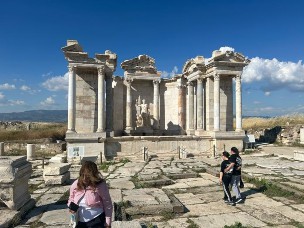
The Trajanic ‘nymphaeum’ at Laodikeia on the Lycus – a site that I strongly recommend for its awesome scenery!
On the recommendation of a guidebook, and given the nature of my trip, I had purchased a 40 euro combined ticket for Hierapolis and Laodikeia on the Lycus, an ancient city some 10 miles south, perched in the foothills of the Taurus mountains. I have to say that, having spent five sweaty hours in Pamukkale / Hierapolis, and with a three-and-a-half hour drive down to Kalkan needed that evening, there was part of me thinking at 3PM yesterday that I would cut my losses here. But I did not, and how happy am I that this was the case. This site stands as the polar opposite to Hierapolis. Whereas Hierapolis is touristy, crowded and perhaps over-rated, this site is stunning, natural and – when I did it – pretty much empty. I suggest that you visit it more to experience the raw beauty of the landscape than any particular ancient feature of it, but it does have a wonderful, atmospheric theatre carved into the hillside, a magnificent ‘nymphaeum’ with a brilliantly preserved statue of Trajan, and a Byzantine church that commemorates the fact that St Paul visited there. I have to say, it was quite special to walk such a naturally beautiful site, and be pretty much the only person there!
After my initial scepticism, I ended up far exceeding the 1 hr limit that I had set myself to view the site, but eventually had to remind myself that I had one of my longest drives of the trip – down to Kalkan on the Lycian coast – still to do. This
drive, which takes you straight through the Taurus mountains, is stunning, but at times a little hairy – not due to the quality of the roads, which are fine, but due to the approach of the rural Turkish to driving – road markings seemingly mean absolutely nothing to them!
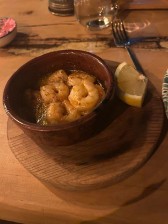
Delicious garlic prawns at Eski Ev, Kalkan!
Anyway, at about 9PM last night, I checked myself into the extremely well-located ‘Old Town Hotel’, and quickly set about making up for lost time, enjoying the culinary delights of the authentically Turkish rooftop restaurant of Eski Ev– to such an extent that I may return tonight – and then finding out which rooftop cocktail bar served the best mojito!
Part of my reason for staying in Kalkan was to ensure that I had a fun ending to my trip, but an equal part of it was to see the Lycian sites of Xanthus, Letoon and Patara. After a slightly later start than what I have been doing so far (I wonder why this was?!?), I set out this morning into the field for the final time, on the short drive from Kalkan to the capital of the ancient kingdom of Lycia, Xanthos. I had been pre-warned by all my guidebooks not to expect to be able to see too much here, but there is plenty for one to get their teeth into, with a very easily accessed Classical Greek and Roman town, and a much harder-to-access Lycian-cum-Hellenistic city on the acropolis.
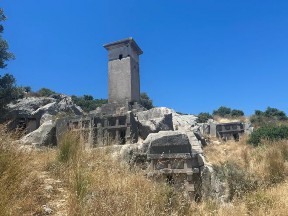
The ‘Harpy Monument’ at Xanthos, a site that it is in need of a little TLC!
Feeling intrepid, I attempted to navigate my way through the undergrowth to get there, and after plenty of snapping foliage and scrabbling over rocks, I made it to the top – something that was well worth it, both to see the ancient Lycian walls and the famous ‘Harpy Monument’, a majestic tomb that is inscribed with the undeciphered ancient language of the Lycians. Whoever is in charge of the site simply must tidy it up and make sure this important bit of it is made more accessible!
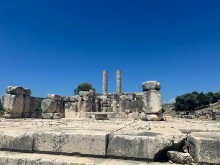
The temple of Leto at Letoon.
From the city of Xanthos, I headed across the river from which it derives its name to Letoon, a sanctuary to Leto and her twin offspring Apollo and Artemis. This site has an unusual feature, in that, due to how low it is, much of it is flooded, including the orchestra of the theatre, which is now used as a gigantic trough
for the flock of sheep that reside there! The highlight of this site is undoubtedly the trio of temples, with the magnificently well-preserved temple to Leto alongside ones dedicated to each of her offspring. Having forked out quite a lot on entry fees this week, it was refreshing not to have to pay a penny for either Xanthos or the Letoon. Whether this was by chance (they both did have unused ticket offices) or the norm now, I do not know!
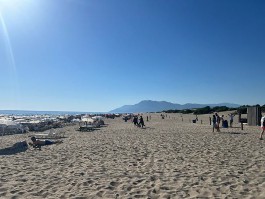
The 18 km-long Patara Beach, a great place to cool off after seeing the ancient site!
My final archaeological stop of the trip was the beautifully preserved city of Patara, located conveniently above the longest beach in Turkey (of 18km!) This Hellenistic / Roman city stands in stark contrast to the aforementioned sites, as on account of its location, it has been very well protected by the Turkish government, and charges quite a steep entry fee! But of course, as part of this, you get prime access to the best of Patara beach, which for me was a wonderful way to end my holiday – a trip that has been a genuinely inspiring experience for me. Buoyed by positive spirit, I’m now hoping that Arsenal win Champions League final, but regardless, am going to make sure I enjoy my final night overall – not before, however, I pay my dues and list some of my true ‘superstars’ of the entire trip:
The restaurants: I have come to the conclusion that all Turkish food is outstanding. Full stop. But the culinary highlights of my trip have been Ejder, Selcuk (authentic backstreet Turkish stuff), and Eski Ev, a wonderful rooftop restaurant in Kalkan which probably served me my best meal of the trip – garlic prawns followed by delicious beef skewers – so good in fact that I may go there again tonight!
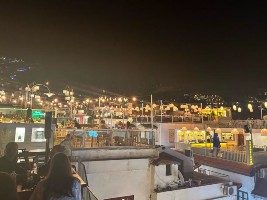
The rooftop terraces of Kalkan.
The hotels: Put simply, Ayasultan (Istanbul), Helen (Canakkale), Elaia (Bergama), Cella (Selcuk), Anya (Pamukkale) and Old Town (Kalkan) were all ideally located for my purposes, and all perfectly decent hotels with absolutely nothing to complain about. Other than Old Town, the rest provided wonderful included Turkish breakfasts. Cella perhaps the nicest of the bunch.
Heroes of the trip:
My trusty companion throughout my adventure!
My hired Renault Clio, automatic with all the gismos – an absolutely faultless and easy car to drive, even for someone who is not renowned at all for their ability behind the wheel.
The Blue Guide – I had armed myself with all sorts of guidebooks for my trip, but this is simply the best for archaeology and culture.
My M&S ‘explorers’ hat given to me for my birthday by my brother – light, comfortable and keeps the sun out!
– The audiobook of Emily Wilson’s Iliad – I only have book 24 to go, which should see me through my drive to Dalaman airport. Listening to this has made for some extremely atmospheric drives across the landscape that inspired Homer!
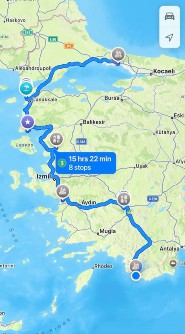 I hate to say it, but ChatGPT, for its on the whole very good recommendations, and even being able to have an accurate guess at which lump of rock I might be looking at!
And finally, the self-explanatory, ever-present, ubiquitous Efes beer!
And on that note…
I am currently writing from poolside at Anya Hotel and Spa, Pamukkale, home of the famous Travertine basins and the Hellenistic city of Hierapolis, which I shall be visiting tomorrow, alongside the city of Laodike, before heading southwards to the final stop of my trip, Kalkan and the Lycian coast. Given I have packed so much in, it seems strange to think that I was in Bergama yesterday when I last wrote. Well what has happened / what have I seen since then?
It should be said first of all that modern-day Bergama is a proper, rural Turkish town, with very few touristic frills. This meant that, as far as I could find, there was only one restaurant – Acropole, at the top of the town, that served alcohol. It also meant that the first morning of Eid al Adha (yesterday) was a real cultural experience, as families were slaughtering and butchering sheep and goats in their own front yards. This is clearly a massive festival for the traditional Turkish rural population – all morning long, incredibly friendly villagers were asking me to join them in their sacrifices – well, not really asking, as none of them spoke English, but beckoning me over. I have to say, the endless bags of innards that littered the sides of the streets, and the streams of blood that were running down them, were quite something!
The start of this festival meant that the archaeological sites did not open until 13.00 – something neither Google nor my AI assistants foresaw, but thankfully my lovely host, Vedat of the charming Hotel Elaia, told me this straightaway, meaning that I did not set a totally pointless alarm! Anyone who has seen the sites of Ancient Pergamum – royal seat of the Hellenistic Attalid dynasty, and probably the pre-eminent city of Asia Minor during its time – will tell you that it is a sprawling metropolis, spread throughout the modern-day town, but the highlight is surely the acropolis, perched high on the hill above Bergama. Given my delayed start, and the fact that I needed to be in Selcuk that evening, I decided to skip the museum (for once!), and to see the red Roman basilica only from the road. Having had my fill of a wonderful breakfast prepared by my host Vedat and then of watching the morning’s sacrifices, I ensured that I was first in the queue when the ‘Asclepium’ – Bergama’s main lower archaeological site – opened its doors at 13.00. This site – a healing centre and sanctuary to the god of healing – had similar significance to its equivalent at Epidauros in antiquity, and I would suggest that an exploration of it is a somewhat similar experience to that of its mainland Greek counterpart – a very nice spot, but bar a rather well-preserved odeion (but not in the same league as Epidauros), relatively, not that much of note to see!
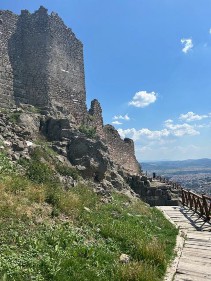
The Byzantine walls of Pergamum
As far as I’m aware, there is not a ‘Pergamum combine’ ticket that allows entrance to both the lower bit – the Asclepium – and the upper bit, the Acropolis, but – from memory – neither were particularly expensive. Anyway, having done the Asclepium, I headed back on foot to my car to drive up to the main event. I had initially planned to take the cable car, but my host had said that that would be a total waste of money. I also would not recommend walking it, as it is a long, steep ascent with very little protection from the sun. If you do drive, yet again, do not make the same mistake that I did in following the SatNav – you end up on some pretty hairy steep cobbled streets – instead skirt the hill on the main road. I would also suggest parking at the last car on the verge, rather than doing what I did in pushing on up the hill – thankfully, a car departed just as I was beginning to run out of options, giving me a dream spot – but had this not been the case, things might have got a little bit awkward!
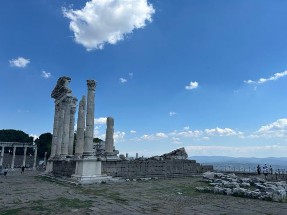
The ‘Trajaneum’ on the acropolis of Pergamum
Anyway, the site of the ancient acropolis of Pergamum itself is jaw-dropping. From the top, you have a 360-view over modern day Bergama and the wilderness of Western Anatolia. The ancient stuff there is also pretty cool. The highlight of it has to be the magnificently restored ‘Trajaneum’, a Roman temple built out of gleaming white marble and on a terrace cut into the hillside. Other stand-outs include the remarkably steep – and gigantic – Roman theatre (put it this way, I was not tempted to descend it!), and the city’s towering Byzantine walls. Given my time constraints, and the fact that it was a boiling hot afternoon, I decided not to descend to the lower agora, but I felt like I got a pretty good view of it – and indeed the ancient aqueduct – from the top!
And so I hit the road heading on to Selcuk, and what I knew from the beginning would be a real highlight of my trip, ancient Ephesus. Firstly, a word about Selcuk itself. Many of the guide-books that I had read in advance had lambasted it as a sell-out and overly touristy. I have to say this could not be further from my experience of it. Getting off the main thoroughfare, I found the wonderful Ejder restaurant for dinner – probably the best Adana kebab that I have had so far this trip (and that is saying quite a lot!) – and then a raki at a wonderful nearby bar. My hotel – Cella Hotel and Spa – was also a step up from those that I had stayed at up until then, though to my despair after a long day in the sun, and then in the car, its pool closes at the rather early time of 18.30.
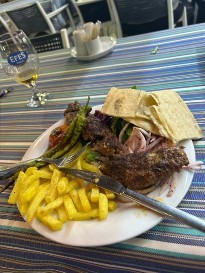
Adana kebab at Ejder restaurant in Selcuk – one of the best things I ate all trip!
Anyway, after a truly outstanding breakfast of freshly cooked Menemem (a cross between scrambled eggs and an omelette, with peppers folded in) at the above-mentioned hotel, I headed out this morning, thinking I would save the best – the ancient city itself – until last, doing the in-town ‘Basilica of St John’ and apparently very good Ephesus Museum first, and not to forget, what little remains of the original ancient wonder of Ephesus – the Temple of Artemis — indeed reckoned as one of the seven wonders of the ancient world.
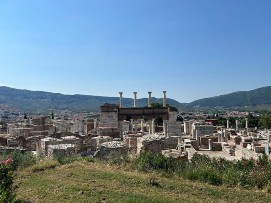
The Basilica of St John in Selcuk
The Basilica of St John is well worth it, built under the Byzantine emperor Justinian in the sixth century, at exactly the same time as the Hagia Sofia, reviewed in my Istanbul blog. It is built on an acropolis above Selcuk called Ayasuluk, which has been inhabited since Mycenaean times, and also features a rather impressive Byzantine-then-Ottoman castle. Conveniently timed to allow me to cool off after a bit of a hike up that hill, I then visited the very well-reviewed Ephesus Museum in town. Given that nothing from it has stuck in the mind, I would say that it is perhaps over-rated, but maybe, in my case it was over-shadowed by what followed it. Even though only one column of it stands, I would still highly recommend a visit to the Temple of Artemis, totally free and an opportunity to see one of the most famous temples of the ancient world. Even from the very limited remains of it, you can tell that it must have been gargantuan!
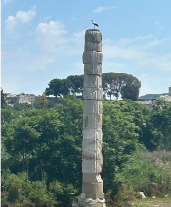
The one column that still stands of the Temple of Artemis at Ephesus – once one of the seven wonders of the ancient world, now a nesting spot for storks!
I then headed on to the main site of the Ephesus ruins themselves. On account of prior recommendation, I made sure that I purchased a ticket that included the terraced housing – something I certainly do not regret (see below!) One can purchase a combined ticket for 65 euros that includes everything mentioned, but I have not yet worked out where the saving is here – put it this way, if there is a gain, it is minimal!
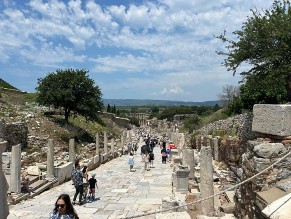
The ‘Arcadian Way’ – the main thoroughfare through Ephesus.
Ancient Ephesus itself is simply jaw-dropping. It had been built up to me in advance of the trip by several sources, and it did not fail to deliver. In fact, it may now be my favourite site of the (post-Mycenaean!) ancient world. What I love about it: the fact that it is so vast, and so well preserved, but lacks the sprawling nature of Pompeii. Basically, if you give yourself enough time to walk slowly round it, you will not miss anything at Ephesus. I am happy with the way I did it, and would recommend it: start at the south gate walking downhill to allow you to enjoy all the wonders of it feeling fresh, and then take your time reviewing the other bits, and stopping at the immersive museum (see below), and the terraced housing on the uphill way back. Iconic features such as the library of Celsus, the ‘Arcadian Way’ (the great marbled street that runs through the middle of the city), and the vast theatre, more than live up to their storied billing for real.
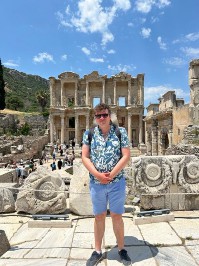
The author in front of the wonderfully restored Library of Celsus.
I want to put a brief word in here for the on-site immersive museum, which in one of my guidebooks was dismissed as ‘not worth it’. For one thing, entry to this museum seemed to be included as part of the general admission ticket to the site, and for another, I feel like it gave the viewer a wonderful idea of what Hellenistic Greek and Roman Ephesus would have been like – through excellent music, graphics and storytelling. Not to mention the fact that it gives its viewer a brief bit of air-conditioned respite from the sweltering heat of totally exposed Ephesus! Entry to the covered terraced housing was also well worth whatever I paid for it. Put it this way – this alone would be the most significant Roman site in the UK. The walkway that takes the viewer above several blocks of insulae is brilliantly designed, and I would describe the whole thing as Pompeii-esque in its illustration of Roman city life.
So that was Ephesus – absolutely fantastic!
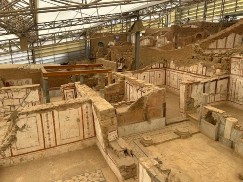
The terraced housing at Ephesus – well worth the additional fee!
And, now, from the Travertine basins of Pamukkale,
Time for an Efes!
Big fan of:
Ephesus immersive museum – badly reviewed, but in my opinion, excellent!
All of the following:
Elaia hotel, Bergama
Cella hotel, Selcuk
Ejder restaurant, Selcuk
Not such a big fan of:
Ephesus archaeological museum in Selcuk – I can’t remember any of this!
A Tale of Two Epic Conflicts
I am writing this from what is without doubt the smallest hotel that I have ever set foot in, the three-bedroom (!) ‘Elaia’ in Bergama, the modern-day town which has been built amongst the ruins of ancient Pergamum. I have also just heard that tomorrow I will encounter the first road block to my itinerary (having so far only added to it, unbelievably!), being informed by my host that the archaeological site of the ancient city will not be open until tomorrow afternoon due to it being the first day of Eid ul-Adha – something that was not foreseen by any website or any of my AI assistants… Never mind!
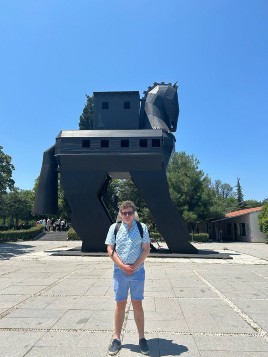
The author fulfilling one of his life dreams – to visit the site of Troy!
A key motivating factor behind me doing this trip was to visit the site of Troy, a city that has loomed over the entirety of my Classical education. For a long time, I have been fascinated not only by the wonderful literature and mythology that centres around Troy, but also the question of to what extent the famous stories are grounded in some sort of historical reality. Recent trips to the sites of Mycenae and Tiryns have compounded my interest in this question.
To illustrate briefly, the main challenge with assessing whether the mythological Trojan War has any historical grounding is that our oldest sources for that conflict – the Homeric epics of the Iliad and the Odyssey – were composed in their extant written versions at least four-hundred years after the Bronze Age setting of the events that they depict. The myths survived the four-hundred-year Dark Age that preceded the invention of the Greek alphabet via oral transmission, a poetic tradition of which scholars have long recognised that the Iliad and the Odyssey – both full of easily memorised type-scenes, formulae and epithets – are part.
On account of this four-hundred year time lapse between event and source, and the fact that the Homeric accounts of the Trojan War have been clearly and brilliantly ‘souped up’ with the involvement of heroes and gods, the only way to attempt to assess the veracity of a historical Trojan War is to turn to archaeology. And this is exactly what a Homer-fascinated amateur Heinrich Schiemann did in the late 1800s. On a life quest to solve the mystery of the historical Trojan War, and on the
recommendation of a similarly obsessed amateur, American Frank Calvert, in 1870 Schliemann brought his team to a somewhat unassuming hill in Western Anatolia called Hisarlik, some 30 kilometres south of the Turkish port at the mouth of the Dardannelles, Canakkale. Schliemann’s endeavours are a famous story of equal archaeological enterprise and violence. Using dynamite, he ripped the heart out of Hisarlik (and layers of precious arachaeology), in order to find his longed-for citadel of Priam. Try as he might – but perhaps unsurprisingly – for three years, he failed to find a city buried within Hisarlik that matched Homer’s depiction of Troy as ‘high-walled’, ‘well-built’, ‘rich in gold’ and ‘sacred’, but on June 15 1873 (the day before his operations were set to conclude), he made his long-awaited, game-changing find: the ‘Jewels of Helen’, part of ‘Priam’s Treasure’, some 9000 brilliantly wrought golden objects. Having famously dressed his wife Sophia in these jewels, Schliemann was convinced that he had solved the mystery which had driven much of his life. The problem: it was very quickly shown that ‘Priam’s Treasure’ and the ‘Jewels of Helen’ must be considerably older than any historical war about which Homer composed; it has since turned out that they are over a thousand years older than any possible historical Trojan War.
After discovery, ‘Priam’s Treasure’ has a fascinating afterlife which has resulted in it being currently housed in the Pushkin Museum in Moscow, but this is a story for another day.
All these stories of archaeological endeavour and intrigue are told brilliantly in the Troy gallery of the Archaeological Museum of Istanbul. Indeed that whole gallery is fantastic and I would recommend it to anyone wanting to get an idea of just how much of an archaeological palimpsest Hisarlik is – short of going to the site itself of course! From my experience of both of them, I would say that the aforementioned museum does a much better – and more interesting – job of this than the recently opened Museum of Troy at the site itself, which seems really to downplay the Homeric aspects of the site – understandable, perhaps, but that of course is the main reason why, for centuries, people all the way back to Alexander the Great and Julius Caesar have made the pilgrimage to Hisarlik!
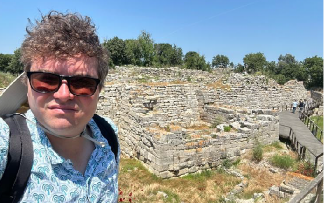
The walls of Troy VI – the ‘well-built’ walls of Homer’s Troy?
But if Schliemann blew it all apart, what is actually at Hisarlik itself? Well, thankfully quite a lot, thanks to the excellent work of Schliemann’s successors, first Wilhelm Dorpfeld and then Carl Blegen. The first identified no fewer than nine cities on the site, and excavated the towering walls of Troy VI – the one from the thirteenth century BC – corresponding with the zenith of the Mycenaean period in Greece, and the latter did much to uncover Troy VII, another (perhaps more likely?) contender for Homer’s Troy. The sprawling site itself is brilliant to walk around – you stay on one elevated walkway the whole way round and get a real sense of the many layers of Hisarlik. It is also tantalising to compare the modern-day feel and topography of the site with Homer’s description of it. For one thing, as per Homer’s depiction of Troy as ēnemoessa, the top of Hisarlik is indeed very windy – something that almost cost me my hat! For another, the hill perfectly fits the location depicted in Homer. From the top (Priam’s Citadel?), you gaze out over a flat plain that extends to the Aegean (the plain of Ilium?) with the island of Bozcada (Tenedos?) lurking just offshore. As you walk past the slightly slanted (as per the Iliad), ‘brilliantly built’ walls of Troy VI (with its massive towers), it is hard not to consider the possibilities of whose footsteps one might be walking in…
The view from Hisarlik over the plain of Ilion.
‘Anzac Cove’ – Beautiful now, but setting of one of the bloodiest battles of WW1.
During my free time tomorrow, I think I will expand more on my thoughts about the veracity of the Trojan War, but for now, I want to touch on some of the other things that I have done over the past 48 hours. Feeling that yesterday (Istanbul to Canakkale) may have just ended up as a lot of driving, I decided to do a whistle-stop tour of the beaches of Gallipoli in the evening, before crossing the Dardanelles into my base for the night. On my four-hour drive from Istanbul, I had listened to two episodes of the Rest is History on the subject, which had equipped me brilliantly for what I was going to see. The drive from ANZAC Cove up the cliff to the various memorials is truly stunning and heart-wrenching – so grim are the stories of the heroes on both sides that fought there.
The Trenches of Gallipoli
Given the purpose of my trip, I found the way in which the Gallipoli campaign inherits the legacy of the Trojan War particularly fascinating. For example, on being assigned to Gallipoli, that most patriotic of war poets, Rupert Brooke, was apparently exhilarated by the opportunity to walk in the footsteps of Achilles, and perhaps die a similarly heroic death, but the reality could not be further removed – death en route from sepsis via a mosquito bite. Likewise, Oxford Classicist and British naval commander Edward Unwin had supposedly been actively inspired by the Trojan Horse in his plans to beach deliberately the HMS River Clyde at Cape Hellas – a ruse that in this case did not break the deadlock, but caused a bloody disaster for the British. These anecdotes show just how big an influence the heroic tales of the Trojan War have had on participants in later conflicts – in reality, a much more significant issue than the question of whether the mythological conflict is grounded in some historical reality.
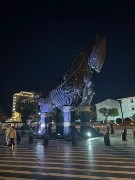
The Trojan Horse of Canakkale
And what else have I done? Well, Canakkale as a city far surpassed my expectations. It is aware of its heritage, with nods to the Trojan War and the Gallipoli Campaign all over the place, and it also (as I found out on a Monday) has a thriving night life!
En route from Troy to Bergama, I stopped at the ancient city of Assos above Behramkale, which has a wonderful temple to Athena situated high on an acropolis with stunning views out to the island of Lesbos, though if driving there, please see below!
I now move on to the Hellenistic section of my trip, with the mega-cities of Pergamum and Ephesus to see over the next couple of days,
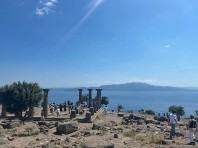
The view of Lesbos from the Temple of Athena at Assos
But now, time for an Efes!
Big fan:
Podcasts and audiobooks when driving – have never really done this before, but listened to the Rest is History in advance of my Gallipoli adventure and am now nine books through Emily Wilson’s translation of the Iliad (brilliantly narrated by Audra Macdonald!)
Turkish hotel breakfasts – basically anything you want!
Turkish motorways – very easy to drive on!
The Troy gallery of the Archaeological Museum of Istanbul.
Nightlife of Canakkale – a real surprise…
The stunning, rural, inland second half of the drive from Assos to Pergamum.
The views of Lesbos from Assos.
Not a fan of:
Driving on Turkish back streets – never attempt to drive through Behramkale, the village beneath Assos!
Being brutally honest, the new museum at the site of Troy (though, to be fair, several of their finds are currently being exhibited at Rome).
The first half of the drive from Assos to Bergama – a slow coastal road with quite a lot of mayhem!
I am writing this in the wonderful surroundings of Gülhane Park, propped at the foot of one of the many towering poplars standing there, much in need of a ‘chill’, having accomplished some 30,000 steps today.
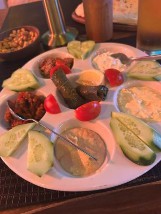
My meal on the first night!
I arrived at this extraordinary city late last night, after my flight was delayed, but quickly set about making up for lost time in assessing whether there was veracity behind the legendary hospitality of the Turks. Any concerns of whether I might get a meal – or even just a drink – at that late hour were short-lived, as I stepped out of my (very conveniently located) Ayasultan Hotel, and was immediately accosted by patron after patron trying to tempt me with each of their particular versions of the classic Turkish kebab and mezze menu.
Trying to abide by at least some basic principles of being a savvy tourist, I ensured that I went one street off the main thoroughfare, and ended up in the fun- but-not-too-touristy-looking ‘Amara Garden’. Not wishing to push the boat out too far on the first night, I ordered – yes, you guessed it! – cold mezze platter followed by a lamb kebab – all of which was as delicious as I hoped it would be, particularly when washed down by several glasses of that wonderful Turkish beer, Efes. Whilst a sore throat did not allow me to follow the locals in partaking in the customary shisha pipe smoking, I did have my first drop of the preferred local spirit – raki – a grape liqueur flavoured with aniseed, which I have to say, when mixed with plenty of water to form the cloudy aslan sutu (‘lion’s milk’), as the Turks call it, was delicious!
Whilst tourism is obviously an essential element of the Turkish economy, and therefore Turks are going to sell things hard, from just one night here so far, I can tell that they are going to be great hosts. I also got my first impression of the (perhaps unique?) cultural status that this part of Turkey holds, as one that is both deeply committed to Islam and yet also very ‘Western’ in attitude. On the table next to me were a young couple enjoying a meal out – he smoking and drinking his way through the night, she, in full hijab, rather more reserved – but clearly enjoying herself!
In advance of my adventure, I had watched an excellent Simon Reeve documentary on Turkey, produced in 2017, in which Reeve does a deep dive into the cultural shift that has happened in the country under their now more-than-decade-long President, Recep Erdogan, highlighting how his long-serving President had used a more visible national alignment with Islam as a means of uniting the country (behind him).
Some of this was undoubtedly apparent in my first day of sightseeing, which took in the historic zone of the European side of Istanbul. Being a Classicist first and foremost, I could not really start anywhere other than the Roman hippodrome, off which seemingly all of Istanbul’s historic wonders stand. This site – totally free – is completely awesome. Three obelisks that would have once decorated the spina – the bit around which the chariots would have raced – still stand to this day, and make it very easy to envisage this as the central hub of Byzantine Constantinople, used not just for racing, but also for imperial triumphs and the burning of heretics!
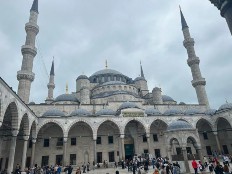
The Blue Mosque
Looming over the Roman hippodrome, with its wonderful domes and spires, is the gift of the early seventeenth century Ottoman Sultan, Ahmet I, to Istanbul, the Sultan Ahmet Camii (or ‘Blue Mosque’). Unlike the Hagia Sofia (see below), this building has never been anything other than a fully functioning mosque – something, to my shame, I had never actually set foot inside, but now was the time. I was surprised to see how plain the interior of this externally stunning building was. Coming from a Christian background, a religion which perhaps has a tendency to downplay the religiosity of its own architectural wonders, I was also surprised to see so much literature available – both on pamphlets and billboards – selling the merits of Islam to the visitors of the mosque. Whether this has always been the case, or is in line with that recent shift of attitude that Turkey has undergone, I do not know, but will perhaps find out over the course of this trip!
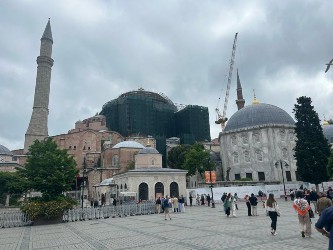
Hagia Sofia
Just down from the Blue Mosque is that jewel of Constantinople, the Hagia Sofia, commissioned by the Emperor Justinian in 532. If you are going to pick a place that encapsulates the varied past of Istanbul, this is it: for some one thousand years, it was the principal church of Greek Orthodox Christianity, then for the next five hundred years, a mosque under the Ottomans, then from 1932 to 2020, a museum, and now, since then, a mosque again. This tension is apparent both in the viewer experience and in the interior of the mosque. Non-Muslims are required to stick to the upper gallery, as the interior is reserved for believers to pray. When Mehmet II captured the city in 1453, he declared brutal, tragic destruction upon many of the Christian artistic jewels that resided within the mosque, and all of the Byzantine mosaics were subsequently painted over during Ottoman rule, but thankfully, due to the heroic work of the Byzantine Society in the twentieth century, some of these have been restored. The very fact that the mosque now hosts a blend of Muslim worshippers, and then Christians and historians of art paying a considerable ticket price to see these jewels of the Byzantine era, and the two groups never crossing paths, encapsulates the somewhat uneasy relationship that Islamic Istanbul has with its Byzantine Christian past, but should perhaps be celebrated as an example of different cultural histories co-existing, and respecting one another.
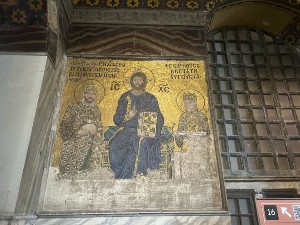
The eleventh century ‘Empress Zoe’ Mosaic
There is no such tension apparent in the viewer experience, or history, of the simply wonderful ‘Basilica Cistern’, the monumental underground water-storage system, built in the reign of the sixth-century Byzantine emperor Justinian I. This masterpiece of Byzantine architecture, which was designed to resolve the issue of the city’s lack of running water supply, was totally unsurprisingly used by the Ottoman invaders for exactly the same purpose for over one-thousand years!
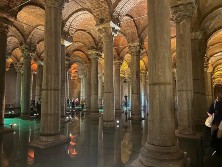
The wonderful ‘Basilica Cistern’
After an excellent lunch of prawns from the sea of Marmara, my afternoon was spent exploring the vast expanse of the palatial seat of Istanbul’s Ottoman Sultans, the ‘Topkapi’ Palace. Once again, this tension between Istanbul’s Ottoman and Byzantine legacy was apparent. Within the grounds of the palace is a jewel of Byzantine architecture, the sixth-century Hagia Eirene (‘Church of Divine Peace’). The relative modesty of this ancient church stands in stark contrast with the luxurious seat of the sultans, which, despite being an expensive viewing (see below), is worth it. Not being particularly clued up on the Ottomans, I was stunned to explore the Harem quarter, where up until the early twentieth century, the wives of the sultan were guarded and attended to by black eunuchs, themselves victims of the slave trade. Nevertheless, it was also fascinating to read of the special place in the community held by the last generation of these eunuchs, and the extraordinary stories of their lives after the end of Topkapi as a palace with the collapse of the Ottoman regime in 1924.
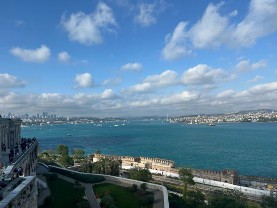
The view across two continents from the Topkapi Palace – including Erdogan’s Camlika Mosque in the distance on the right.
After the visitor to Topkapi has walked through three extraordinary courtyards, all of them surrounded by treasure-filled rooms, they are treated to a truly special view, that of the gleaming Bosphorus, the boundary between two continents, and the mega-city of Istanbul spread before them either side in all its gleaming glory. On the Asian side, one can see very clearly Erdogan’s latest (vanity?) project, opened in 2019, the 100,000 capacity Camlika Mosque, overlooking the whole of the city, and dwarfing even the Hagia Sofia. As I took in this view, I reflected on what a great day I had had, and my key takeaway from my all-too-short stint in Istanbul, that it is a city of potential tensions – of Asia and Europe, of Ottoman and Byzantine past, of Christianity and Islam – which nevertheless finds a way to deal with these in a workable manner. Long may this continue!
But now, time for an Efes!
Big fan:
Efes beer – speaks for itself!
Raki – actually really nice!
The hippodrome – totally free, and awesome!
The Blue Guide – the best, if you want proper guidance on history and art, and a source of some serious panic on my part when I believed I had left it in a restaurant!
Not a fan:
Turkish coffee – I didn’t really enjoy this – somehow too bitter and too sweet – and managed to spill some of it down my jumper for good measure!
Ticket pricing – given everything else is so cheap, the entry fees for foreigners for the Hagia Sofia and the Topkapi Palace are frankly extortionate! Plus I was conned in to buying a double ticket for Hagia Sofia, including a museum that I was never intending to visit!
Bryanston – Latin and Classical Civilisation Sixth Form Trip to Greece.
Dr Ben Pullan, Head of Classics, reflects on the Latin and Classical Civilisation Sixth Form trip to Greece.
A Jordanian Adventure – Part Two
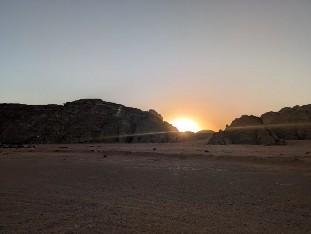
Figure 13: The sunrise at Wadi Rum.
Despite not intending to join Sharon and Tash to watch the sunrise on day 3, not closing my curtains meant I was awake at about 6:45, just in time to see the sun come up over the cliffs across the desert from our domes, as well as spot the two hot air balloons go past.
After breakfast and packing we had two camps to check out – Hasan Zawadieh Camp and Captain’s Camp. The latter of which was owned by the same family that owned the restaurant and hotel we had dinner at that evening (more on that later). Both camps ticked a lot of boxes for us all, and we were subject to the wonderful hospitality of the locals, being fed dates and sweet biscuits, offered herbal tea and cardamon coffee whilst we looked around.
We were all fans of the cave rooms at the Captain’s Camp, complete with hatch in the ceiling to stargaze through!
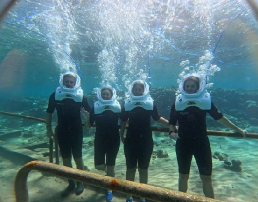
Figure 14: SeaTrek Aqaba
Climbing back in the minivan, we headed off to Aqaba, Jordan’s only piece of coastal city, and the country’s access to the Red Sea. A shorter drive of about an hour, we headed straight to the Royal Diving Club (after a brief bit of redirecting due to road closures on the approach and some unclear road signs).
We thought we’d just be doing some snorkelling, but we were given the opportunity to do a Sea Trek, using bubble helmets, so of course we all said yes! After receiving a safety talk and getting changed into wetsuits and swim shoes, we were walked to the end of the pier and one at a time descended down the stairs where we stopped whilst the helmets were connected to the oxygen tubes and then placed over our heads, before the diver then escorted down the rest of the steps to the seafloor.
Then, having equalised our ears, we had a handrail to follow as we moved along the sand past a coral reef teeming with fish. The drop off from the level we were at to where the diver was taking photos from was quite something! At one point some larger fish did pop up from the depths to have a brief swim before returning into the darker blue. This is something I never thought I would do, and certainly won’t forget doing, what an experience!
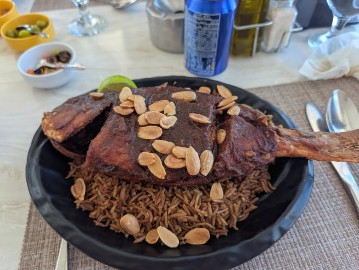
Figure 15: Sayadieh – baked fish with rice and almonds
After surfacing and drying off we headed into central Aqaba for lunch at the Ara Revolt Plaza, with it’s 130m tall flagpole. We ate lunch at Mirwas, and when offered, chose the local speciality fish option; Sayadieh.
We thought, as we had had meat for dinner and lunch so far, a fish dish would be best. It was delicious, and just as filling as every other meal we’d had so far. It was such a large piece of fish, it probably didn’t need all the usual starters, but we ate them all anyway! Hungry work, trekking along the seafloor!
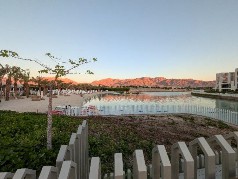
Figure 16: The Hyatt Regency Beach
We were then off to our Hotel, the Hyatt Regency Aqaba, the hotel that has since ruined all other hotels for me (except maybe where we stayed at the Dead Sea). It was huge, it was very fancy, and it was amazing!
We had some free time before dinner and some evening hotel inspections, so we took full advantage of the hotel. We met down at the private beach to discuss everything so far and have a bit of a swim and a relax before heading back to change into our evening wear. Meeting Basim and Abdullah at the front desk we headed first to the Oryx hotel for an inspection, a 4 star hotel, used to hosting sports and e-sports teams it could be good for groups if they have gone as far south as Aqaba.
Hopping back in the minivan we headed to the Sharif Hussein’s House Museum where we learnt all about the Arab Revolt with the Jordanian Heritage Revival Company, seeing weapons, letters, and clothing from the period. Then it was over to the Captain’s Restaurant for dinner.
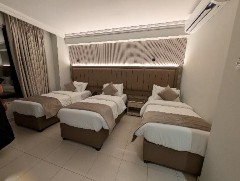
Figure 17: A triple room at the Captain’s Hotel, Aqaba
After a second round of salad and Sayadieh for dinner, we had a brief inspection of the Captain’s Hotel, a 3 star hotel that would be great for groups staying in Aqaba. The restaurant allows for HB, there’s a separate diner for groups at breakfast, it’s all been refitted recently so is modern and up to date, and the on-site pool meets all STF standards. After that it was back to the hotel to pack and sleep ahead of the journey to the Dead Sea on day 4.
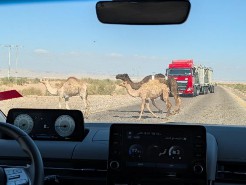
Figure 18: Camels crossing!
We were all up early enough to get down to breakfast in good time, and what a buffet spread it was! I went for the simple option this time and had eggs benedict, (made to order), and some pastries.
It was a long drive from Aqaba to the Dead Sea and our visits on day 4, just under 4 hours or so, though we were able to stop several times (once, unfortunately, due to a flat tire). Just like with the drive from Amman to Petra, the changing landscape as we left the flat plains outside Aqaba to the more mountainous area near the Dead Sea was something that really stuck out, about halfway along the journey we used Google Maps to tell we were the other side of the mountains and gulleys that hide Petra.
We also enjoyed the wild camels that occasionally caused roadblocks whilst they crossed the road! After a little while in the minivan we reached the bottom of the Dead Sea and you then have mountains and cliffs on your right, and the salt pans of the Dead Sea on your left. We drove past the Museum at the Lowest Point on Earth and Lot’s Cave, which may be of interest to some groups with religious studies students.
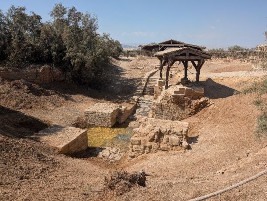
Figure 19: The Baptism Site
The first place on our visit list for the day was the Baptism site and the river Jordan, north of the Dead Sea. I think we were all a little underwhelmed by the Baptism site, especially as the flow through from the River Jordan had dried up.
Instead of being treated with the reverence of what should be an incredibly holy site, it seemed more like a standard tourist attraction, though the requirements to even visit it seemed very stringent – permits, permission, a shuttle bus to take you from the security checkpoint to the car park for the site (though we had permission for the minivan to drive down). We then walked down to the River Jordan, which serves as the line of the border between Jordan and Israel, seeing the colour of the water, I was fine with not taking a dip, though the rest of the group did. There was even a mother and daughter also visiting the site who went in and ducked under the water in a religious manner.
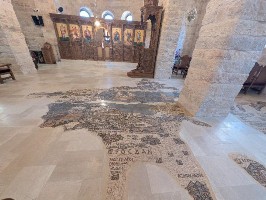
Figure 20: A section of the Madaba Mosaic Map
Departing the site, we headed to Mount Nebo, where Moses supposedly had his view of the promised land before he died. The remains of the Memorial Church of Moses are situated on top of Mt. Nebo, dating from the 4th-6th Centuries AD.
Between 2007 and 2016 a new basilica was basically built over the ancient church, and this now can be used for services, as well as holding mosaics from the site. I got to see mosaics, I was happy! The small museum on site also had some interesting archaeology in from Roman, Byzantine and other periods.
We briefly stopped off at a Mosaic Workshop to talk to the staff before heading to Madaba, where we went straight to the church of Saint George to see the Madaba Map, the incredibly detailed map of the Holy Land, from Lebanon to the Nile Delta (north to south) and from the Mediterranean Sea to the Eastern Desert (west to east). While incomplete and fragmentary within the church floor, it is still stunning!
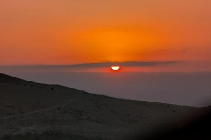
Figure 21: The sunset over the Dead Sea
Unfortunately, we didn’t get to see either of the Archaeological Areas or the Museum in the city that feature other Byzantine era mosaics, but just gives me a reason to go back! Our very late lunch was at Haret Jdoudna, which seems like a perfect setting for lunch for groups that are spending a day in Madaba to see all the mosaics.
It was another full on, absolutely filling lunch, and then we were off back to the Dea Sea to check in to our hotel – the Kempinski Ishtar, which along with the Hyatt Regency, the nicest hotel I have ever stayed in! As we came over the hills on the way back from Madaba the sun was setting over the Dead Sea and reflecting off the surface, making for an absolutely stunning view, and then by the time we checked in, it was purple hour, which made for a stunning view.
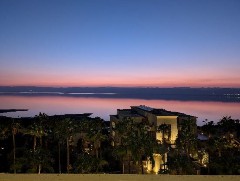
Figure 22: Purple hour at the Kempinski Ishtar
We had arrived too late to go into the Dead Sea and float around, and most of the pools were also closed, but I did manage to get into the infinity pool before that closed. Given our lunch was later than usual, we only went for a light pasta and salad dinner from the large buffet choices, before retiring for bed.
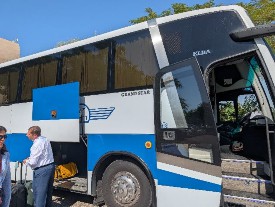
Figure 23: The Jett Bus for our transfer to Amman
Unfortunately, this last full day was when my body decided to come down with some kind of virus/stomach bug, so while the ladies went down to the dead sea to try the floating experience, I spent the time in my room before eating as plain a breakfast as possible.
Luckily, Sharon C had some rehydration powder and the journey from Dead Sea to Amman was not that long. Instead of Nadir and the minivan this morning, our journey to Amman was in a Jett coach, like the ones groups would most likely be using for transfers.
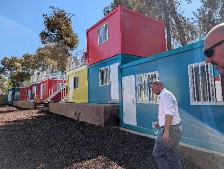
Figure 24: The bright and colourful accommodation at the Challenger Academy
We had a brief check in with the Challenger Team’s Academy, who had been at the event in London earlier in the year that had led to the invite by the Tourism Board. Their on-site upgrade was still being finished but there were plenty of Jordanian school groups there having a go at their various activities. As part of this upgrade, they were in the process of installing new accommodation blocks, and we were given a tour of the whole facility.
In the discussions after our tour, we talked about what else they can offer, including being local agents for airport to airport services or smaller services. We then continued on to Amman to inspect a hotel in the city centre that could be of use for groups, though it was more of a business hotel. It was good to have seen a real variety of hotels and camps throughout the country during our stay.
Figure 25: Me being interviewed after the workshop
We then left to check into the Intercontinental IHG before eating lunch at the hotel, one last large lunch before departure. Basel had told us day 1 that lunch was the main meal of the day for Jordanians, and that had definitely proven to be true! From then it was onto the workshop, an almost speed-dating experience where Sharon, Sharon, Tash and I were sat around on the room and one by one representatives form various Jordanian travel companies pitched themselves to us.
We have now established a good rapport with several and we will be launching our Jordanian tour with one of them this year. We were then interviewed by Abdullah from the Jordanian Tourism Board, for their promotional materials.
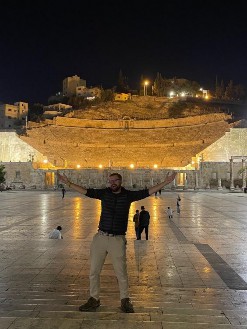
Figure 26: Me very excited to see the Roman Theatre in Amman
Once the workshop was done, we headed out for dinner at the Majdoline restaurant, during which we celebrated Sharon’s upcoming birthday, before we headed back to our hotel. Knowing we were leaving very early the next morning, I convinced the others to jump in a taxi and come with me down to Amman’s Roman Theatre and Odeon, as I wanted to see them for the purposes of being able to then advise any groups that go on a Jordanian Tour.
It was about a 10 minute taxi from our hotel for 5 dinar each way, and while the sites were closed, the large square in front of them was open and bustling at 10pm, with young people hanging out, kids playing catch, older people sat around chatting.
We managed to see through the bars of the theatre gates and the wooden slat doors of the odeon to sections of the inside. The nymphaeum just around the corner was also closed, but you could see the entirety of what remains and it was great to be able to tick off these 3 sites in some form, before returning to the UK.
We returned to the hotel and our rooms to make sure everything was packed before bed, I think by the time we had returned and I had packed everything it was 01:00. We were then up and ready to leave the hotel at 06:45 to avoid any Amman rush hour traffic on our way to the airport. This meant we got to spend a lot of time at Amman airport as we waited for the gate to open, but it also allowed us to get breakfast and hydrate before we got on the long flight home.
Luckily, rather than having to navigate various public transport back from Heathrow, Sharon P was able to give me a lift back to Southampton as she lives in the area. This made my journey home about 2-3 hours quicker.
Having been nervous about travelling to Jordan given the ongoing issues in the region, I was so glad that I went in the end! It was a once in a lifetime experience, made up by the people I travelled with, and those we met along the way, the places we saw, and the food we ate.
By the end of our time in Jordan, I think it was safe to say that the kindness and welcoming nature of the locals, along with the amazing things we had seen and done, had left quite the impression on us all.
Verona (again!), Desenzano del Garda, Brescia, and Limone sul Garda
by Dr. Kerry Phelan (@KerryLPhelan on X/Twitter)
My husband had to attend Marmomac’s 2025 Exhibit in Verona in September and I, of course, jumped at the chance to head back to the region to do a little more exploring. There was no pretence this year – he knew very well that I would have a specifically Classically-themed itinerary in mind this time – and so I flew over to meet him in Italy when the trade show had finished. We hired a car at Valerio Catullo Airport and drove over to Desenzano del Garda as our first stop.
The town of Desenzano is a vibrant spot, with shimmering views across Lake Garda; it’s well-connected by train (to Verona and other major cities, like Milan) and by ferry to other beautiful towns around the Lake itself.
I didn’t waste any time, and, on our first morning in Desenzano, we headed out early to explore the Villa Romana, a mere five minute walk from the centre of town.
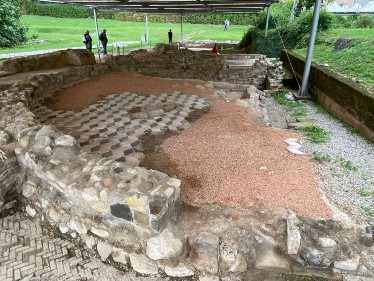
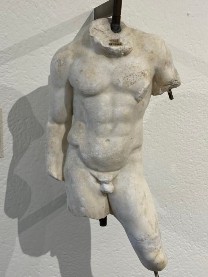
The archaeological complex – comprising of a Roman dwelling and garden, statute-adorned courtyard, workshop, and a thermal area – also has a little museum on site displaying the finds from the villa. Under the museum building itself, the ancient structures that can be seen through the glass-protected openings in the floor were first uncovered in 1970. They are the oldest part of the building, the first villa in the area, which was erected around the 1st century BC. That building was later incorporated into a larger complex with structural changes in made the 1st century AD, further remodelling in second century AD, and a final 2
full redesign in the middle of the 4th century AD, when most of the mosaics visible today were added. The remains stand as one of the most important examples of a late antique villa complex in northern Italy, built during the general economic crisis of the 3rd-4th century AD, where the owners of such properties were seeking an escape from the frenetic activities of urban life.
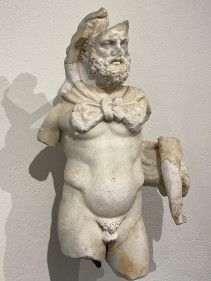
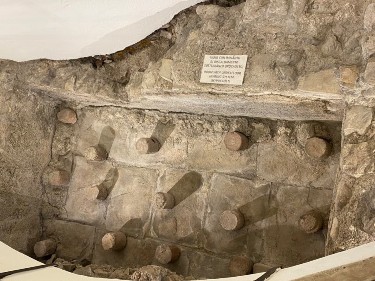
I was thrilled to discover a rather dashing white marble statue of Hercules inside the museum; roughly datable to the mid-2nd century AD, it’s a lasting reminder of an extraordinary sculpture collection that would have adorned the gardens of this private residence.
A visit to the complex is entirely worthwhile just to see intricate mosaics on display there, with stunningly detailed patterns and life-like depictions, their beauty cannot be overstated. Vivid red, orange and black colours show various fishing and hunting scenes, beasts attacking wild animals, cupids, and even chariot racing. The mosaics themselves have been preserved in excellent condition, and we were able to watch the staff actually cleaning and maintaining them in situ during our visit.
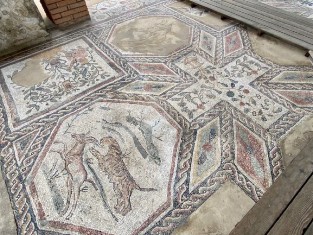
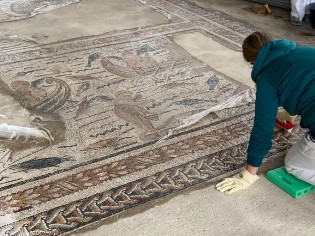
Though the site is quite small – everything can be seen in less than an hour – it was really impressive. Last year, I dragged my then unsuspecting husband to the Grotte di Catullo in Sirmione to visit the largest and more elaborate Roman villa in northern Italy; however, I do think that I was more taken with the single storey villa that would have stretched along the waterfront at Desenzano than its better-known counterpart in Sirmione.
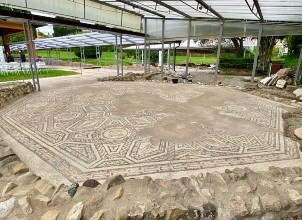
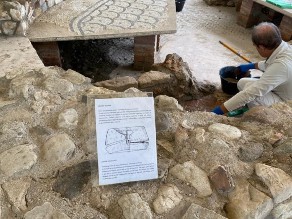
While in the area, James had asked me to visit Brescia for a quick recce for our future student groups and I was happy to oblige (we never truly stop working at Hellene!). About 30 minutes away from Desenzano by car, the city of Brescia thus became our next stop. Geographically, this city is sandwiched between Verona and Milan; and, although the latter two tend to feature more frequently on generic Italian itineraries, the Brixia Roman Archaeological Area is an absolute must see for students and teachers of Classical Studies alike. It stands as yet another significant and wonderfully preserved site in the region, so much so that Brixia has had UNESCO World Heritage Site recognition since 2011; the Area itself includes the Republican Sanctuary from the 1st century BC, the Flavian Capitolium (built AD 73), and the Theatre dating between the 1st-3rd century AD.
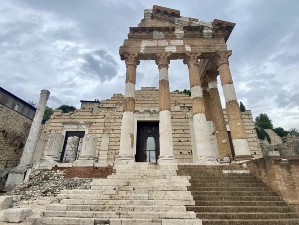
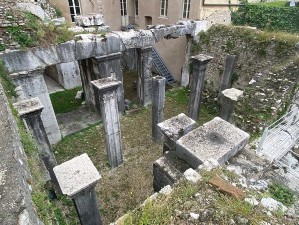
The Capitolium and its temple were dedicated to the triad of gods, Jupiter, Juno, and Minerva. Today, visitors can pay to enter into the Capitolium space and see parts of its original decoration and furnishings. On the walls of the central hall, there is a display of the epigraphic collection; the eastern cell is home to the very large and truly exquisite bronze Winged Victory, dated to the 1st century AD, which was discovered together with six imperial heads and hundreds of other bronze artifacts in 1826.
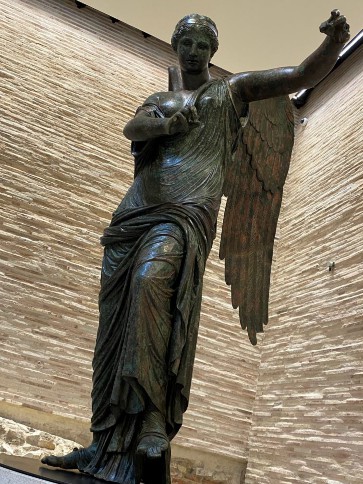
Underneath the Temple, and included in the paid entry access, visitors find the partially-preserved structures of the Republican Sanctuary; in its interior, there are frescos of painted white columns and mock polychrome marble slabs. This monument, unique in northern Italy, is attributable to high-level workers from central Italy, who hired to construct a building in Brescia to demonstrate the city’s adherence to Rome’s cultural model, in the years immediately following the bestowal of citizenship (89 BC).
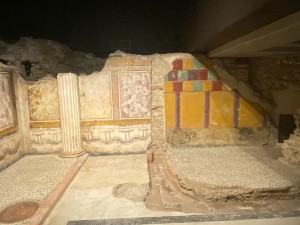
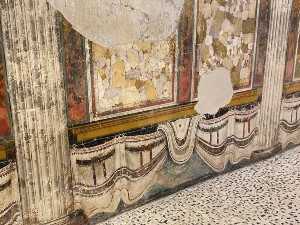
Next to the Capitolium – and free to visit! – stands the remarkable Theatre, set on the slopes of the Cidneo Hill. The layout of the building dates back to the Augustan age, and was subject to numerous enlargements and improvements over the centuries. This Theatre was used until late antiquity (late 4th– early 5th century AD), but it was mostly likely abandoned after the 12th century due to the damage caused by an earthquake. It seems likely that both the Theatre and the Capitolium were subsequently buried by landslides and falling rubble from the hill behind them.
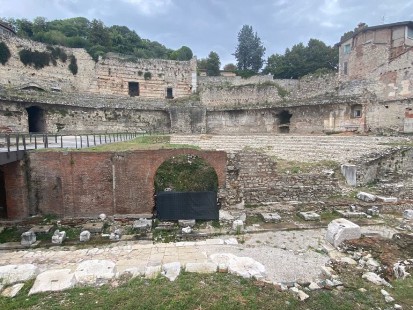
Just to the south of Capitolium, about a 2 minute walk away, are the remains of the Basilica Romana. The Basilica structure, now incorporated into the façade of modern building (currently the office of the Lombardy Superintendence for Archaeological Heritage, of all things!), was constructed in the Flavian period to close off the Forum area and to serve as a sort of monumental entryway for the space.
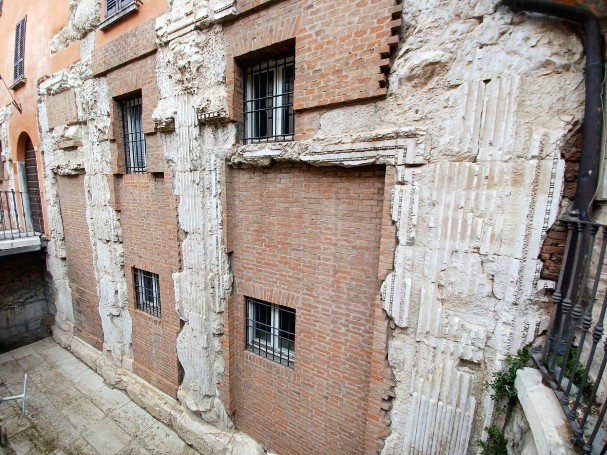
From the main archaeological area, then, we then followed the so-called UNESCO Corridor to the Museo di Santa Giulia. The museum houses a wide and varied collection that includes ceramics, inscriptions, architectural fragments, and lots of post-Roman artifacts and art too. For me, there were a couple of features worth mentioning in particular.
Firstly, the Domus dell’Ortaglia which is located in the northeast part of the museum complex. This area actually consists of two separate houses, the Domus of the Fountains and the Domus of Dionysus. The Domus of the Fountains, the larger of the two structures, seems to have originally been constructed in the 1st century BC and was occupied until the 4th century AD. The smaller Domus of 7
Dionysus was built in the 2nd century AD and was still in use until the 4th century AD. This house gets its name from a superb mosaic depicting a reclining Dionysus and his panther. Frescos of sea life and pastoral scenes decorate the walls, along with the rather special portrayal of a Nile river scene at the centre of the Domus complete with Pygmies, hippopotamuses, and an Egyptian priest of Isis.
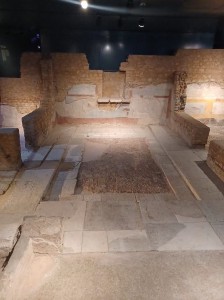
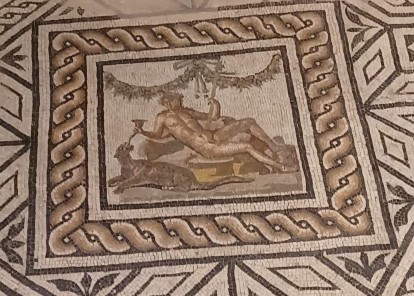
And secondly, the display of the six bronze portrait heads (five male and one female) identified as members of the Flavian dynasty, and 2nd and 3rd century AD emperors. These precious items would have been displayed inside the Capitolium temple; they were most likely hidden when the building was abandoned.
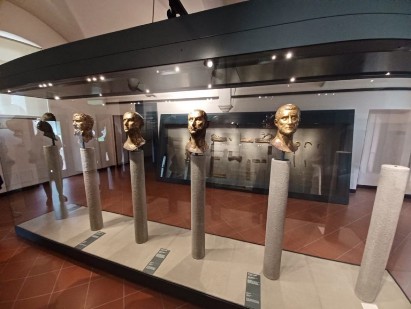
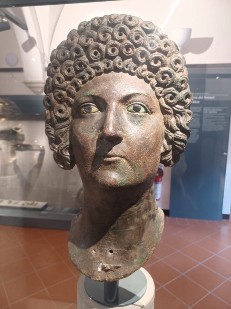
For the rest of our trip, my husband and I based ourselves in Limone sul Garda, a town nestled between Lake Garda and steep mountains on its western shore. From there, we explored some of the towns to the north (like Malcesine, Riva del Garda, and Tremosine sul Garda). Limone itself is very picturesque, with winding narrow alleys, and a beautiful waterfront promenade from the Porto Vecchio harbour area to the historic old town.
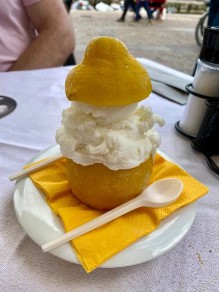
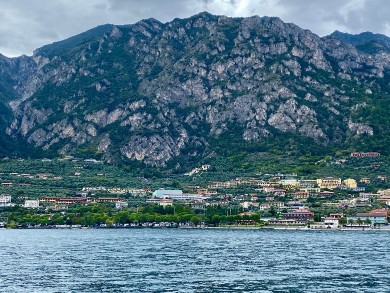
One of the last hits on my Classically-themed itinerary was one that I missed out on last year’s visit to Verona, and that was the Museo Archeologico al Teatro Romano. The site of the Roman Theatre in Verona is also home to a super impressive Archaeological Museum in a former convent from the 15th century.
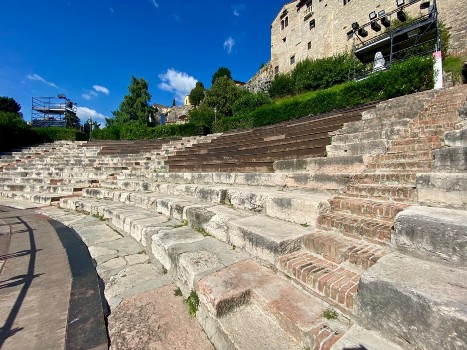
The Theatre was built on the slopes of the San Pietro Hill towards the end of the 1st century BC, and would have extended all the way down to the the Adige river below; ancient audiences would have enjoyed performances set against the beautiful backdrop of the city’s urban landscape and its river banks. During the summer season, the Theatre continues to music and drama festivals and, while we were there, the White Project Band was carrying out a soundcheck for its performance later that evening.
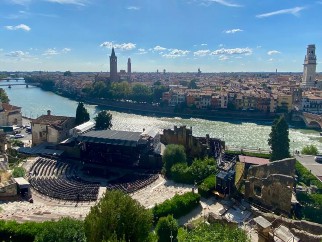
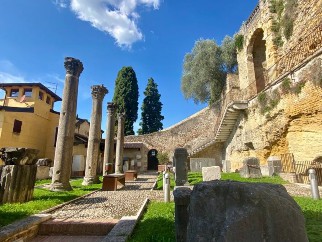
The views of Verona, as you ascend to the Archaeological Museum on the Hill and look out from the Great Terrace, are magnificent. The exhibits display Roman materials found in Verona and the province, with numerous sculptures, sacred and sepulchral inscriptions, mosaics, and columns from the Arena di Verona. One of my favourites from the collection was the mosaic showing gladiatorial scenes, used to decorate a reception-room floor of a house from the first half of the 3rd century AD. The battles depicted are presided over by a referee, and the inscriptions in the black tesserae give the names of some of the gladiators and the outcome of the contest.
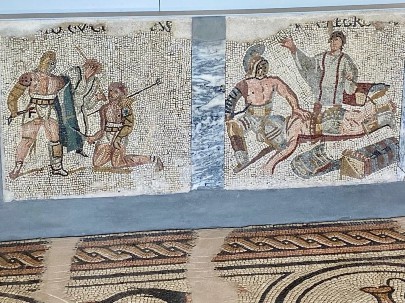
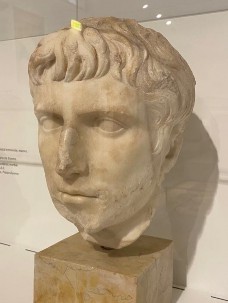
Another highlight was the marble portrait of Octavian, identified by many scholars as the future emperor in mourning after the death of Julius Caesar since his beard is only hinted at, and datable to the years after 44 BC. Overall, I spent a little over two hours exploring the various different rooms, but the very keen Roman historians could easily spend 3 or even 4 hours fully exploring the collection.
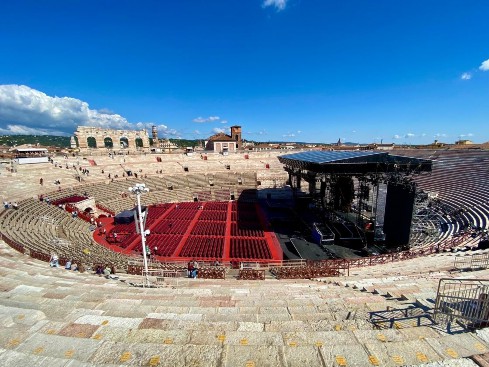
We spent our last evening back in Verona, soaking up the atmosphere from the Piazza Brà and enjoying the music from the Italian superstar, Zucchero, and his very special guest Russell Crowe (I kid you not, Maximus Decimus Meridius himself!) resonating from the Arena di Verona.
I certainly wouldn’t hesitate to go back to Verona again next year; while I have no interest in its annual Exhibit on natural stone (and my husband certainly wouldn’t believe me if I tried to claim that I did) the opportunity to continue to explore the ancient sites that northern Italy has to offer is simply irresistible. I wouldn’t hesitate in recommending visits to Verona and also Brescia to all Classical scholars looking for an alternative to the usual Rome-based itinerary.