

Verona (again!), Desenzano del Garda, Brescia, and Limone sul Garda
by Dr. Kerry Phelan (@KerryLPhelan on X/Twitter)
My husband had to attend Marmomac’s 2025 Exhibit in Verona in September and I, of course, jumped at the chance to head back to the region to do a little more exploring. There was no pretence this year – he knew very well that I would have a specifically Classically-themed itinerary in mind this time – and so I flew over to meet him in Italy when the trade show had finished. We hired a car at Valerio Catullo Airport and drove over to Desenzano del Garda as our first stop.
The town of Desenzano is a vibrant spot, with shimmering views across Lake Garda; it’s well-connected by train (to Verona and other major cities, like Milan) and by ferry to other beautiful towns around the Lake itself.
I didn’t waste any time, and, on our first morning in Desenzano, we headed out early to explore the Villa Romana, a mere five minute walk from the centre of town.
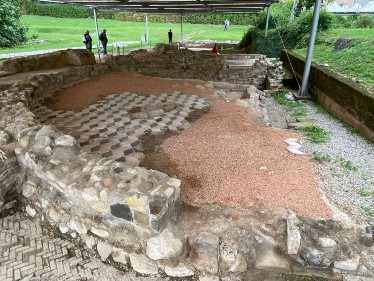
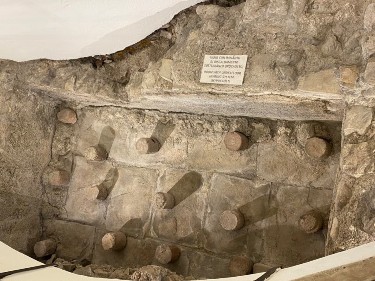
The archaeological complex – comprising of a Roman dwelling and garden, statute-adorned courtyard, workshop, and a thermal area – also has a little museum on site displaying the finds from the villa. Under the museum building itself, the ancient structures that can be seen through the glass-protected openings in the floor were first uncovered in 1970. They are the oldest part of the building, the first villa in the area, which was erected around the 1st century BC. That building was later incorporated into a larger complex with structural changes in made the 1st century AD, further remodelling in second century AD, and a final 2
full redesign in the middle of the 4th century AD, when most of the mosaics visible today were added. The remains stand as one of the most important examples of a late antique villa complex in northern Italy, built during the general economic crisis of the 3rd-4th century AD, where the owners of such properties were seeking an escape from the frenetic activities of urban life.
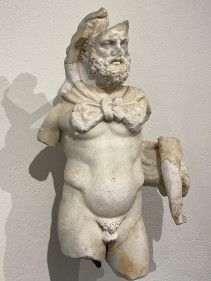
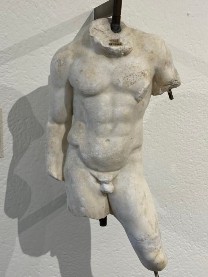
I was thrilled to discover a rather dashing white marble statue of Hercules inside the museum; roughly datable to the mid-2nd century AD, it’s a lasting reminder of an extraordinary sculpture collection that would have adorned the gardens of this private residence.
A visit to the complex is entirely worthwhile just to see intricate mosaics on display there, with stunningly detailed patterns and life-like depictions, their beauty cannot be overstated. Vivid red, orange and black colours show various fishing and hunting scenes, beasts attacking wild animals, cupids, and even chariot racing. The mosaics themselves have been preserved in excellent condition, and we were able to watch the staff actually cleaning and maintaining them in situ during our visit.
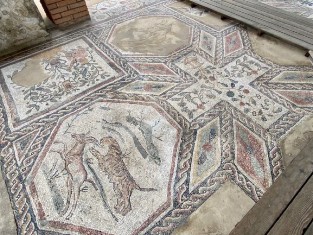
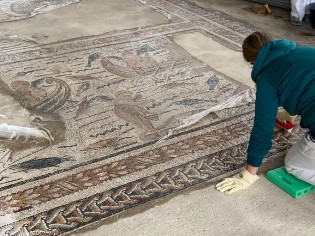
Though the site is quite small – everything can be seen in less than an hour – it was really impressive. Last year, I dragged my then unsuspecting husband to the Grotte di Catullo in Sirmione to visit the largest and more elaborate Roman villa in northern Italy; however, I do think that I was more taken with the single storey villa that would have stretched along the waterfront at Desenzano than its better-known counterpart in Sirmione.
While in the area, James had asked me to visit Brescia for a quick recce for our future student groups and I was happy to oblige (we never truly stop working at Hellene!). About 30 minutes away from Desenzano by car, the city of Brescia thus became our next stop. Geographically, this city is sandwiched between Verona and Milan; and, although the latter two tend to feature more frequently on generic Italian itineraries, the Brixia Roman Archaeological Area is an absolute must see for students and teachers of Classical Studies alike. It stands as yet another significant and wonderfully preserved site in the region, so much so that Brixia has had UNESCO World Heritage Site recognition since 2011; the Area itself includes the Republican Sanctuary from the 1st century BC, the Flavian Capitolium (built AD 73), and the Theatre dating between the 1st-3rd century AD.
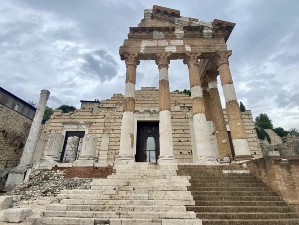
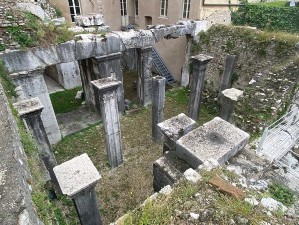
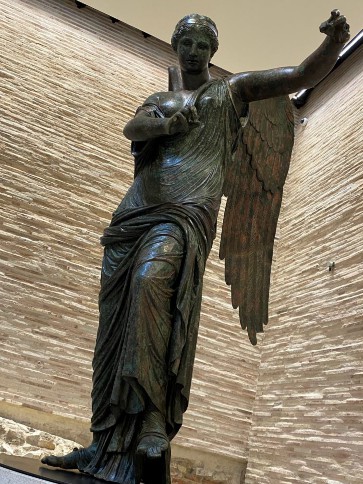
The Capitolium and its temple were dedicated to the triad of gods, Jupiter, Juno, and Minerva. Today, visitors can pay to enter into the Capitolium space and see parts of its original decoration and furnishings. On the walls of the central hall, there is a display of the epigraphic collection; the eastern cell is home to the very large and truly exquisite bronze Winged Victory, dated to the 1st century AD, which was discovered together with six imperial heads and hundreds of other bronze artifacts in 1826.
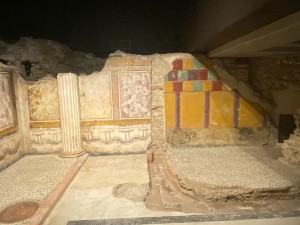
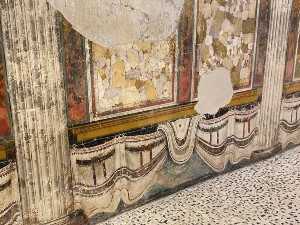
Underneath the Temple, and included in the paid entry access, visitors find the partially-preserved structures of the Republican Sanctuary; in its interior, there are frescos of painted white columns and mock polychrome marble slabs. This monument, unique in northern Italy, is attributable to high-level workers from central Italy, who hired to construct a building in Brescia to demonstrate the city’s adherence to Rome’s cultural model, in the years immediately following the bestowal of citizenship (89 BC).
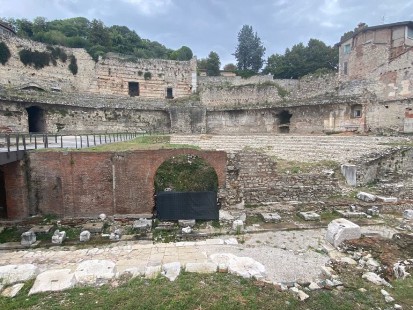
Next to the Capitolium – and free to visit! – stands the remarkable Theatre, set on the slopes of the Cidneo Hill. The layout of the building dates back to the Augustan age, and was subject to numerous enlargements and improvements over the centuries. This Theatre was used until late antiquity (late 4th– early 5th century AD), but it was mostly likely abandoned after the 12th century due to the damage caused by an earthquake. It seems likely that both the Theatre and the Capitolium were subsequently buried by landslides and falling rubble from the hill behind them.
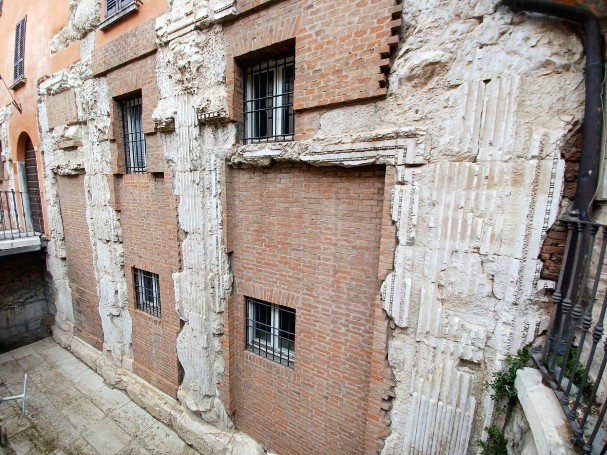
Just to the south of Capitolium, about a 2 minute walk away, are the remains of the Basilica Romana. The Basilica structure, now incorporated into the façade of modern building (currently the office of the Lombardy Superintendence for Archaeological Heritage, of all things!), was constructed in the Flavian period to close off the Forum area and to serve as a sort of monumental entryway for the space.
From the main archaeological area, then, we then followed the so-called UNESCO Corridor to the Museo di Santa Giulia. The museum houses a wide and varied collection that includes ceramics, inscriptions, architectural fragments, and lots of post-Roman artifacts and art too. For me, there were a couple of features worth mentioning in particular.
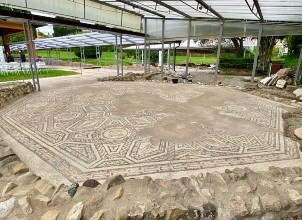
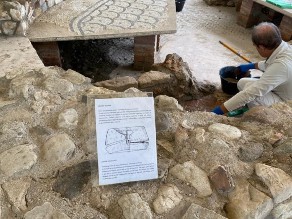
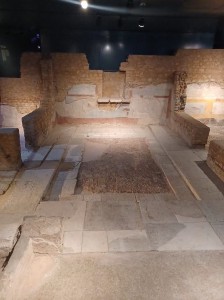
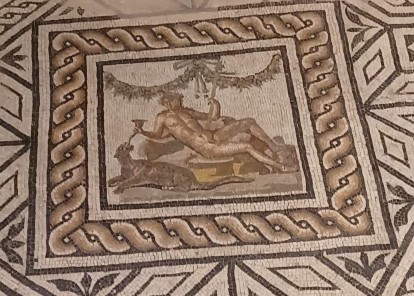
Firstly, the Domus dell’Ortaglia which is located in the northeast part of the museum complex. This area actually consists of two separate houses, the Domus of the Fountains and the Domus of Dionysus. The Domus of the Fountains, the larger of the two structures, seems to have originally been constructed in the 1st century BC and was occupied until the 4th century AD. The smaller Domus of 7
Dionysus was built in the 2nd century AD and was still in use until the 4th century AD. This house gets its name from a superb mosaic depicting a reclining Dionysus and his panther. Frescos of sea life and pastoral scenes decorate the walls, along with the rather special portrayal of a Nile river scene at the centre of the Domus complete with Pygmies, hippopotamuses, and an Egyptian priest of Isis.
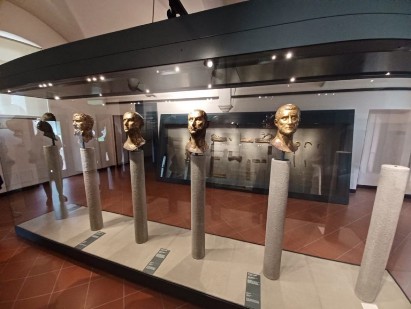
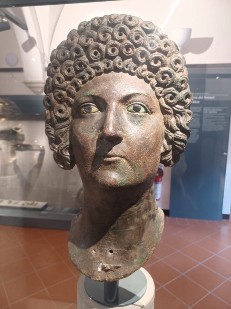
And secondly, the display of the six bronze portrait heads (five male and one female) identified as members of the Flavian dynasty, and 2nd and 3rd century AD emperors. These precious items would have been displayed inside the Capitolium temple; they were most likely hidden when the building was abandoned.
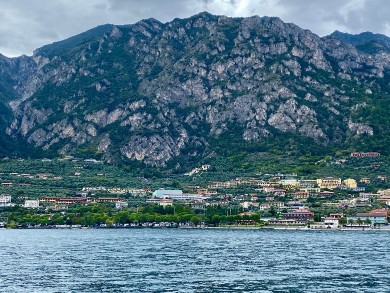
For the rest of our trip, my husband and I based ourselves in Limone sul Garda, a town nestled between Lake Garda and steep mountains on its western shore. From there, we explored some of the towns to the north (like Malcesine, Riva del Garda, and Tremosine sul Garda). Limone itself is very picturesque, with winding narrow alleys, and a beautiful waterfront promenade from the Porto Vecchio harbour area to the historic old town.
One of the last hits on my Classically-themed itinerary was one that I missed out on last year’s visit to Verona, and that was the Museo Archeologico al Teatro Romano. The site of the Roman Theatre in Verona is also home to a super impressive Archaeological Museum in a former convent from the 15th century.
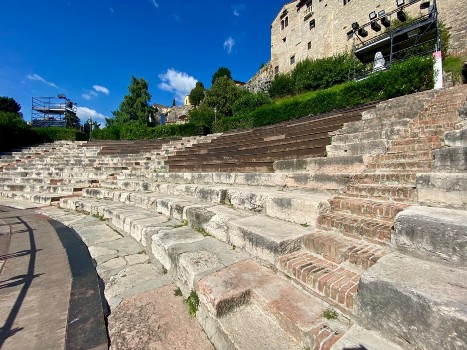
The Theatre was built on the slopes of the San Pietro Hill towards the end of the 1st century BC, and would have extended all the way down to the the Adige river below; ancient audiences would have enjoyed performances set against the beautiful backdrop of the city’s urban landscape and its river banks. During the summer season, the Theatre continues to music and drama festivals and, while we were there, the White Project Band was carrying out a soundcheck for its performance later that evening.
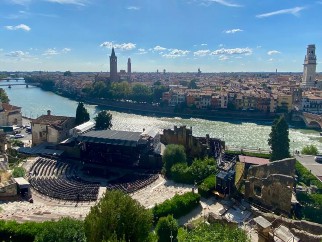
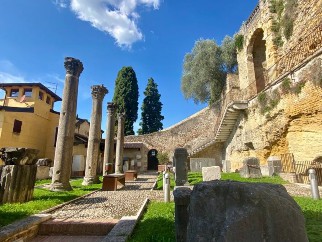
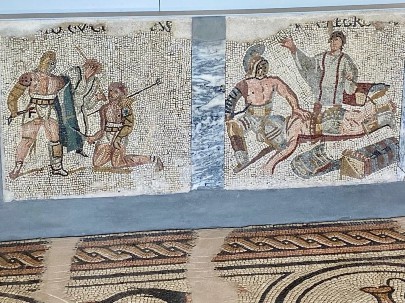
The views of Verona, as you ascend to the Archaeological Museum on the Hill and look out from the Great Terrace, are magnificent. The exhibits display Roman materials found in Verona and the province, with numerous sculptures, sacred and sepulchral inscriptions, mosaics, and columns from the Arena di Verona. One of my favourites from the collection was the mosaic showing gladiatorial scenes, used to decorate a reception-room floor of a house from the first half of the 3rd century AD. The battles depicted are presided over by a referee, and the inscriptions in the black tesserae give the names of some of the gladiators and the outcome of the contest.
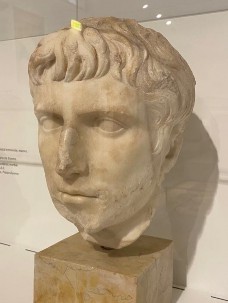
Another highlight was the marble portrait of Octavian, identified by many scholars as the future emperor in mourning after the death of Julius Caesar since his beard is only hinted at, and datable to the years after 44 BC. Overall, I spent a little over two hours exploring the various different rooms, but the very keen Roman historians could easily spend 3 or even 4 hours fully exploring the collection.
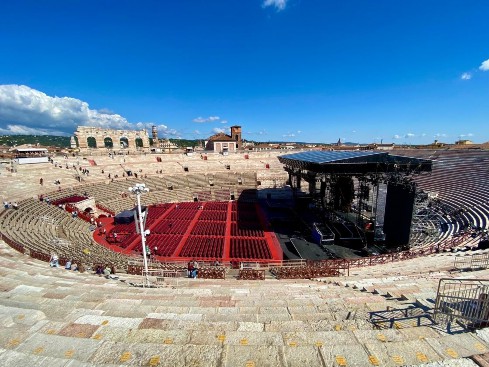
We spent our last evening back in Verona, soaking up the atmosphere from the Piazza Brà and enjoying the music from the Italian superstar, Zucchero, and his very special guest Russell Crowe (I kid you not, Maximus Decimus Meridius himself!) resonating from the Arena di Verona.
I certainly wouldn’t hesitate to go back to Verona again next year; while I have no interest in its annual Exhibit on natural stone (and my husband certainly wouldn’t believe me if I tried to claim that I did) the opportunity to continue to explore the ancient sites that northern Italy has to offer is simply irresistible. I wouldn’t hesitate in recommending visits to Verona and also Brescia to all Classical scholars looking for an alternative to the usual Rome-based itinerary.