

Reconning the Renaissance.
I’ve been to Florence before, when I was living in Rome and working for our local agents at the time. My parents went there for a holiday so I took the Italo fast train up to Santa Maria Novella station and spent a sunny but cold November day with them, strolling around the centre and visiting Boboli Gardens. This June familiarisation trip was a little different in pace to that day however!
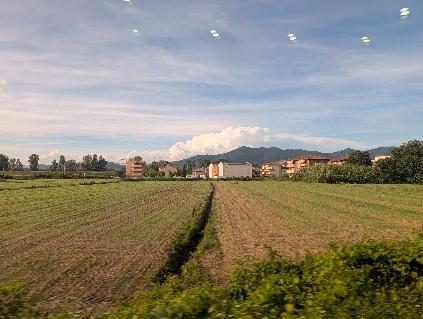
Figure 1: View from the Pisa- Florence train
I took a nice early ferry and then train up to Gatwick from the Isle of Wight, got up to Gatwick for around midday and flew out to Pisa, landing after 17:00 and making my way to Florence via the Pisa Mover shuttle from the airport to main station and then a train from Pisa Centrale. No issues with the flight or the transfer, no complaints about the Pisa Mover shuttle or train from Pisa to Florence, and there was something quite pleasant about pootling along the Tuscan countryside full of yellows and greens in the late afternoon/early evening light.
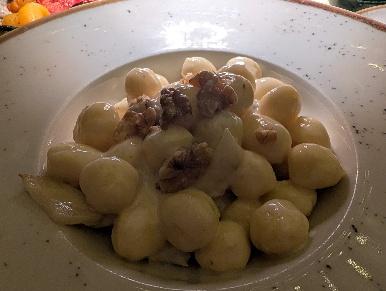
Figure 2: Gnocchi for dinner
Arriving in Florence at Santa Maria Novella, it was around a 15 minute walk north to the Hotel Donatello on the northern side of Piazza della Indipendenza, where I would be staying for the trip. Having unpacked and spoken with Charlotte to let her know I had arrived safely, I then headed out to dinner. After a little bit of searching online, I had found the Osteria deli Medici, the peak of Florentine naming! Their gnocchi with blue cheese, pear and walnut sauce was so good, and it kicked the foodie part of my trip nicely. I paired it with grilled mixed veg and followed it up with a tiramisu, both just as tasty as the gnocchi.
After dinner it was time for a stroll past Basilica di San Lorenzo and up to Santa Maria del Fiore, Florence is a very walkable city, you are easily within 30 minutes walking of one major site or another. Having got my videos and photos for to overlay Ezio’s Family song on for the ‘gram, I returned to the hotel and turned in.
On my walk back to the hotel I did find the (first of many) cooking classes and a mask decorating class, good options for school groups looking for extra-curricular activities.
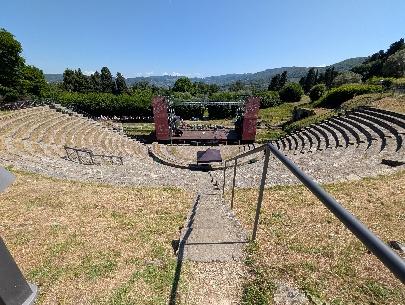
Figure 3: The Roman Theatre at Fiesole
Day 2 started with a walk to Piazza della Libertà to get a bus to Fiesole, my bus was either 10 minutes late, or 5 minutes early, but either way, it wasn’t long before I was in Fiesole. A charming hilltop town that has Etruscan origins as the 7th Century BC town of Vipsul. Several Etruscan remains survive, including a large section of walls and temple. Vipusl (or Faesulae as it was then known) was conquered by the Romans in the 3rd Century BC and the town was then destroyed by Sulla in the Social War in 80 BC. Sulla rebuilt it and filled the town with veterans. The Roman remains in Fiesole include the Theatre and Baths, as well as a portion of the finds in the on-site museum. The museum has a good mix of Etruscan and Roman finds of all sorts; inscriptions, reliefs, statues, tombs, and pottery (including this chonky boy in Fig 4).
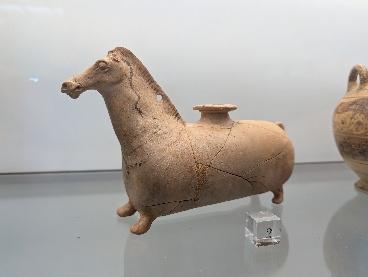
Figure 4: A bottle in the shape of a horse
Having spent over an hour exploring and photographing the remains and museum, with a backing soundtrack of schoolchildren singing (practice for a summer event), I hopped back on a bus down to Florence and headed to the Mercato Centrale for lunch. Now, I will happily recommend the Mercato Centrale in Rome for a lunch stop, but if Florence’s one is always as busy as it was when I stopped by, there’s no chance I’d recommend it for groups, given the mass of people and the layout being a little maze-like, groups would get split up easily. I grabbed a speciality panini from one of the stalls and then headed outside to eat it in the sun. I briefly stopped for a drink and some fruit at one of the small markets in the Piazza San Lorenzo to try and round out my lunch, before I visited the Basilica. Rome has spoiled me for churches and basilicas, and I say that as an avid atheist. Every church in Rome, even the small ones, are covered head to toe in marble and art and colour.
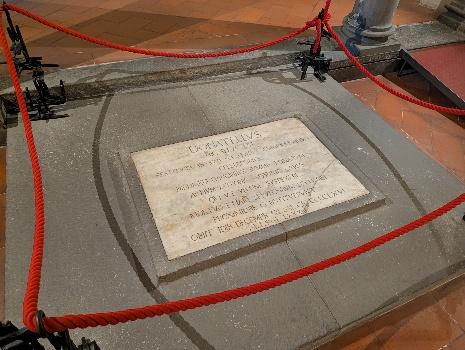
Figure 5: The tomb of Donatello
Florence’s by comparison (except with the Duomo’s dome and the Medici Chapel) are grey and plain inside, not what one would expect from the powerhouse city of the Renaissance, home to the powerful sponsors of art, the Medici. As you can guess, I wasn’t sold on San Lorenzo, but to see Donatello’s tomb was nice (though nothing of the tombs in Santa Croce, which I’ll come back to later).
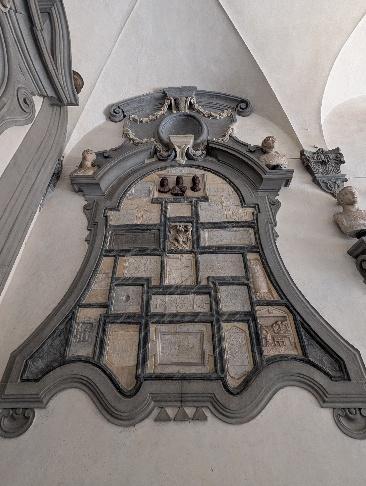
Figure 6: The Roman inscriptions in the courtyard of Palazzo Medici Riccardi
After San Lorenzo, I popped across the piazza to visit Palazzo Medici Riccardi which has a courtyard full of ancient busts, fragments of sculptural reliefs, urns, sarcophagi and inscriptions inside eight large frames, as well as the so-called Marble Museum which features originals and copies of busts of various Roman emperors and other personalities. Both of these collections were from the Riccardi family who bought the property from the Medici in the 17th Century, just over 200 years after the Medici had had the Palazzo built in 1444. After exploring the parts of the Palazzo that were most relevant to me, I quickly whipped round the rest of the Palace, with its lavishly decorated (I’m going to be using this phrase a lot I fear) rooms, including the Galleria degli Specchi (Mirror Gallery), which were as full as art and colour as one would expect.
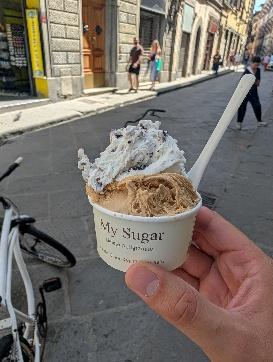
Figure 7: Obligatory gelato picture
On my way to my hotel auditing appointment at Hotel Bonifacio I did swing by My Sugar Gelato Artigianale, as recommended by my Lonely Planet guide book and practically inhaled it in an attempt to keep cool (helped by it being delish!)
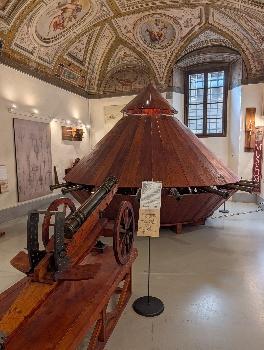
Figure 8: A model of Da Vinci’s tank
Hotel auditing done, I headed over to the Leonardo Da Vinci Museums and flipped a mental coin as to which one to visit, giving my chosen one a quick recce, exploring the inventions of the famous Florentine, and having a go with some the interactive exhibits. Either of the museums would be a good stop for any groups studying science, design tech, or general history.
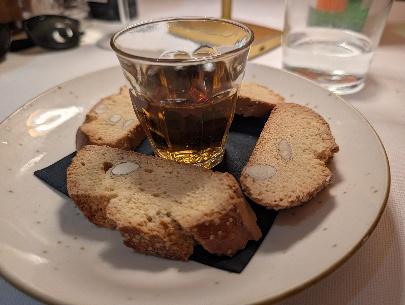
Figure 9: Cantucci with Vin Santo
Having retreated to my hotel to lie in front of the aircon and cool down for a couple of hours, I eventually had to choose a dinner. Now, within Google Maps I have several different lists saved, the first is Ancient Sites and Museums I want to visit (over 1200 at last count), another is ancient sites and museums I’ve been too (over 300), and the last is restaurants from Stanley Tucci’s Italian food shows – both Searching for Italy and Tucci in Italy. Across the two shows, Mr. Tucci visits Tuscany twice and so I had several options to choose from. For my second night, I went with Osteria Belle Donne and sliced beef with rocket and parmesan. I’m not a big meat eater, but that was a wonderful dinner. Having checked what food was eaten at the restaurant on the show, it turns out it was the Cantucci with Vin Santo, which as someone who enjoys Italian sweet treats, I also ordered. It was so wonderfully sweet and wentdown very quickly.
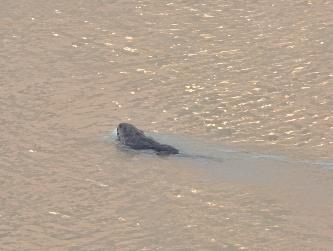
Figure 10: A nutria swimming the Arno
To walk dinner off I headed towards the Arno, stopping at Chiesa di Santa Trinita for a quick photo where Assassin’s Creed II’s title scene occurs. Whilst walking along the Arno, I did spot a Nutria swimming across the river.
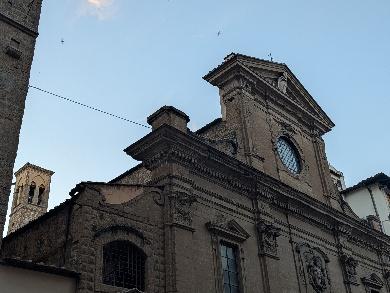
Figure 11: Santa Trinita to satisfy my AC geek
I walked down to Ponte Vecchio and onto the most famous bridge in the city before turning around and heading back towards Piazza della Signoria, where I
could see Loggia dei Lanzi and the Fountain of Neptune (the latter had been under restoration on my last visit) before coming across a street performer as he finished his penultimate song and started on ‘Bella Ciao’ which was received very well by the gathered crowd. I then returned to my hotel to retire for the night.
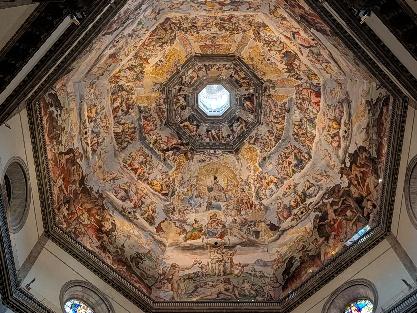
Figure 12: Il Duomo’s Dome by Brunelleschi
Up nice and early (for me) on day 3 to get in the queue for the entrance to Santa Maria del Fiore, I went for the standard entry
rather than the dome climb. I arrived at Il Duomo at around 09:40, it opens at 10:15 and the queue was already the width of the façade and around to the campanile. However, the staff moved us to the other side the monument to keep us out of the sun and in the proper line. I entered Santa Maria at around 10:55 and left by 11:05, as I hadn’t paid to do any of the extras – the Brunelleschi Pass gives access to the Dome, Bell Tower, Baptistry, Museum, and Santa Reparata, The Giotto Pass has the same minus the Dome and the Ghiberti Pass has the same as Giotto minus the Bell Tower. As mentioned earlier with regard to San Lorenzo, the inside of Il Duomo was rather plain and scant of decoration expect for at a few altars and the interior of the dome. Even from ground level though, the dome was stunning!
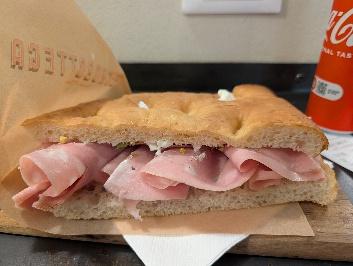
Figure 13: My schiacciata lunch
Walking towards Palazzo Vecchio for my next booked visit, I passed another cooking class and then the House of Dante, which is a visitable museum, as well as the Oratorio dei Buonomini di San Martino which has some lovely fresco work in. A few streets away from the Piazza dell Signoria I stopped at a sandwich shop called Retrobottega for a schiacciata (local Tuscan focaccia sandwich), opting for the Bombola which had mortadella, chopped pistachios, homemade ricotta mousse and lime zest in it. Very tasty! A quick and easy lunch a few steps from Florence’s centre.
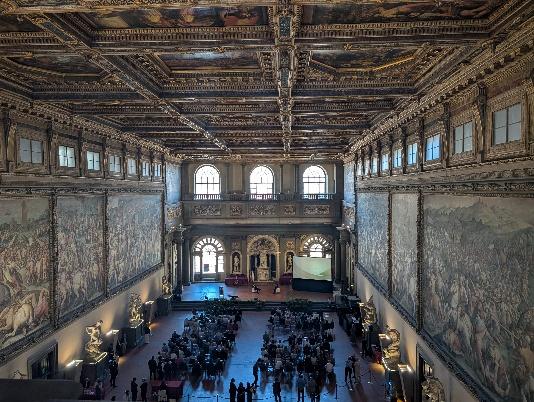
Figure 14: The Great Hall of Palazzo Vecchio
An early lunch eaten, it was time to enter the Palazzo Vecchio, unfortunately the Roman Theatre beneath is only visitable on the weekends, and I was there on a Tuesday, so no Roman ruins for me. The Palazzo Vecchio is the town hall of Florence, it was home to the Signoria government of the city between the 13th and 16th Centuries. When the Medici came to power, Duke Cosimo I de’ Medici moved his seat of power to the Palazzo, then renamed it from Palazzo della Signoria to Palazzo Vecchio when he moved across the river Arno to Palazzo Pitti. From the courtyard, I climbed the stairs to the Great Hall with its grand frescoes of scenes from the wars with Siena and 16th Century statues of six of Hercules’ Labours. The visitor route from there flows through lavishly (there it is) decorated rooms known as the Apartments of Leo X, the Apartments of the Elements (these include rooms named after the Roman gods), the Apartments of Eleonora, and the Apartments of the Priors, finishing in the Loeser Bequest. The Palazzo Vecchio is so utterly drenched in art, which becomes a theme for the rest of the day.
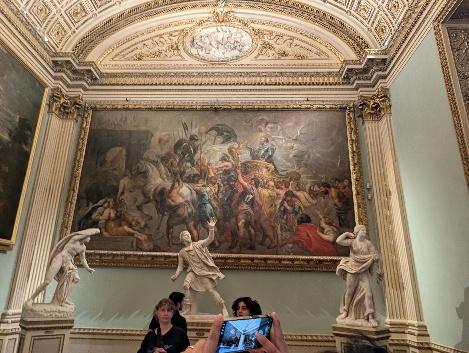
Figure 16: A section of the Niobid Room at the Uffizi
I walked another couple of streets away from the Piazza after leaving the Vecchio to find a drink and some pastries for the extra energy and then sat in the shade near the entrance to the Uffizi, as that was my next stop. Even with that extra drink and a breather in the shade, by the time I’d climbed the stairs along with the throng of other visitors, I was feeling a bit light headed. Not helped by my desire to rush around and see as much as I could within the hour and forty-five minutes I had between my entry at 14:00 and when I had to gather at the Vasari Corridor at 15:45 for my entry to that. I wasn’t sure how much ancient sculpture was in the Uffizi, just that were a few rooms that had sculpture in, and that some of the collection had been moved to the Vasari Corridor. The large U-shaped gallery visitors walk into at the top of the stairs from the entrance was packed with Roman busts and statues, and there were a few sarcophagi in the entrance halls, as well as bust and statues as you climbed the stairs. The Tribune room had a few pieces in – including the Venus de’Medici, but there was such a queue for it that staff were telling people to leave the queue and look around the rest of the gallery, so I just snapped a photo through the open door as I walk past. There was also the Cabinet of Marbles that had a few pieces in, though I believe a lot of the works in there were casts, and the Niobe Room which was dedicated to statues of the Niobids in various poses as they were struck down by Artemis and Apollo, with a large horse statue in the centre. Before heading to the next floor I made sure to see Botticelli’s Birth of Venus and a few other pieces, as well as stepping out on to the panoramic terrace and buying a water from the café there to rehydrate myself.
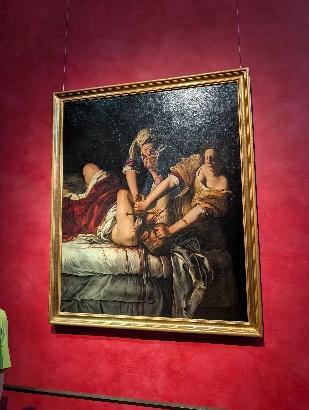
Figure 15: Judith and Holofernes by Gentileschi
That was all the ancient artwork until I entered the Vasari Corridor, but there were certainly some paintings I wanted to see on the next floor down, and so I was happy to spend some time checking out Artemisia Gentileschi’s Judith and Holofernes, Caravaggio’s Medusa and Bacchus as well as other paintings by Van Dyck, Titian and Tintoretto to name a few artists.
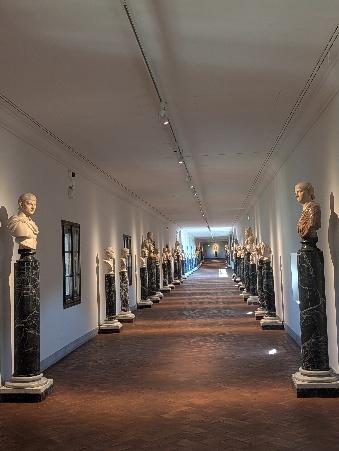
Figure 18: The Vasari Corridor across the Arno
There was a small group of us for the 16:00 Vasari Corridor visit, and it is guided by staff from the Gallery. They gave a quick explanation of the corridor itself then escorted us along it, stopping to point out areas of interest, such as the large windows over the Arno at Ponte Vecchio, the corner as it passes around the Mannelli Tower , and the (now closed off) loggia access at the Chiesa di Santa Felicita. The main straight of the Corridor as you cross over the Arno river was lined by ancient busts each side, some had names inscribed in the bases, but aside form that there were no information panels. I don’t know if it was because I was in a smaller group, or that it hadn’t been open very long, but getting to walk the Corridor did feel like I was part of something very exclusive.
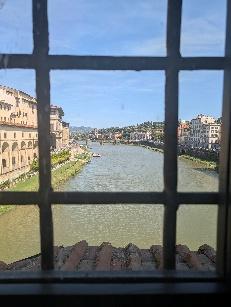
Figure 17: Looking out over the Arno from the Vasari Corridor windows
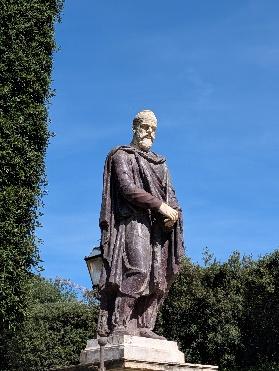
Figure 19: Roman Barbarian at the exit of the Boboli Gardens
The Vasari Corridor ends in the Boboli Gardens, as visitors exit at the Grotto del Buontalenti and then walk up into the Palazzo Pitti courtyard, which means walking past the Roman barbarian statues at the exit to the Gardens. As we exited at the Grotto, the painted decoration of a tortoise with a sail attached was pointed out to us, upon my enquiring about this design choice it was explained that this was Cosimo Medici’s interpretation of the Augustan phrase ‘to make haste slowly’.
I had been hoping to visit the gift shop in Palazzo Pitti, as I hadn’t been able to visit the Uffizi’s to see if they sold a Gallery Guidebook, but the one in Pitti’s courtyard it was closed. There was a temporary one on the first floor of the Palazzo, so I bought an entry ticket and made my way up, to find it was smaller with probably less stock in, so I sacked that idea off and just followed the Palazzo route.
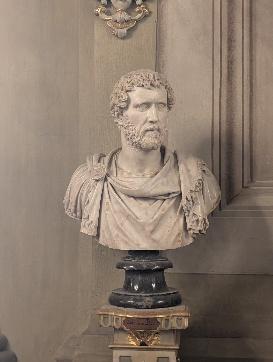
Figure 21: Bust of Antoninus Pius in Palazzo Pitti’s Galleria Palatina
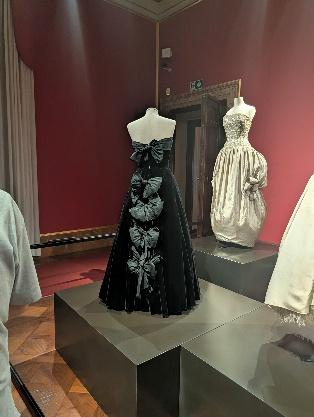
Figure 20: One part of the Fashion and Costume Museum at Palazzo Pitti
The first few rooms on the route were full of Roman statuary, part of the Galleria Palatina, so I was all happy. Then came the lavishly decorated rooms, walls covered in frescoes or framed paintings, ceilings painted with heavenly scenes to make the rooms feel taller. Like in the Palazzo Vecchio, there were plenty of rooms named after the Greco-Roman gods and myths – The Iliad Room, The Education of Jupiter Room, Roome of Ulysses, Room of Prometheus and so on. Can’t fault any of those rooms at all, wonderful decoration, exquisite paintings and art, but on building three of this, I was getting gallery fatigue. We would of course make sure to space out these large galleries within itineraries so that students don’t end up feeling the same. There were several ancient busts in stairways, including an Antinous and a Septimius Severus that didn’t have information cards or panels. Before finishing in the Pitti, I made sure to visit the Fashion and Costume Museum and the Modern Art Gallery, for groups that are looking more at the History of Art or Fashion. Covering over a century of ladies fashion, the former of these two museum spaces was a quick visit for me, and some of the dresses were interesting, while the latter covered works from the 18th Century up to fairly modern day, though I have to admit to speed-walking through it by the end.
Figure 22: The entry board for Ferragamo Museum
One last Museum for the day, then I was done, so I headed across Ponte Vecchio to the Salvatore Ferragamo Museum. I spent some time inside taking photos of the shoes and information panels on the famous shoemaker. This would be another good space for any students of Fashion or Textiles, there are even connections with cinema for Media Studies students.
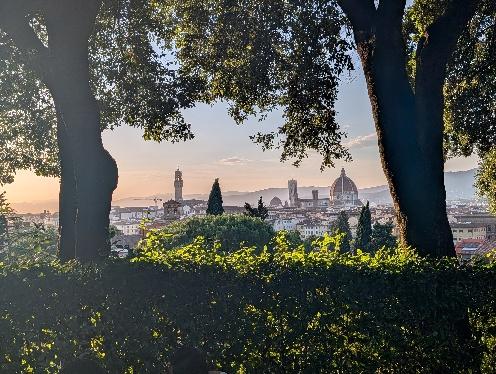
Figure 23: A photo of Florence from the way down from Piazza Michelangelo
Exiting the Ferragamo Museum I headed back across the Arno and explored the southern side of Florence, with a brief stop for a drink and some cicchetti at a place called Bulli e Balene, before heading eastwards to check out the view over Florence from San Miniato al Monte. It was going to be a longer walk than ideal at that time of day, so I also picked up a gelato at Cantina del Gelato for my (mostly uphill) walk. Exiting the walls of Florence at Porta Miniato I followed the road up to the San Miniato Terrace and the steps leading up to the (closed) abbey gate and perched myself there while I caught my breath and had a drink. The view over the city was stunning, and there were several photoshoots going on (by the looks of it a wedding shoot and a couple of romantic holiday ones). Whilst I was on the terrace, there was a proposal next to me, which was roundly applauded by all of us up there. I hope my sweaty self didn’t ruin their any proposal photos they had organised! After recovering from the climb I walked down to Piazza Michelangelo where every other person in Florence appeared to also be! Grabbed a few photos there then headed all the way backdown to street level and stayed on the south side of the Arno for my dinner choice.
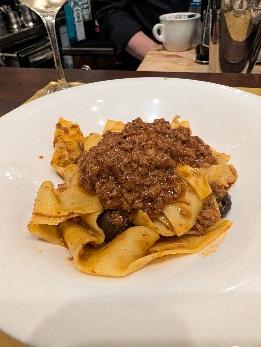
Figure 24: My wild boar pasta dinner
Inspired by Stanley Tucci again, I queued at Osteria del Cinghiale Bianco, and managed to get a seat at the bar for a dinner of pappardelle with wild boar ragù followed by tiramisu profiteroles. Both of these were ridiculously delicious, and I wish I had a photo of those profiteroles! Before returning to the hotel and collapsing on my bed.
Another early start on Day 4 as I got up and out to the Florence Archaeological Museum, getting there so early it hadn’t opened! After
waiting around for 10 mins or so after it had opened, and still 15 minutes before my ticket time, I entered and started to explore. I must have been the only visitor in there for the first hour or so, as I saw no-one else until I was on my way out. The museum is currently undergoing some renovation works, so the Roman Courtyard and the large open space in the centre with replica tombs are both closed, the Cameo gallery also seemed to be closed, though there are digital collections available for those via touchscreens.
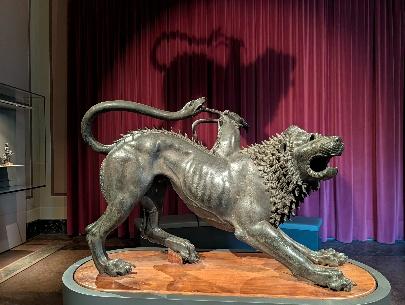
Figure 25: The Chimaera of Arezzo at the Archaeological Museum
The current route around the Museum starts off by the gift shop and then you walk through the incredibly large Egyptian collection, one of the largest in Italy behind the one in Torino I believe. The Egyptian collection runs from the earliest dynasties to late antiquity, and then the next section features cases of bronze statuettes and mirrors as well as the Bronze Statue of the Haranguer, dated to around 100 BC from Perugia. In this space you will also find a closed room
with sarcophagi in, and the highlight of the museum’s collection – the Bronze Chimaera of Arezzo. Both the Chimera and the Haranguer are masterworks in bronze, though the snake’s head was restored into the wrong position in 1785. The Chimaera was discovered in 1553 in Arezzo and was immediately whisked away to Florence. The Etruscan inscription on the right foreleg indicates that it was sacred, and offered to a deity.
The numismatic room came next, and I like coins, so plenty to see in there. My inner magpie, and outer ancient coin collector was very happy to see the various ancient coins alongside the more modern ones.
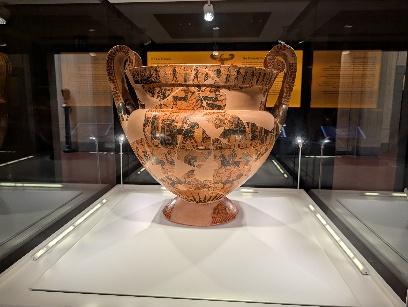
Figure 26: The François Vase at the Archaeological Museum
The collection continues on the next floor up, which is full of Etruscan and Greek sarcophagi, votives and pottery – with highlights including the François Vase and the Sarcophagus of the Amazons. There is a small Greek and Roman bronze collection in the museum which features the Leghorn Torso (apparently a place and not just a Looney Tunes character) and the Medici Riccardi Horse Head amongst smaller bronzes. The Minerva of Arezzo has a cast in the museum, as the original is now in Russia, and there are also several bronze heads of emperors including a so-called Trebonianus Gallus.
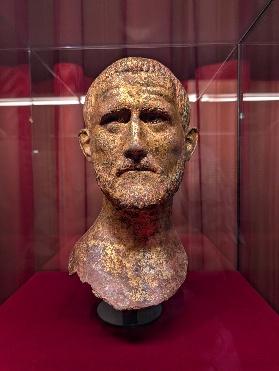
Figure 27: The head of Probus in the exhibition
Interestingly, the Icone di Potere e Bellezza exhibition, which was supposed to finish in April was still on. Running in partnership with the museum in Brescia it has seen several of the bronze heads from Brescia be on display in Florence and the Idol of Pesaro sent to Brescia to stand alongside the Winged Victory there. The heads of Septimius Severus, Claudius Gothicus, Probus and Venus are the ones on display in Florence shown alongside coins and cameos depicting them too. There’s also a display case for Symbols of Beauty and Power which include a bronze eagle’s head from the Augustan age, and a 16th Century base for the Idol of Pesaro.
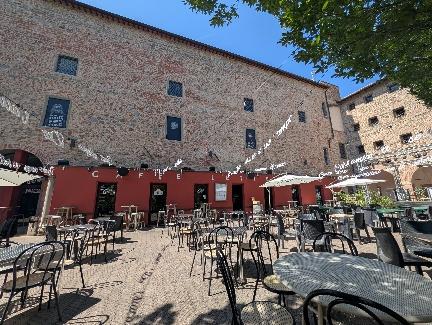
Figure 28: The café in Le Murate, set in a repurposed prison
Finishing in the museum, I walked eastwards to my next hotel audit, stopping off to check out the Mercato delle Pulci and Mercato Sant’Ambrogio on the way, the former a flea market, the latter the older and smaller version of Mercato Centrale. If it wasn’t a little out of the way, I would recommend find lunch bits for groups there. I also stopped for a drink at the Café Letterario in Le Murate, a converted prison that now serves as a social hub and housing.
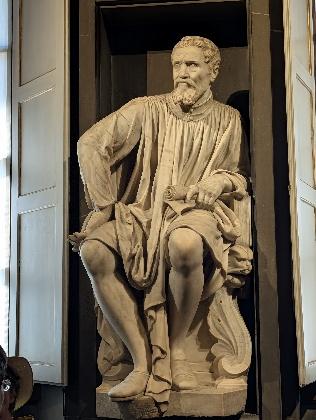
Figure 29: Statue of Michelangelo in Casa Buonarotti
My last hotel audit done, I was off back towards the centre. My first stop was Casa Buonarotti, the house of the family and descendants of Michelangelo. I was pleasantly surprised to find it had a room full of ancient artefacts, and there were others on display in the small courtyard. These pieces had been collected by Michelangelo the Younger and Filippo Buonarotti from their own excavations. The rest of the museum space were rooms dedicated to various drawings and wax models of Michelangelo, a galleria dedicated to the life of the great artist depicting scenes from his life, the family’s collection, the painting by Tiberio Titi of Michelangelo’s bust being placed on his tomb, and a collection of documents and objects given to the Casa Buonarotti on the occasion of the fourth centenary celebrations of Michelangelo’s birth in 1875.
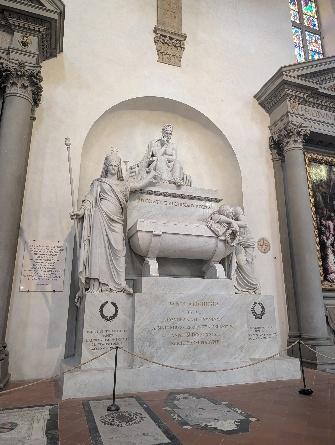
Figure 30: The tomb of Dante in Santa Croce
After another brief schiacciata stop, this time not far from Santa Croce, I made my way into the church, to be pleasantly surprised by the amount of decoration in there compared to San Lorenzo and Santa Maria. However, the most impressive part of Santa Croce were the tombs of notable Italians, I won’t pretend to know who they all were, but I know Machaivelli, Galileo, Rossini, Michelangelo and Dante, and despite not being overly spiritual, did feel touched to be in the same place as these historical figures.
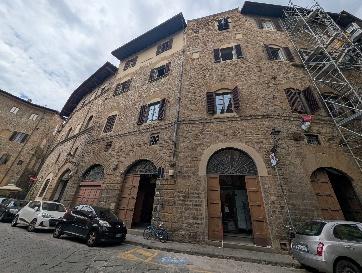
Figure 31: the curve of the buildings where the amphitheatre once stood
As I now had a bit of free time, I walked around the circumference of the site of Fiorentina’s amphitheatre, now completely buried and only visible by the floorplan of the buildings which sit on top – vey much like the Theatre of Pompey in Rome. This included a walk past the Serial Killer Museum, which I don’t think would hold any relevance for groups, unless they are studying psychology or criminal studies.
A quick stop at Gelateria dei Neri where I thought I was ordering gelato flavours but they were pure cream, very thick and sweet! I had a caramel flavour and a pistachio flavour, with some chocolate gelato to make it easier to digest.
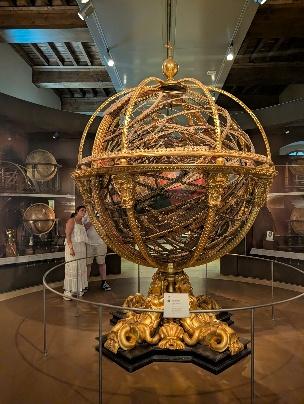
Figure 32: An armillary sphere from the 16th Century
Next up was a quick visit to the Museo Galileo where I saw a whirlwind history of science; from globes, telescopes and clocks to biology and chemistry. Another good option for non-classical students, perhaps particularly those of maths or science.
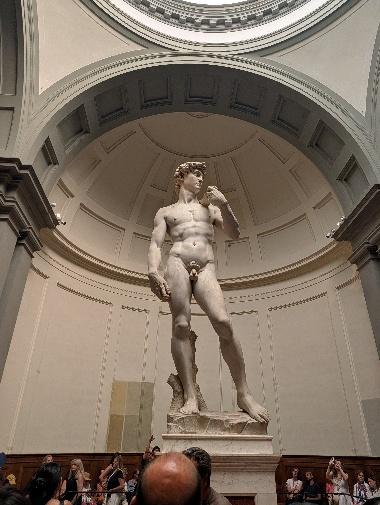
Figure 33: Michelanegelo’s David
After a quick stop back at the hotel to cool down and take some more photos for the audit, my last visit in Florence was to the Galleria dell’Accademia to see Michelangelo’s David. While there are plenty of other works in the Galleria, let’s face it, visitors are only there for the masterpiece. There is something about the statue, perhaps it is the scale and the detail, but it is striking, standing at the end of the corridor, rising above the crowds.
After exiting the Galleria, I walked through Florence’s centre, tried one of the famous wine windows (though cheated with a Spritz), and had a tasting platter and a smoked mozzarella for dinner, with a peach semi-freddo for dessert.
A gentle walk back to the hotel afterwards to pack ahead of my early start the next day.
Day 5 was another early start, with a hotel walkaround with management for photos to go with their completed audit, and a quick walk to Santa Maria Novella for the 09:09 train to Lucca.
As with most trains in Italy, it was a fairly smooth and easy ride, though it was on a strike day (this’ll come back to haunt me later). Arriving in Lucca by train means arriving outside the city walls, so there’s a short walk either through the gates in the walls at ground level or climbing up and over the walls near the Cathedral. Despite having my suitcase with me I was following the crowd and therefore opted for the latter. I had booked to store my suitcase at a café via the Bounce luggage storage website, having used it in Naples last year on my recce trip. Bag dropped of it was time to explore.
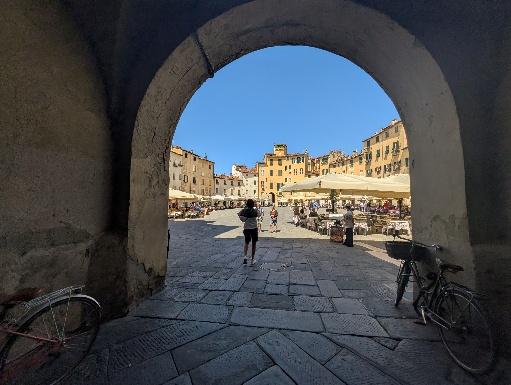
Figure 34: Entering Piazza dell’Antifeatro
First place to head was the Piazza dell’Antifeatro to see the site of the Roman arena that has been converted into a public square full of restaurants and surrounded by apartments. A few pieces of the ancient structure remain embedded in the walls, though I would love to have a dig around in the basements of the surrounding buildings!
I decided to go on a little stroll around Lucca to see what else I could find, as I figured I had until 15:00 when I had to head to the train station. I headed over t
Piazza San Michele to see the outside of Chiesa di San Michele al Foro, which marks the location of the Roman Forum in Luca (as it was known to the Romans). Just north of the Piazza is the Domus Romana which I was under the impression was only open on weekends and it was a Thursday, though their website now says different. After walking through the Piazza I continued down to Piazza Napoleone before looping around and climbing up the medieval Torre delle Ore, one of the two surviving towers in the city (Torre Guinigi) is the other).
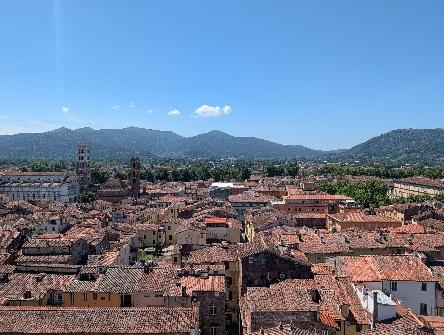
Figure 35: View from the Torre del Ore
The view from the top was fantastic, giving a exceptional view over the entire town and even over towards Pisa airport. The information panel at the top explained about the one of the streets below – Chiasso Barletti has its own undiminished dignity, preserved intact over the millennia since, the time in 56 BC when Caesar, Pompey and Crassus held a “famous meeting in which two hundred senators and people of considerable military and political importance took part” (Gugliemo Lera, Lucca, citta da scorpire, Maria Pacini Fazzi publ.1975).
Luca, of course, being the spot where the First Triumvirate fixed their breaking alliance and give themselves more control over the Roman Republic.
Heading back to Piazza dell’Antifeatro for lunch, I picked L’Angolo Tondo and went for the Roasted Tuscan pork, red pepper cream, courgette, pine nuts and grilled peaches. Another delicious meal in Italy, though that’s never a surprise!
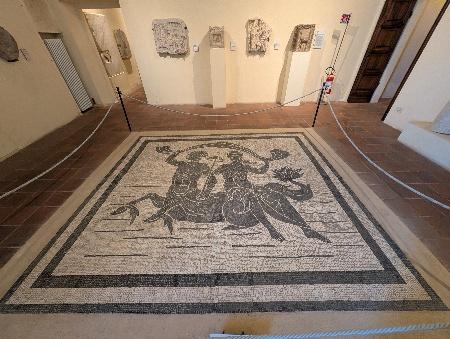
Figure 36: The mosaic and some inscriptions in Museo Nazionale di Villa Guinigi
Lunch all finished I headed east to the Museo Nazionale di Villa Guinigi close to the city walls to take a look a the ancient collection there. The ancient collection covers the Etruscan and Roman periods, as impressive as these are, with several inscriptions and a mosaic in the Roman section, they only make up a small part of the Museum’s collection. The collection extends to the late antique and medieval periods, then extends into the religious paintings up until the 18th Century. Walking back through Lucca afterwards I came across the Via del Battistero which serves as the street of antique dealers, which included one dedicated solely to Napoleon (not unexpected given his sister was given rule over the region when Napoleon converted the Republic into a monarchy).
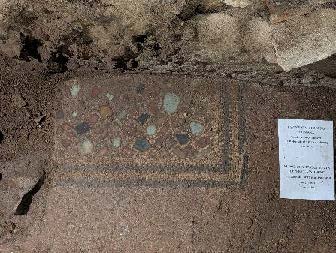
Figure 37: The cocciopesto floor in the archaeological area under the church
Having spotted something on the information panel in the Villa Guinigi Museum I made my way to the Chiesa dei Santi Giovanni e Reparata which has a visitable archaeological area underneath, as well as a Roman
sarcophagus in the main church area. This archaeological area contains remains dating back to the 1st Century BC, including a column from the Roman Baths of the 2nd Century AD, cocciopesto mosaic flooring from a Roman Republic period house, 7th Century Lombard tombs, 12th Century baptistry floor, the mosaic floor from the first church built in the 5th Century, 12th Century graffiti depicting the legend of St. Reparata, the base of a medieval tower, and the melting tanks for the church bells for the 12th Century church. A lasagna of history!
It was time to collect my bag, chug an ice tea, and head over to the train station, where the strike was in full flow. All trains to Pisa and Florence were cancelled, including the one I had booked for. The only train running to Pisa was delayed by about 40 minutes and was sat at the platform, so using my best Italian I managed to ask station staff if I could board it with the ticket I had bought for the later train.
Side note here – you cannot buy a train ticket in Italy online within 5 minutes of the train’s schedule departure – which is what had stopped me buying tickets for the one running train.
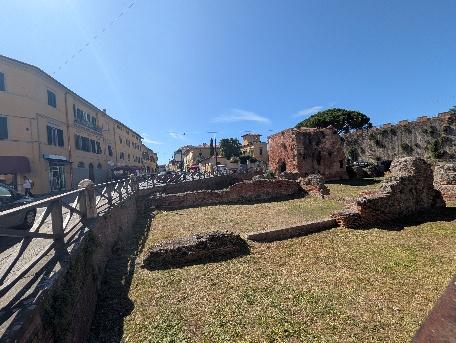
Figure 38: The Baths of Nero in Pisa
So, with a heavy delay I was eventually on my way to Pisa, hopping off at the stop closest to the Leaning Tower, to say I had seen it. Like with Il Duomo in Florence, if you truly want to experience the Tower and the rest of the monuments in Piazza dei Miracoli – Museo delle Sinopie, Museo dell’Opera el Duomo, Cathedral and the Camposanto – one has to purchase a ticket. There are currently 7 different possible ticket combinations. Moving swiftly on, I worked my way over to the Baths of Nero, which is the only surviving part of Roman Pisa left standing, and isn’t even from the time of Nero, but more likely Domitianic. Heading south I stopped for a while in Piazza Martiri della Libertà to sit in the shade before trying to get into the Gipsoteca di Arte Antica dell’Universita di Pisa to discover that there was some kind of talk or conference going on there so I chose to not enter. At this point I chose just to walk towards the train station and try to find somewhere to get some food. I managed to get a Chicken Caesar salad in the Piazza Vittorio Emanuele II to fill me up a bit as I’d have to be checking in to the airport around dinner time and a 21:30 flight.
Unfortunately, the Museo delle Navi Antiche di Pisa was only open in the mornings, so I hadn’t be able to visit it. Somehow on my route walking around I hadn’t been able to see any of the central Piazzas or shopping streets – the Piazza dei Cavalieri and Corso Italia, so I wasn’t overly impressed with the city, though I’m sure it has a lot more to offer than what I saw!
The Pisa Mover from Pisa Centrale station to the airport was on time and all fine but unfortunately my flight was delayed by just shy of an hour so it was just before midnight when we landed, luckily I had grabbed a few slices of airport pizza (my first pizza of the trip) whilst waiting for my flight. I sped through Gatwick to get checked in and asleep as quickly as I could.