

Greek Battlefields – Ancient History Tour (5-days)
Warfare was an almost constant presence in Greece during the fifth and fourth centuries BC: the Greco-Persian Wars, the Peloponnesian War, the Corinthian War, and the Macedonian campaigns undertaken by Philip II.
As such, an Ancient Battlefields Tour provides secondary school students with a tangible connection to the military history of the ancient Greek poleis during the Classical period; standing on the plain where Athenian hoplites battled the invading foreign forces at Marathon and at the pass where a Spartan king fell in Thermopylae will augment the figures and diagrams presented in the classroom.
If you require a quotation, send us your wish list!
Day 1
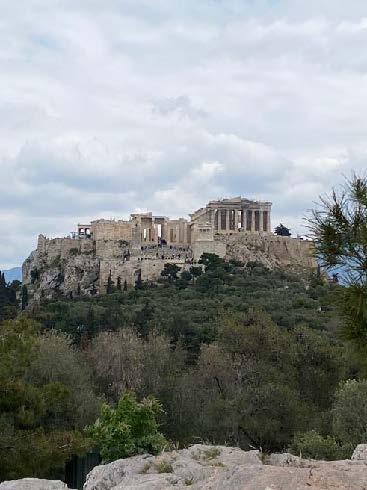
<View of the Acropolis from the Pynx / Kerry Phelan
Arrival in Athens Airport, and transfer by coach to check-in to Athens hotel (it may be possible stop en route at the Archaeological Museum of Lavrion – to see the collection from metal-processing workshops and mines (Thorikos Ergasterion & Soyriza) which financed the Athenian navy – dependant on flight times). In the evening, climb Philopappos Hill to see the defensive walls; the views are incredible and a must for those studying topography, and descend via the Pnyx. Return to the hotel for your evening meal.
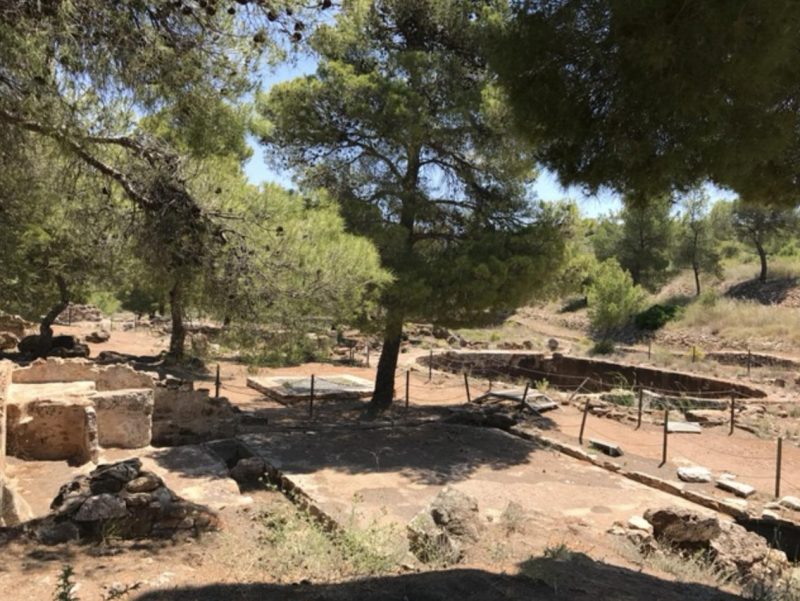
<The silver mines near Sounion / Sarah Thomason
Day 2
In the morning, visit the most popular sites in Athens such as the Acropolis, its New Museum, and the Agora, we recommend choosing from the following afternoon/evening activities:
- Visit the National Archaeological Museum: view the collection of Ancient Greek armour on display, in addition to the Persian arrowheads and spearpoints found on Kolonos Hill from the Battle of Thermopylae in 480 BC.
- Make a brief visit to the Epigraphic Museum: here, see the Decree of Themistocles (or Troezen Inscription, where it was found) discussing Greek strategy in the Greco-Persian Wars, purported to have been issued by the Athenian assembly under the guidance of Themistocles.
- Explore the War Museum: small collection of obsidian tools and bronze weapons from Minoan and Mycenaean periods; for Archaic and Classical Antiquity, authentic Corinthian helmets on display, an anchor of an ancient ship and various ship models; also, models of his Alexander the Great’s armament and siege mechanisms.
- Another place of interest is the Numismatic Museum: a collection of 500,000 coins as well as lead seals, weights, medals, and seal rings dating from antiquity up to the present.
- Kerameikos site and Archaeological Museum: see the remains of Themistoclean walls and the Dipylon Gate.
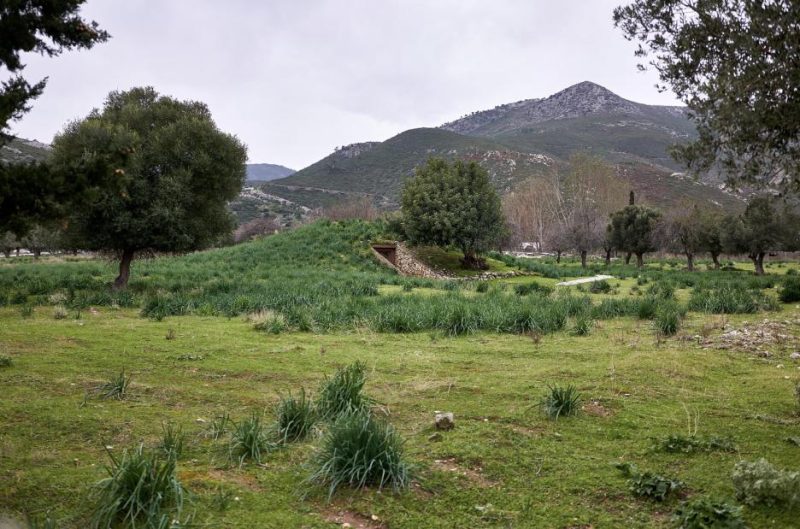
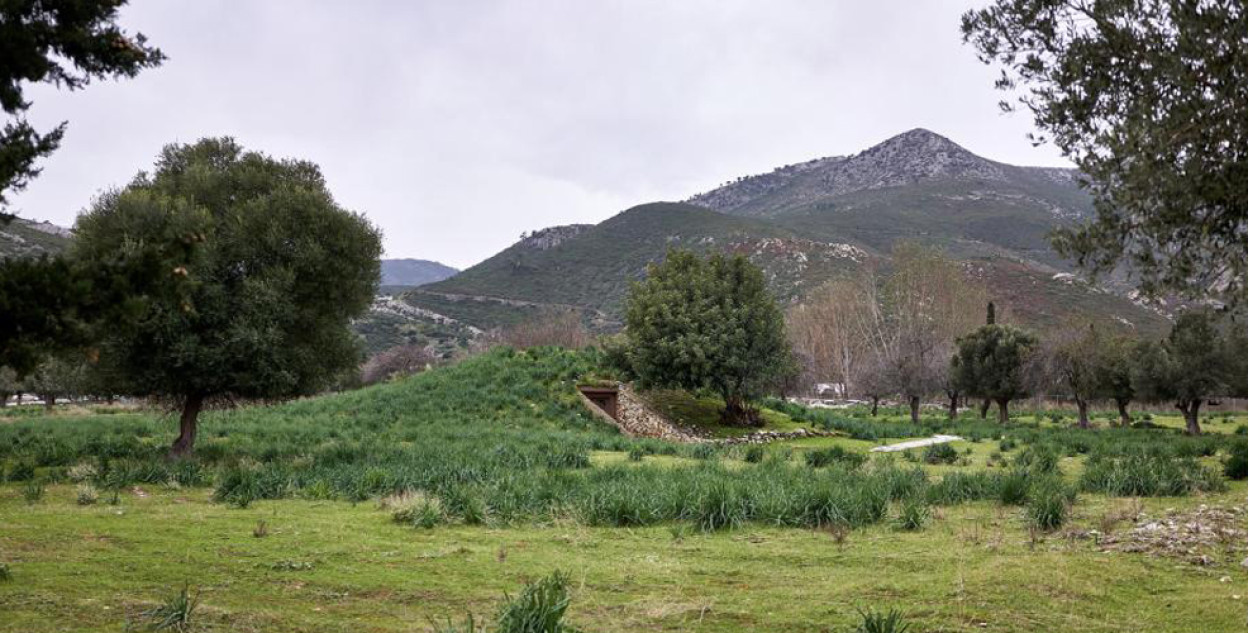
<The tumulus of the Plataeans on the plain of Marathon
Day 3
in the morning, travel by coach (60 minutes drive from Athens) to Marathon. This famous battle site of 490 BC, now an archaeological park, is home to the two burial mounds of the Greek war dead, known as tumuli. The larger of the two, the Soros, is the tumulus which holds the cremated remains of the 192 Athenian citizens who fell during the battle. Just to the north of the Soros, there stand a modern replica of the Victory Column.
The second tumulus houses the inhumed bodies of the Plataeans, allies of the Athenians, who fell in the same battle. Students can take in the view of battlefield from the hill outside the precinct.
After lunch in the village, visit the exhibition at the Archaeological Museum of Marathon – which presents the history of the area from the prehistoric era until the Roman period – and the display of finds from the Athenian and the Plataean tumuli. Return to Athens by coach for evening meal at your hotel.
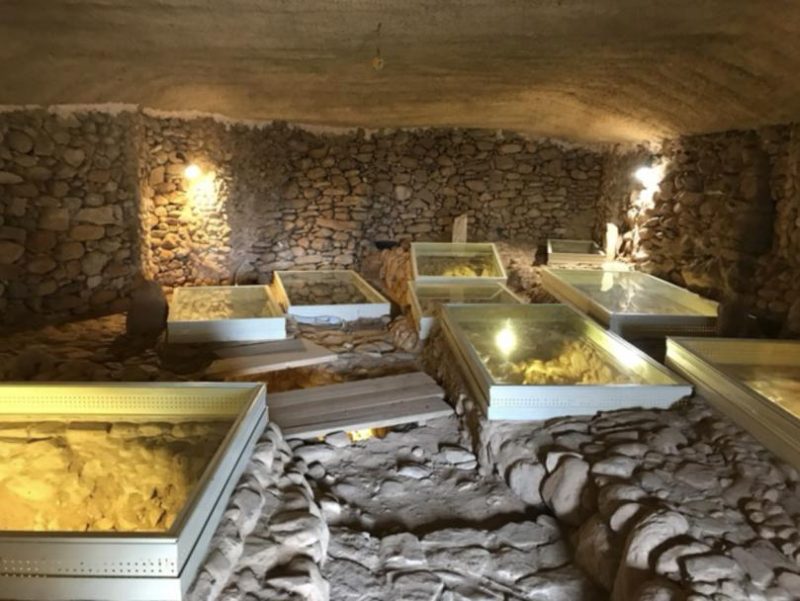
<Interior of Plataean tumulus / Sarah Thomason
Day 4
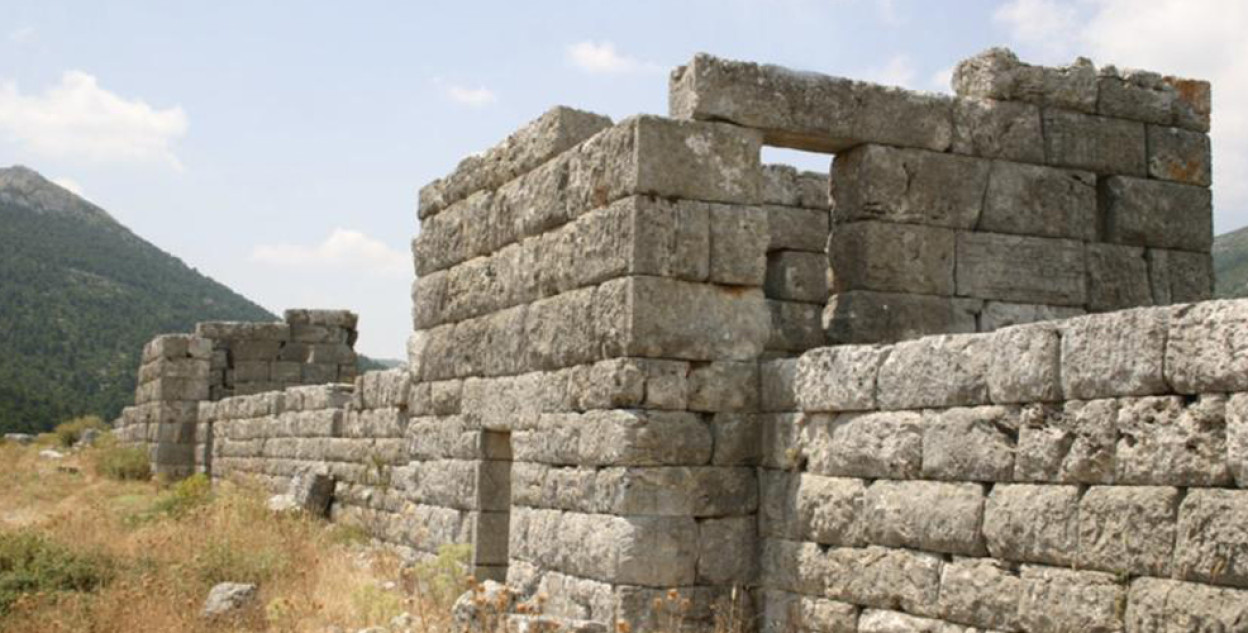
in the morning, check-out from the Athens hotel and travel by coach to the Eleutherae Fortress (30 minutes drive from Athens) to see the surviving stone towers and impressive curtain walls, which primarily date back to the 4th century BC (alternatively, with a small detour for lunch afterwards, visit the Aegosthena Hill Fort – 90 minutes drive from Athens – to see the tallest surviving ancient Greek tower and the site with an acropolis and later Byzantine ruins).
Travel by coach to the Lion of Chaeronaea monument, the mass grave of the elite Sacred Band of Thebes defeated by Philip II of Macedon in the Battle of Chaeronea in 338 BC (with an optional stop en route at the Archaeological Museum of Thebes, documenting the city’s profound 4th-century BC military legacy). In the afternoon, after lunch, visit the Archaeological Museum of Chaeronea which displays coins and weapons from the burial mound of the Macedonians and the mass grave of the Thebans. Return to the coach and check-in to Galaxidi hotel.
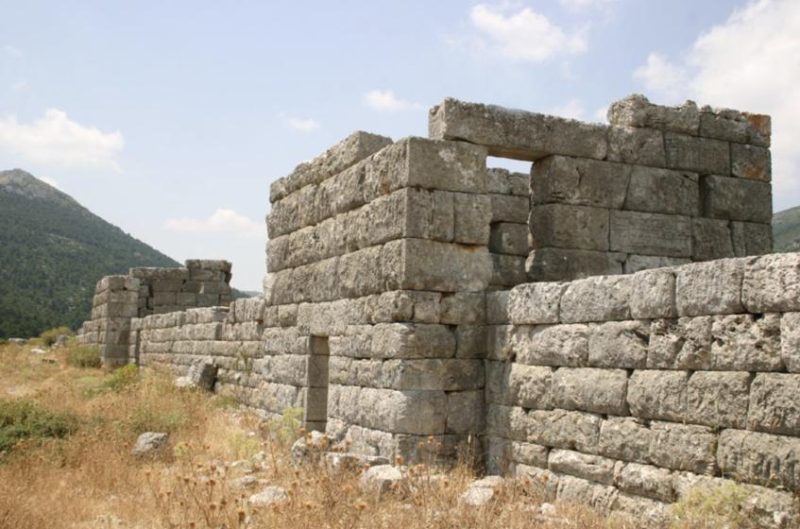
<Fortress of Eleutherae
Day 5
In the morning, travel by coach (120 minutes drive from Galaxidi) to Thermopylae. First, visit the Centre for Historic Information in Thermopylae and its collection of educational material is based on Herodotus’ History and on archaeological research. Stand before the bronze statue of the Spartan King, Leonidas – located at the centre of the pass where the final phase of the battle took place – and then walk across the road to Kolonos Hill.
This is the site where the remaining Spartan and Thespian forces were completely surrounded and killed by the Persians. Groups can also visit natural, sulphur-rich thermal springs located at the foot of Mount Kallidromo. After lunch, return on the coach to Athens Airport (150 minutes drive from Thermopylae) for an evening flight home (with a possible stop en route at the Temple of Poseidon in Cape Sounion, dependant on flight times).
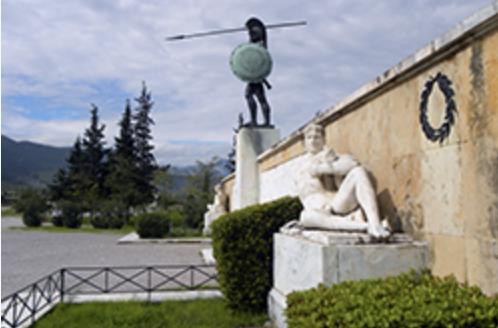
<Thermopylae / Sarah Thomason
Feel free to contact us to tailor your own tour. 01342 324727
Optional Extras
- Visit Piraeus to see the remains of the Themistoclean defensive walls and towers, the trireme ship sheds and the Archaeological Museum. Groups can also visit the Hellenic Maritime Museum in Piraeus, which has two halls dedicated to the maritime achievements of prehistoric and ancient times (comprising of a multitude of ship models). A short drive away (30 minutes drive from Piraeus), in Palaio Faliro, is the Park of Maritime Tradition in Floisvos, where groups can see the see the ‘Olympias’, a unique replica of an ancient Greek trireme.
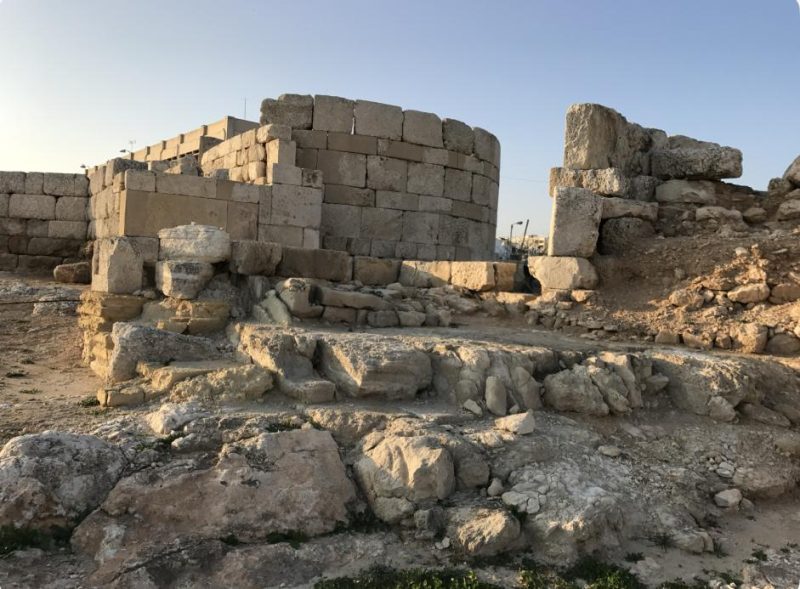
<Piraeus defensive tower and trireme ship shed ramp / Sarah Thomason
- Take a day trip from Athens to the island of Salamis. Transfer by coach to the port at Perama; there, take the ferry (approx. 15 mins sail) to Salamis. Students can look out over the narrow channel where Themistocles lured the massive Persian armada into a naval bottleneck, thus neutralising their numerical advantage. There, visit the Tomb of the Salamis Fighters, located on the northern coast of Kynosora, in front of the sea where the Battle of Salamis took place in 480 BC. After lunch, visit the Archaeological Museum of Salamina, in which the objects on display bear witness to the human presence and activity from the Late Neolithic era until the Roman-Early Christian times. Return by ferry to Perama, and transfer by coach for evening meal at your hotel in Athens.
- Overnight in Delphi after visiting the Lion of Chaeronea (60 minutes drive to Delphi) and visit the archaeological site and museum of Delphi on the next day before departing for Thermopylae (90 minutes drive).
- Stop at Plataea on drive from Eleutherae Fortress to the Lion of Chaeronea and Museum. While the site of the Battle of Plataea (60 minutes drive from the Archaeological Museum of Thebes). It remains an agricultural plain, it might be worth a stop en route to view the topography where the Persians were defeated. To visit the Museum and Theatre would require longer.
- Visits to Mantinea (90 minutes drive from Tolo) or Sphakteria (approx. 15 mins sail from Pylos) would be best combined with itineraries that include the Peloponnese.
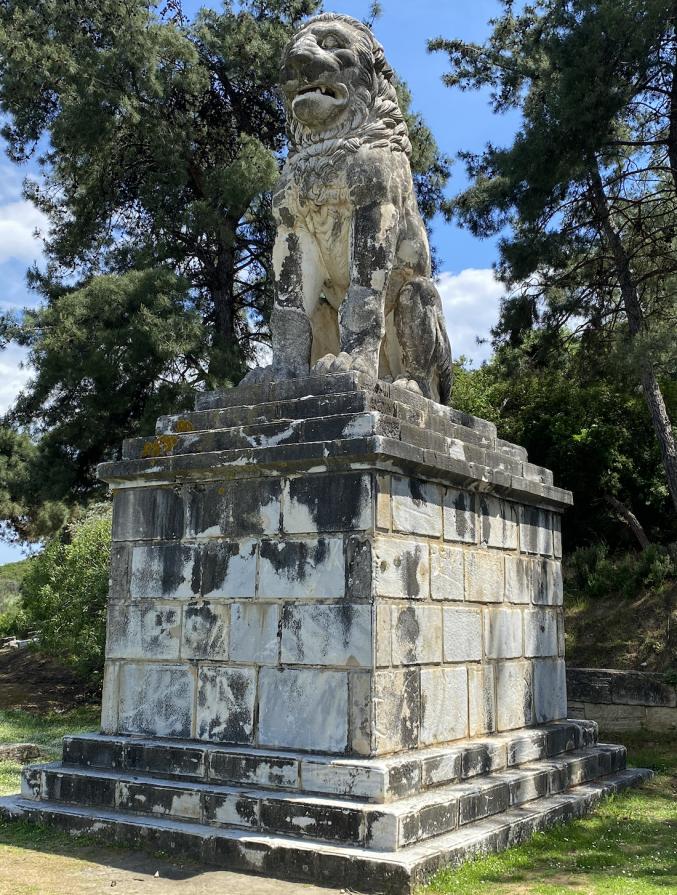
<Lion of Chaeronea / Kerry Phelan
Any trip can be adapted to include personal favourites or key syllabus sites.