

Following in the Footsteps of St. Paul
Greece has so much more to offer than simply sites from Classical antiquity; for Religious Studies students, its exciting to explore the topography and cultural world of early Christianity. St. Paul, the apostle, had a divine calling to cross the Aegean Sea and bring the Christian gospel into Europe for the first time in the first century AD. Bring the words of his Epistles and Acts to life by following in the footsteps of his missionary journey, stopping at the very same cities in Greece in which he preached: Athens, Corinth, Thessaloniki, Philippi and Neapolis.
If you require a quotation, send us your wish list!
Day 1
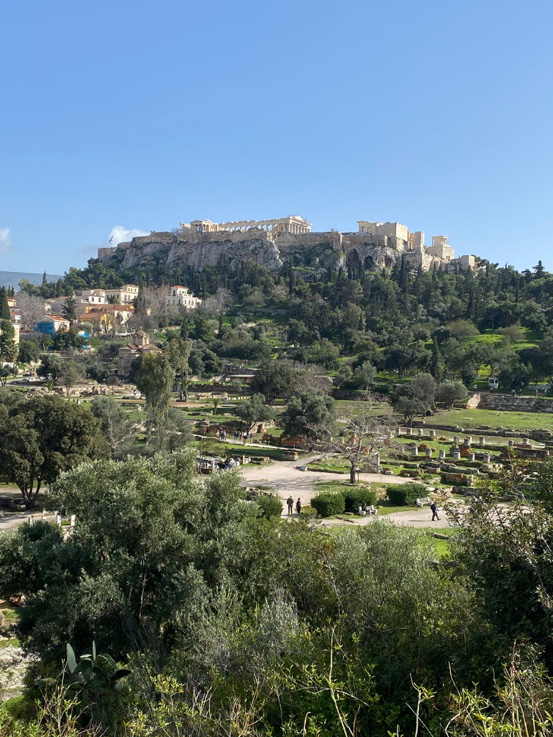 <View of the Athenian Agora, with the Acropolis in the background / Kerry Phelan
Arrival in Athens Airport, and transfer by coach to check-in to Athens hotel. Visit the Acropolis to see the Parthenon, Erectheum, and the Propylaea. Afterwards, groups should visit the Areopagus where St. Paul preached about one true God and delivered his famous sermon to the Athenians (Acts 17). Today, a bronze plaque marks the spot where he stood. From the Areopagus, students have an excellent view of the ancient Agora, the former centre of public life in the city. Return to the hotel for your evening meal.
Day 2
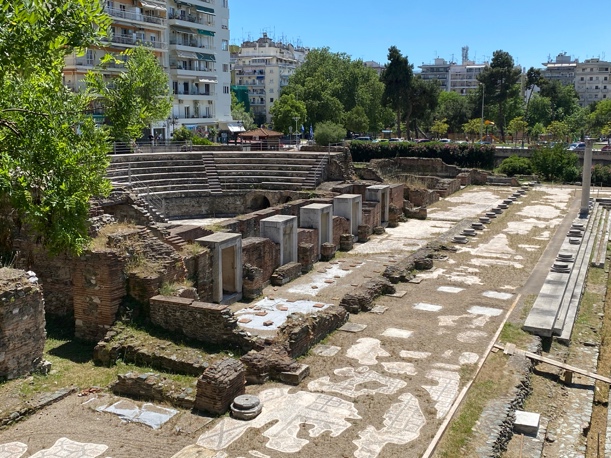
<Roman Forum in Thessaloniki / Kerry Phelan
in the morning, travel by coach (90 minutes drive from Athens) to Corinth. Visit the site of Ancient Corinth where St. Paul arrived in AD 50, preaching and living there for 18 months – his longest recorded stop during this phase of missionary work (Acts 18). In order to fund his efforts, St. Paul took on manual work in the city with the Jewish tentmakers, Aquila and Pricilla. Explore the remains of the Roman Agora where he worked, and stand at the Bema where he was brought for trial before Gallio, on the accusation of conducting illegal teachings.
The Bema, a large elevated rostrum standing prominently in the centre of the Roman Forum, was the place from which the city’s officials addressed the public; probably because of the monument’s connection to St. Paul, the Bema was transformed into a Christian church during the Byzantine period. Also on site, the Archaeological Museum exhibits both a prehistoric collection and artifacts dating up to the later Byzantine period. After lunch in the village, return to Athens by coach for evening meal at your hotel (with a optional stop en route at the ancient port of Cenchreae, where St. Paul shaved his hair to fulfil a personal vow before setting sail for Syria).
Day 3
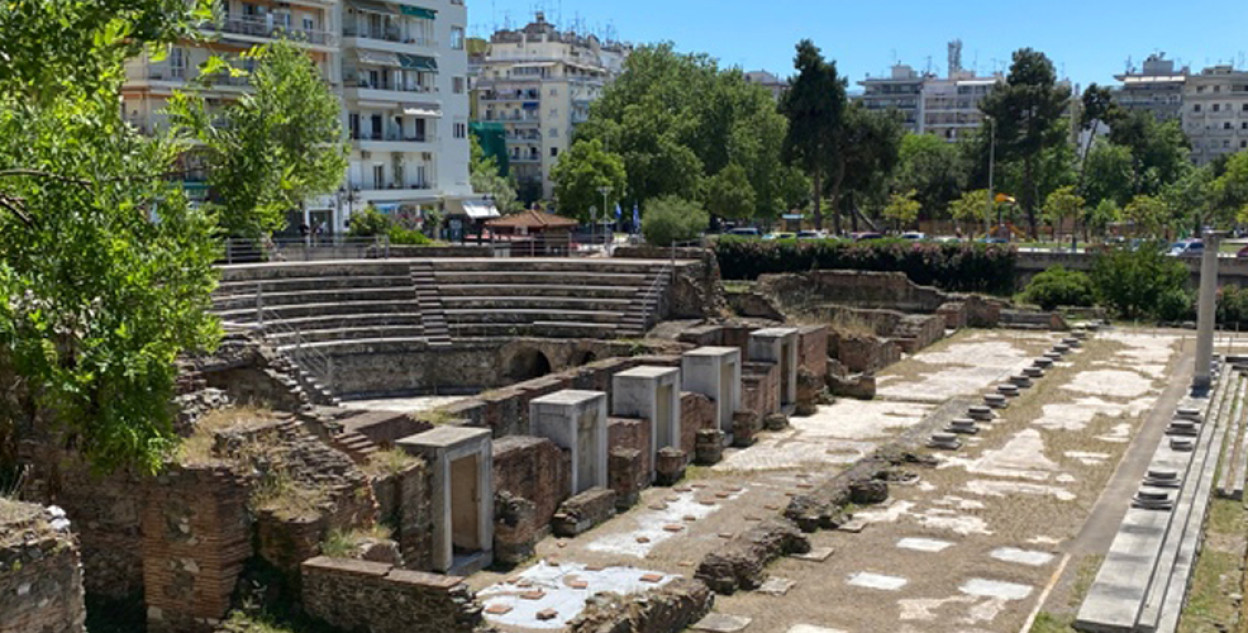
In the morning, check-out from Athens hotel and travel by coach to Thessaloniki, and check-in to hotel in the city. On foot, explore the remains of the Byzantine Walls – which provide excellent context for the scale of city that St. Paul addressed in his two epistles to the Thessalonians – and the Roman Forum where the saint likely taught. Walk up to the Vlatadon Monastery, erected on a site where St. Paul preached; this 14th-century building is a UNESCO site housing ‘St. Paul’s stone’, the traditional spot where he was said to have stood and preached during his visit in AD 51.
After lunch, we recommend a stop at the Hagia Sophia, a must-see for Orthodox worship, symbolism, and iconography. Alternatively, walk to the Archaeological Museum of Thessaloniki – one of the largest museums of the country and the central museum of Northern Greece – which illuminates a comprehensive history of Macedonia from prehistory until late antiquity. Return on foot to Thessaloniki hotel, with evening meal at a nearby taverna.
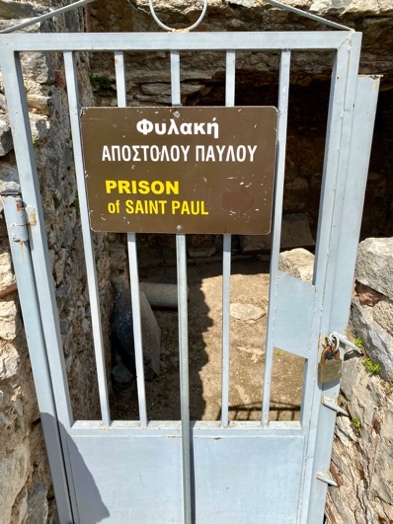
<Prison of St. Paul in Philippi / Kerry Phelan
Day 4
In the morning, travel by coach (2 hours drive from Thessaloniki) to Philippi, St. Paul’s first visit when arriving from overseas, and the site of the first Christian church in European territory. At the archaeological site, students can visit the Roman Forum and the remains of the ancient basilicas, and the so-called ‘prison’ where St. Paul was held (after being accused of provoking abnormalities in the city). By visiting Philippi several times, in addition to his Letter to the Philippians, St. Paul demonstrates a close tie to the city of Philippi.
While at the site, groups should also visit the Archaeological Museum of Filippoi, which exhibits finds from the 4th century city to the last occupation in the 7th century AD, and links the site to the significant figures of Philip II, Octavian Augustus, and of course St. Paul. Close to the site, is the Baptistery of St. Lydia in Kavala – ancient Neapolis – where, after hearing a sermon by St. Paul, the first Christian woman, Lydia, decided to be baptised in the River Zygaktis. After lunch, transfer by coach to Thessaloniki Airport (3 hours drive from Philippi) for an evening flight home.
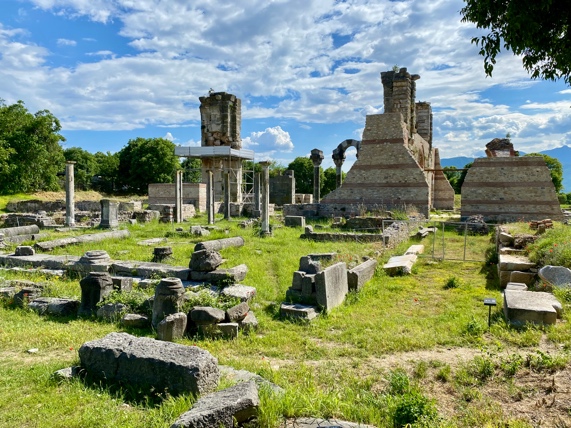
<Roman Forum in Philippi / Kerry Phelan
Feel free to contact us to tailor your own tour. 01342 324727
Optional Extras:
- Visit the Agora site and Museum and to explore the remains of the bustling marketplace. The group could also visit the nearby Holy Church of Saint Paul in Metaxourgeio, built in the late 19th century, honours his visit and his bold effort to speak across cultures and religious traditions.
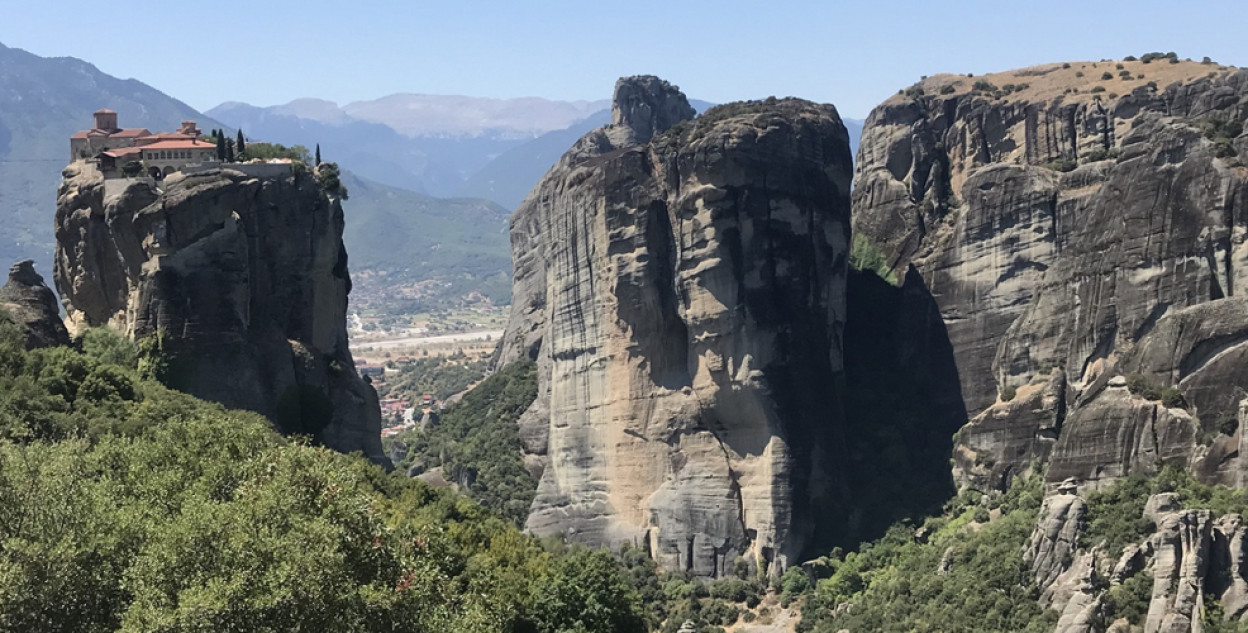
- Visit to Meteora; perched on top of huge rocks, stand the awe-inspiring monasteries (24 in total, with 6 still actively inhabited by small communities of monks or nuns) which were added to the UNESCO World Heritage List in the late 1980s because of their outstanding architecture and beauty, in addition to their religious and artistic significance; check-in to Kalambaka hotel (3 hours drive to Thessaloniki).
- Visit Veria (90 minutes drive from Thessaloniki); in the centre of town lies the Bema of St. Paul, the original 1st century AD steps where he stood and preached Christianity during his journey from Thessaloniki; an additional stop at the Archaeological Museum of Veria presents antiquities from both the city and the archaeological sites of Imathia region that date back to a period spanning from the earliest Neolithic age until the late Roman times; a short drive away (approx. 80 mins drive from Veria) is the ancient city of Pydna, on the shores of Thermaikos gulf, and the port from which St. Paul travelled from the North to the South of Greece.
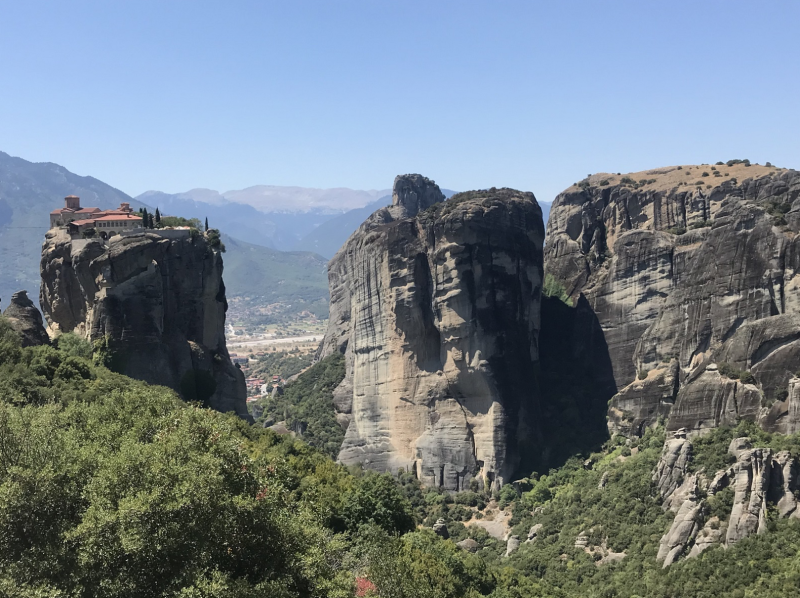
< Meteora / public domain

Any trip can be adapted to include personal favourites or key syllabus sites.