

Rome – Marble, Myths and Masterpieces
An itinerary for students of art and design, covering a range of topics and themes. From ancient Roman marvels of architecture and art, through masterpieces of the Renaissance and Baroque periods by great artists, to modern street art and more.
The programme can be edited to include archaeological sites and museums specific to your areas of study.
If you require a quotation, send us your wish list!
Day 1
Land in Rome, meet your courier, coach and then depart for the city. Your first stop will be in the EUR district to see Fascist era architecture, including the famous “Square Colosseum” (Palazzo della Civiltà Italiana, home of the Fendi Headquarters) and other monuments such as Marconi’s obelisk.
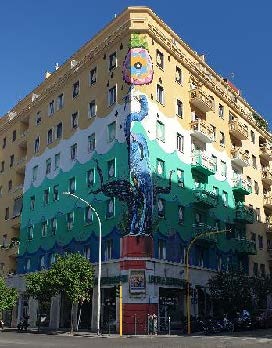
<Figure 1: Street Art on Via delle Conce
Depart by coach for Testaccio and lunch at Mercato di Testaccio (architect Marco Rietti’s reinterpretation of the traditional Roman piazza as a modern, covered agora offering regional cuisine) before exploring Mattatoio contemporary art space. Spot the Jumping Wolf street art at Via Galvani, walk down the Vai delle Conce and the Via dei Magazzini Generali to find more large-scale street art and graffiti.
Transfer to your hotel for check in and luggage drop off before heading out on foot into the city to see Palazzo Massimo.
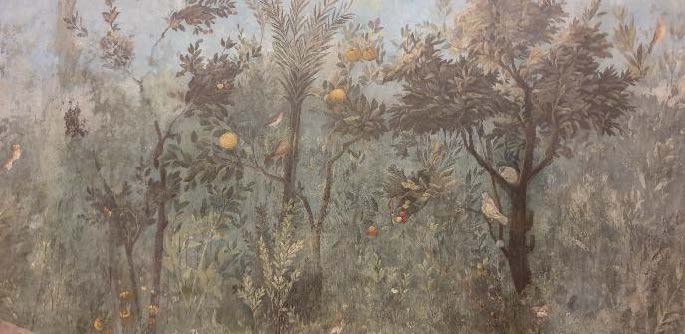
<Figure 2: Part of Livia’s Garden Villa Fresco
Here, ancient Roman and Hellenistic art spans every medium – bronze and marble statuary, frescoes, and mosaics. Keep a careful eye out for the bronze statue of the Boxer at Rest (one of the greatest pieces of bronze statuary from the ancient world) as well as the Garden Frescoes of Livia (one of the best surviving frescoes outside Pompeii).
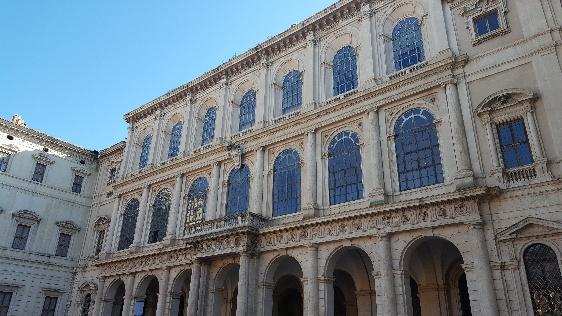
<Figure 3: Palazzo Barberini
Once finished, leave Palazzo Massimo and enjoy the short walk to Palazzo Barberini, home to the National Gallery of Ancient Art. Set inside a Baroque palace with staircases designed by both Bernini and Borromini, the collections hosts paintings by Caravaggio, Gentileschi, Bernini, Holbein, Rubens, and many others.
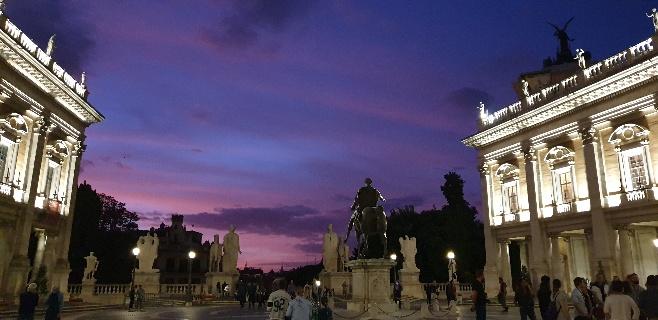
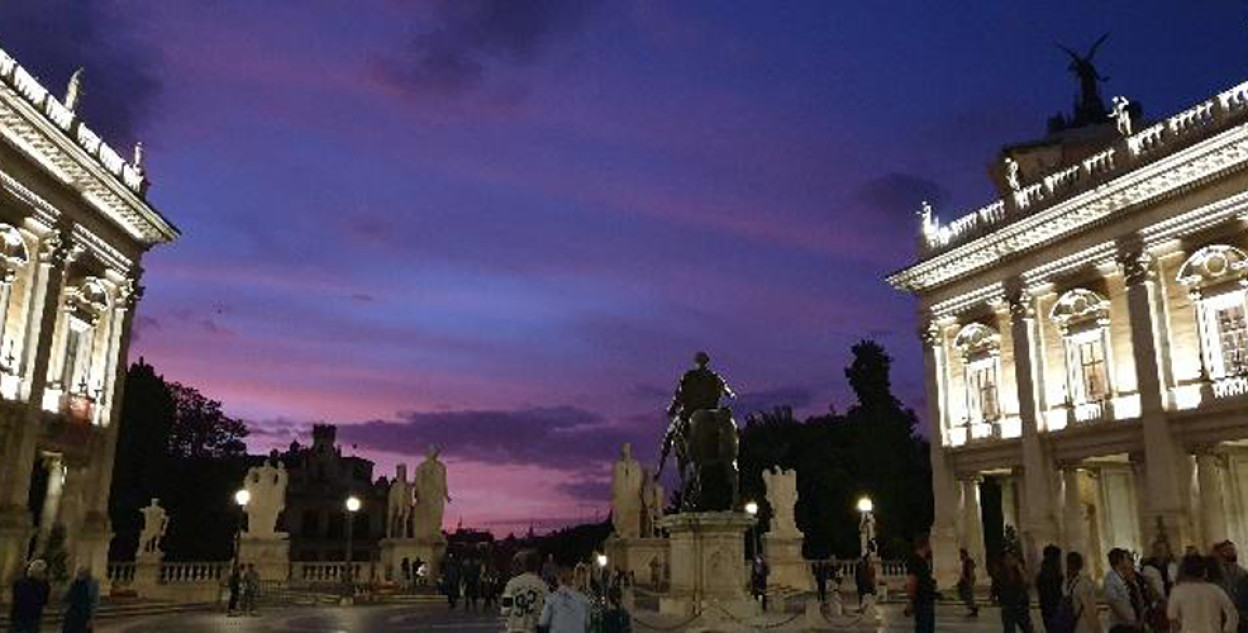
<Figure 4: Purple Hour on the Capitoline
Throughout this first day and the rest of the trip, you will find plenty of opportunity for photography, everywhere and anywhere; locals and tourists walking through the streets, market stalls full of produce, monuments and museum pieces, light filtering through church windows, sunrise over the Forum, the purple hour from the Capitoline, the golden hour in the backstreets, fauna and flora in the public parks, the flowing water from the hundreds of fountains. If you are quick enough, most of these can also be sketched.
Having finished in Palazzo Barberini, make your way to a local trattoria for dinner before returning to the hotel afterwards.
Day 2
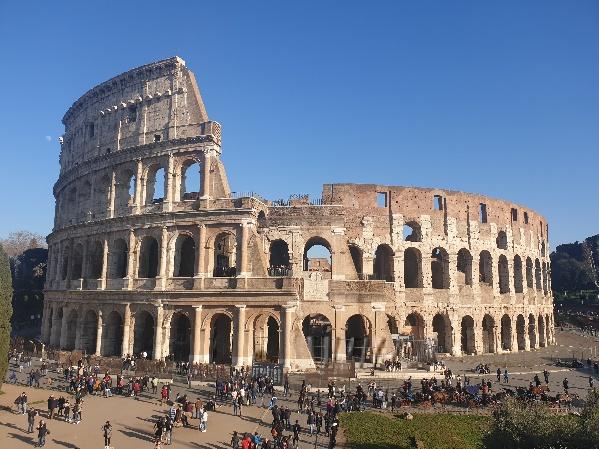
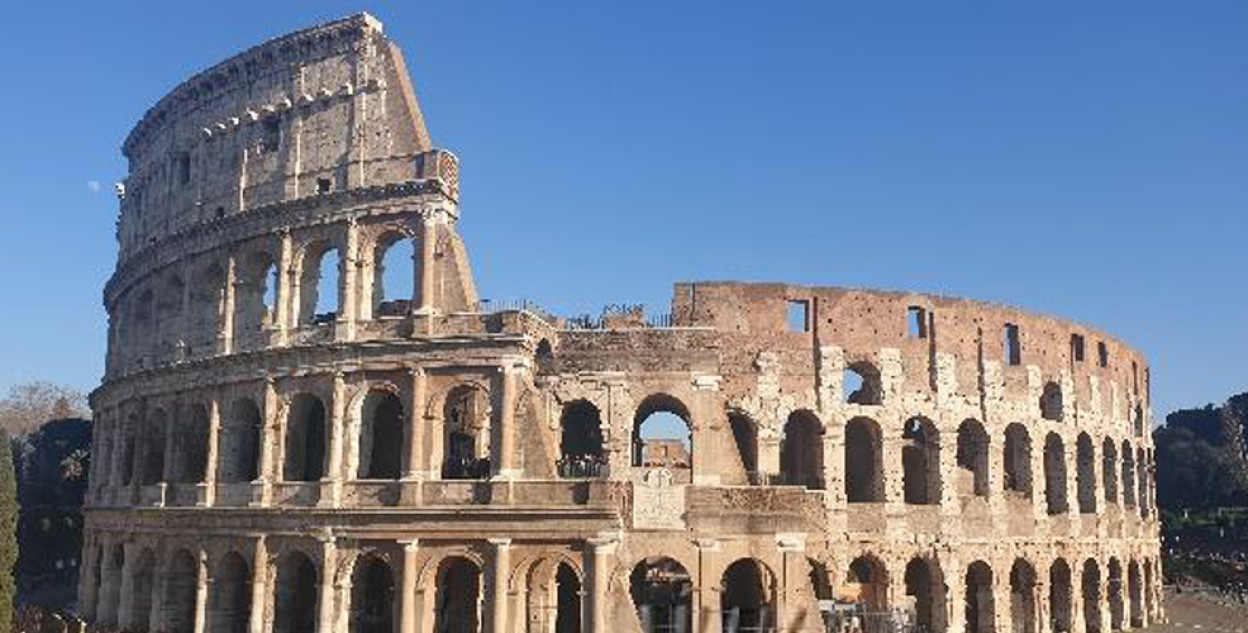
<Figure 5: The Colosseum
After breakfast, depart the hotel on foot and head to the Colosseum, the greatest monument to Roman imperial power that survives. Built across the span of a decade it features a host of architectural features including the structurally tiered use of each capital type on the exterior columns and pilasters.
Pass through the arched entrances at ground level (spot Roman numerals above each arch) to enter the interior via the surviving vaulted corridors and staircases that allowed the 50,000 spectators to reach their seats. On reaching the inner section, look down into the hypogeum subterranean passageways where the gladiators and wild beasts were kept before being winched up to the arena floor.
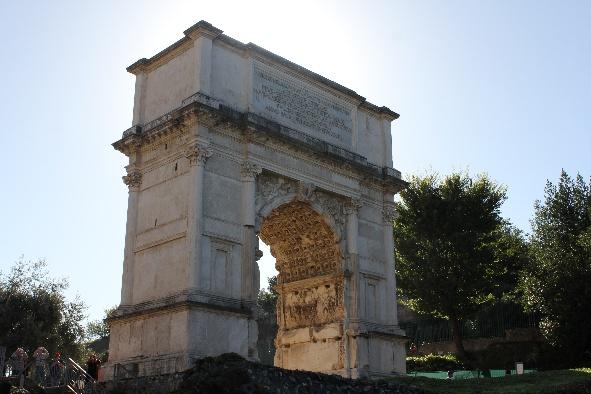
<Figure 6: The Arch of Titus
Leaving the Colosseum, cross the Piazza to the Arch of Titus entrance (or head down the Via di San Gregorio to the Palatine Hill entrance) to enter the Roman Forum and Palatine Hill section of the archaeological park. As you pass the spoliated Arch of Constantine look out for the much earlier imperial reliefs of Hadrian and Trajan.
Once in the Roman Forum you will find a wealth of architectural remains – from the partially reconstructed Temple of Vesta to the arches of Titus and Septimius Severus, the many arched vaults of the basement levels of the imperial palace to the columns of the temples to the Flavians and Dioscuri.
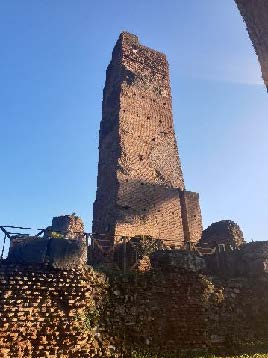
<Figure 7: The remains of the aula regia on the Palatine
On the Palatine you will find the remains of the imperial palace that once dominated the hill; surviving features include the octagonal fountain, the stadium, the nymphaeum, the (now undulated) floor of the cenatio Jovis and the remains of the aula regia.
Coming down from the Palatine, make sure you grab some lunch nearby (we recommend in the Monti district for the variety of food – and you can find some interesting graffiti down that way too).
After lunch, climb the Capitoline Hill by either the staircase at the front, or the slope up from the Via dei Fori Imperiali. For the best view over the Roman Forum through which you walked earlier, the routes up to the Capitoline are the way to go.
In the Capitoline Museums you will find a wealth of ancient art, as well as the remains of the colossal podium of the most important temple in Rome, the Temple of Jupiter Optimus Maximus. Across the two buildings that make up the museum, as well as the connecting underground path, you will find a series of statuary, reliefs, inscriptions and massive podium and tufa blocks of the archaic temple, as well as the pinacoteca art gallery on the top floor of the Palazzo dei Conservatori.
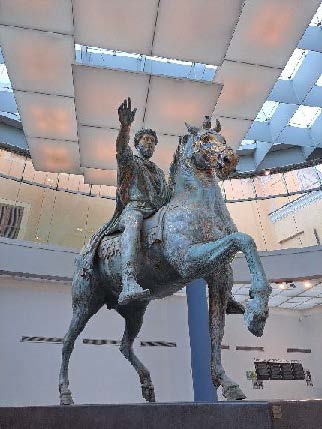
<Figure 8: The bronze equestrian statue of Marcus Aurelius
The statuary includes the bronze equestrian statue of Marcus Aurelius, the bronze Lupa and the Twins, marble statuary from the various imperial gardens on the Roman outskirts, imperial reliefs set into the staircases, busts of emperors and philosophers, some set in richly decorated rooms with16th-17th Century frescoes portraying Rome’s ancient history.
The pinacoteca hosts works of Italian artists from the Middle Ages to the 17th Century, as well as European and Oriental porcelains.
Depart the Capitoline Museum and take a slow stroll through the city to the local trattoria for dinner, keeping your eye out for photo opportunities and street art.
Day 3
After breakfast at the hotel, walk through Rome (or take the metro to Flaminio metro stop) and then stroll through the Villa Borghese gardens to the National Gallery of Modern and Contemporary Art. Here you will find works from famous artists from the 18th-21st Centuries such as Klimt, Canova, Rodin and Warhol.
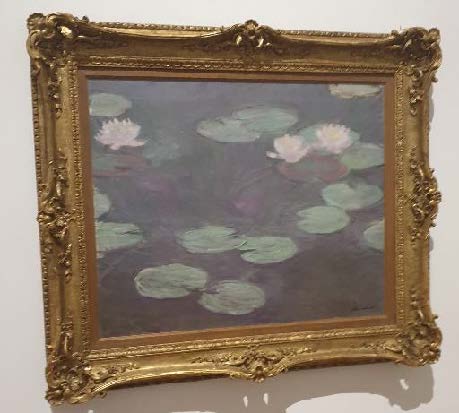
<Figure 9: Ninfee Rosa by Monet at the National Gallery
Once finished, stroll back through the greenery of the Villa Borghese gardens to the Galleria Borghese. In this lavishly decorated 17th Century villa, you will find one of the greatest art collections in the city, featuring Bernini’s David, Rape of Proserpina, Apollo & Daphne, and Canova’s Paolina Borghese Bonaparte as Venus Victrix. These masterpieces on the ground floor are surrounded by ancient Roman art, while the first floor features a collection of paintings by various artists such as Caravaggio, Titian and Domenichino.
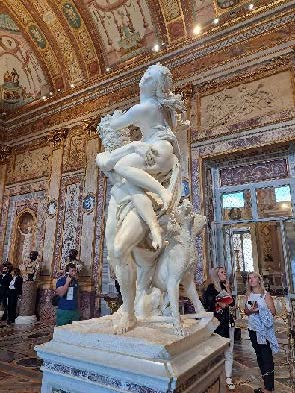
<Figure 10: The Rape of Proserpina by Bernini
Once your 2-hour visit period is up, take a walk back once more through the gardens, exit at the Piazza del Popolo steps and find lunch in the area (though there should be several snack bars in Villa Borghese gardens).
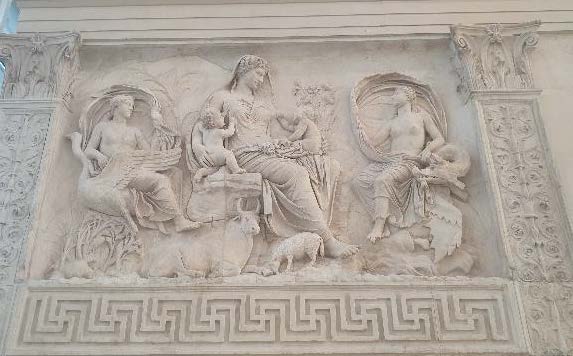
<Figure 11: The Goddess Panel on the Ara Pacis
After lunch, walk to the Ara Pacis for the most wonderful examples of visual communication by Rome’s first emperor. From the two processions showing the imperial family and other important figures, to the mythological scenes tying Augustus to the foundation of Rome, and the most famous of the panels depicting a still-disputed goddess sitting with children on her lap and surrounded by nature. This is Imperial iconography and power writ large through carving into stone.
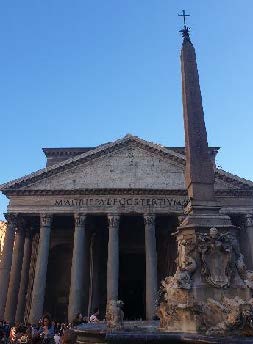
<Figure 13: The Pantheon
Walk down to the Pantheon – a marvel of Roman architecture and engineering. The largest unreinforced concrete dome in the world, set within a temple to all the gods, was converted into a church thus ensuring its survival. You will also find the tomb of Raphael here. Two churches close by feature paintings by Caravaggio – San Luigi dei Francesi and Sant’Agostino in Campo Marzio. Both can be seen on the way to Piazza Navona where you can find Bernini’s Fountain of the Four Rivers. The rest of the afternoon is yours to explore the Campus Martius at leisure.
There is plenty to see here; several obelisks in Piazza del Popolo, Piazza di Monte Citorio, Piazza della Rotonda, Piazza della Minerva and Piazza della Trinita dei Monti, the Column of Marcus Aurelius with its detailed reliefs depicting the emperor’s Germanic Wars, the Spanish Steps, and the masterpiece that is the Trevi Fountain. If you would like a more structured afternoon, the Gallery of Modern Art and the Gagosian Art Gallery are both near the Spanish Steps.
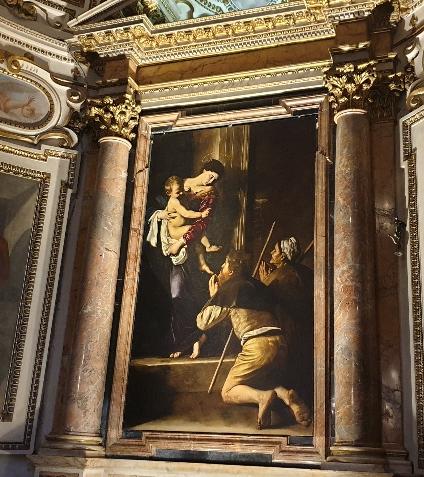
<Figure 12: Caravaggio’s Madonna di Loreto in Sant’Agostino
As the day ends, head to the local trattoria for dinner and then return to the hotel.
Naples Underground (Napoli Sotterranea) includes a section of the route with an underground WWII Museum featuring a collection of materials, objects and documents relating to the period from June 1940 to September 1943.
Day 4
Have breakfast at the hotel and then check out, meet the coach and depart for the Vatican Museums.
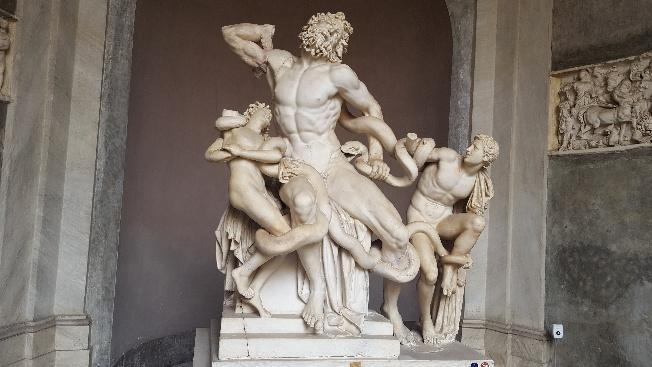
<Figure 14: Laocoön and His Sons
One of the largest collections of art in Rome, the Vatican Museums hosts galleries dedicated to its Byzantine-Medieval Art, 15th-18th Century Art, 19th Century and Contemporary Art, Decorative Arts, Tapestries and Textiles, Egyptian and Near Eastern Antiquities, Greek and Roman Antiquities, Epigraphy, Etrusco-Italic, Christian Antiquities, Ethnological, Historical and Architectural Heritage collections. Safe to say, you won’t be able to see it all, so choose wisely!
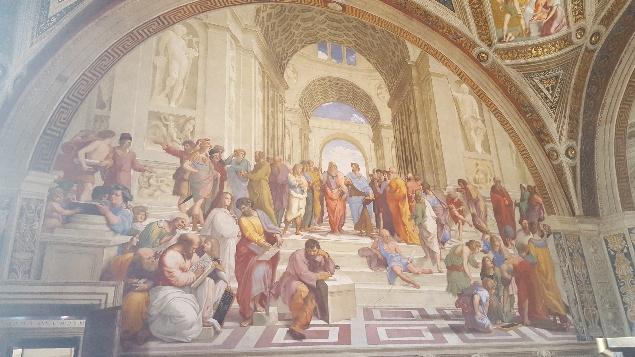
<Figure 15: The School of Athens in the Raphael’s Rooms at the Vatican
Of the ancient works, the statuary includes the Laocoön & Sons, the Apollo Belvedere and the Prima Porta Augustus, as well as a large lapidary and mosaics from the Baths of Caracalla. The Gallery of the Maps is a wonder to walk through, the Egyptian collection includes a reconstruction of the Serapeum at Hadrian’s Villa in Tivoli, the Etruscan collection includes the Bronze Mars of Todi, Da Vinci’s St. Jerome can be found in the Vatican Pinacoteca, and just before you reach the pinnacle that is the Sistine Chapel there are several rooms painted by Raphael for Pope Julius II which include the School of Athens. Be prepared for the Sistine Chapel to be a bit of a squeeze but Michelangelo’s stunning works are worth it (just remember, no photos!)
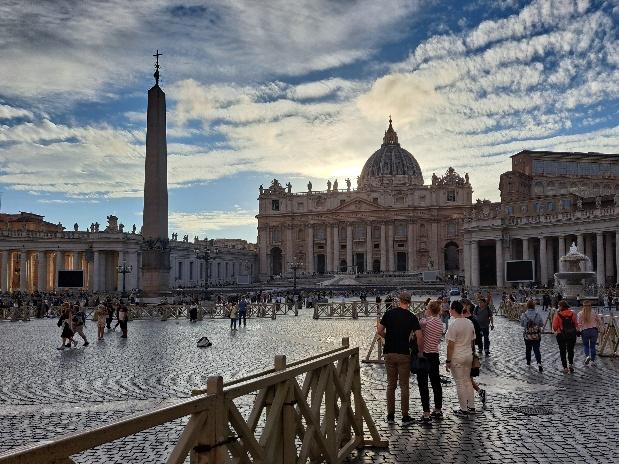
<Figure 16: Basilica di San Pietro
Once finished in the Vatican, head out and find yourselves some lunch in the Borgo area. If you have time before meeting the coach for transfer to the airport, queue and enter Basilica di San Pietro to see the interior of the world’s most famous church, which includes a statue by Michelangelo – his Pieta.
Meet your coach and transfer back to Rome’s airport to depart on your flight back home.
Feel free to contact us to tailor your own tour. 01342 324727
Optional Extras
- Museo Boncompagni Ludovisi – A museum dedicated to the promotion and documentation of the decorative arts, fashion, and costume, understood as the evolution of social taste in the modern period
- Park of the Aqueducts – Walk between the arches of the aqueducts to see arch after arch – the architecture mastered by the Romans.
- MAXXI – National Museum of 21st Century Art
- MACRO – Museum of Contemporary Art of Rome
- Chiostro del Bramante – Designed by Bramante in the Renaissance, now serves as an exhibition space
- Galleria Doria Pamphilj – Showcasing the private art collection of the Doria Pamphilj family in the lavish setting on the Via del Corso
- Galleria Spada – Famous for its façade and the forced perspective gallery by Borromini
- Giovanni Barracco Museum of Ancient Sculpture – A smaller museum in Rome displaying the private collection of Giovanni Barracco, donated to the city in 1902. Covering the Assyrian, Egyptian, Cypriot, Phoenician, Etruscan and Greco-Roman Art.
Any trip can be adapted to include personal favourites or key syllabus sites.