

Battle of Crete – World War II
Throughout history, the island of Crete has been an important part of numerous empires and foreign civilizations: Mycenaean, Dorian, Roman, Venetian, and Ottoman. But one of the most significant episodes occurred just within living memory: the Battle of Crete in 1941.
Throughout history, the island of Crete has been an important part of numerous empires and foreign civilizations: Mycenaean, Dorian, Roman, Venetian, and Ottoman. But one of the most significant episodes occurred just within living memory: the Battle of Crete in 1941.
The last battle to defend Greek territory was the Battle of Crete in May of that same year. The Greeks, together with the Commonwealth the forces in Crete, were drawn up in five key areas: around the three airfields at Maleme, Iraklion, and Rethymnon, and at Souda Bay and the port of Chania.
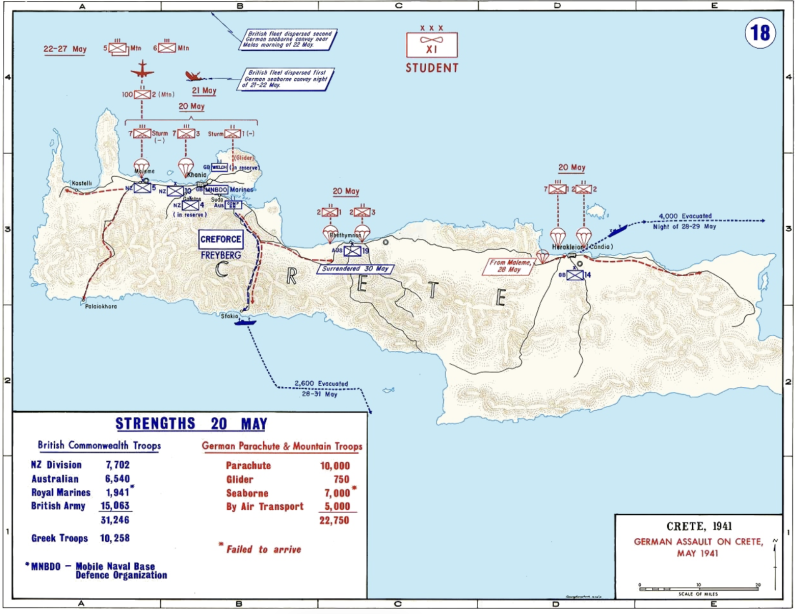
< United States Military Academy / public domain

The Germans launched their airborne attack on Crete on 20th May. The airfield at Maleme was quickly captured and used for landing German reinforcements and, on 23rd May, the remainder of the Maleme position had to be relinquished and its defenders fell back to Chania. On 26th May, the Allied line west of Chania was broken. Souda Bay became indefensible and the troops from these two positions, with the remainder of the Maleme garrison, withdrew across the island to Sfakion. Elsewhere, Iraklion was successfully defended until the night of 29th May, when the garrison was evacuated by sea, and Rethymnon was eventually overwhelmed on 31st May. Though the Battle only lasted for twelve days, it was intensely fierce and costly for both sides.
The venues below are not comprehensive by far but are merely suggestions from which to start considering a cross-curricular trip with the Modern History Department. Alternatively, use the opportunity to increase the awareness and knowledge base of your Classicists students in an area where modern and ancient history march side by side. Travelling to Crete, students can visit the following notable sites:
If you require a quotation, send us your wish list!
Tavronitis Bridge
‘Operation Mercury’ was the Axis airborne invasion of Crete in 1941; Tavronitis Bridge.
The paratroopers’ landing zone on Crete in 1941. The strategic bridge crossing where intense combat occurred during the first wave of the German invasion.
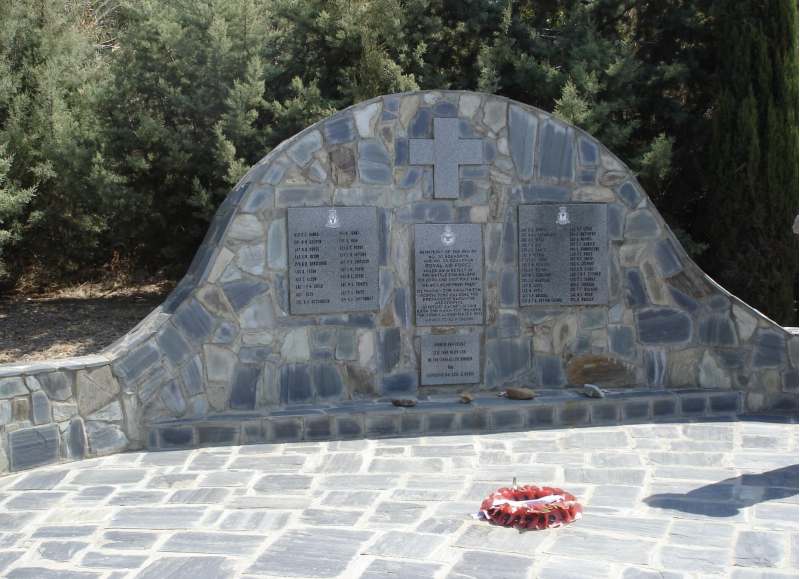
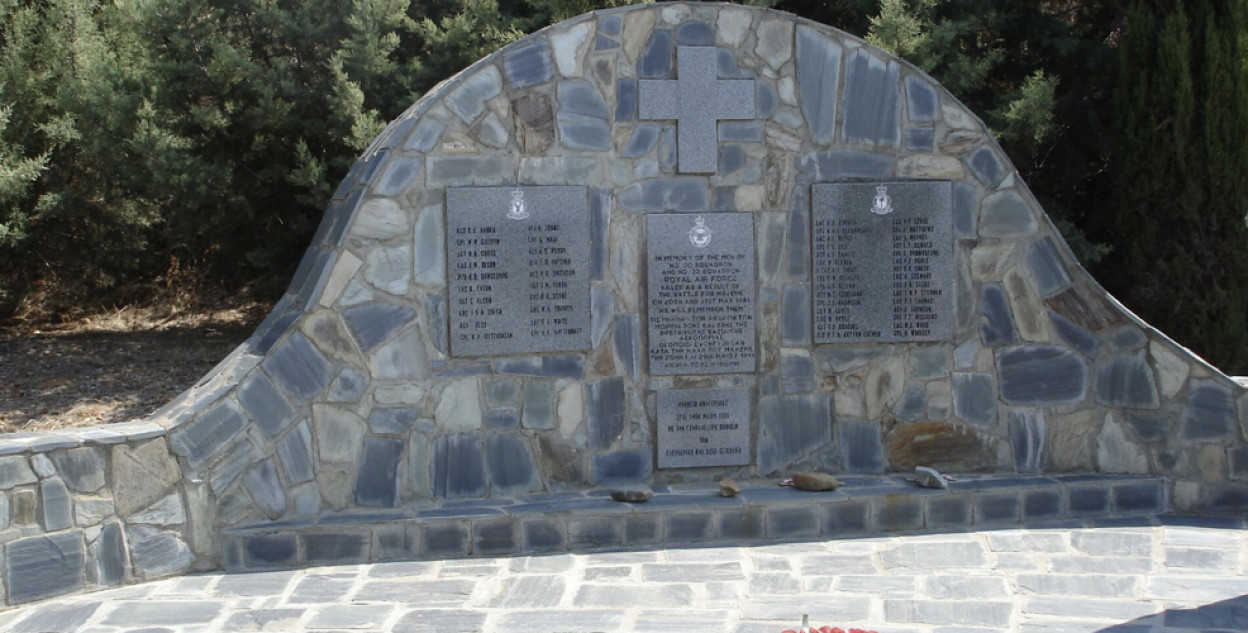
<Memorial at Maleme Airfield, Tavronitis, to RAF members of 30 and 33 Squadrons who were killed in the Battle of Crete / public domain

Maleme Airfield & Hill 107
Maleme Airfield was a site of vital importance and primary objective for German paratroopers; Hill 107 – Kazvakia Hill – overlooks the airstrip and was the scene of critical New Zealand defence. The airfield was quickly captured and used for landing German reinforcements. Within a few days, the remainder of the Maleme position had to be given up and its defenders fell back to Chania.
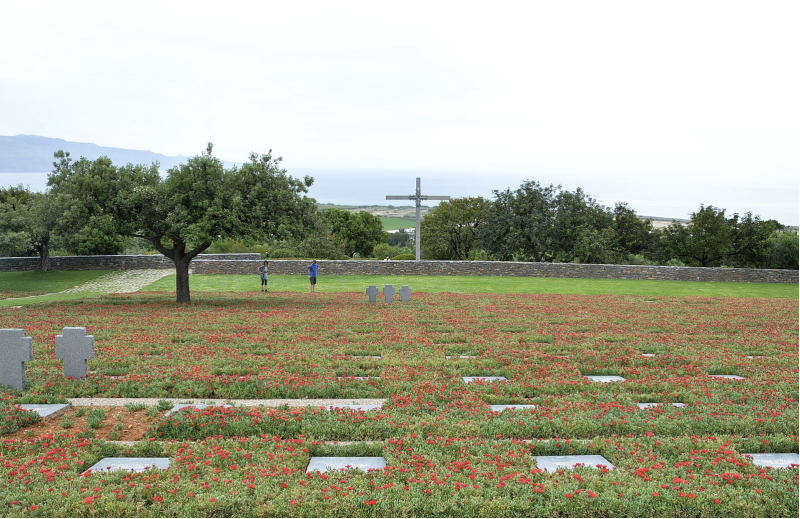
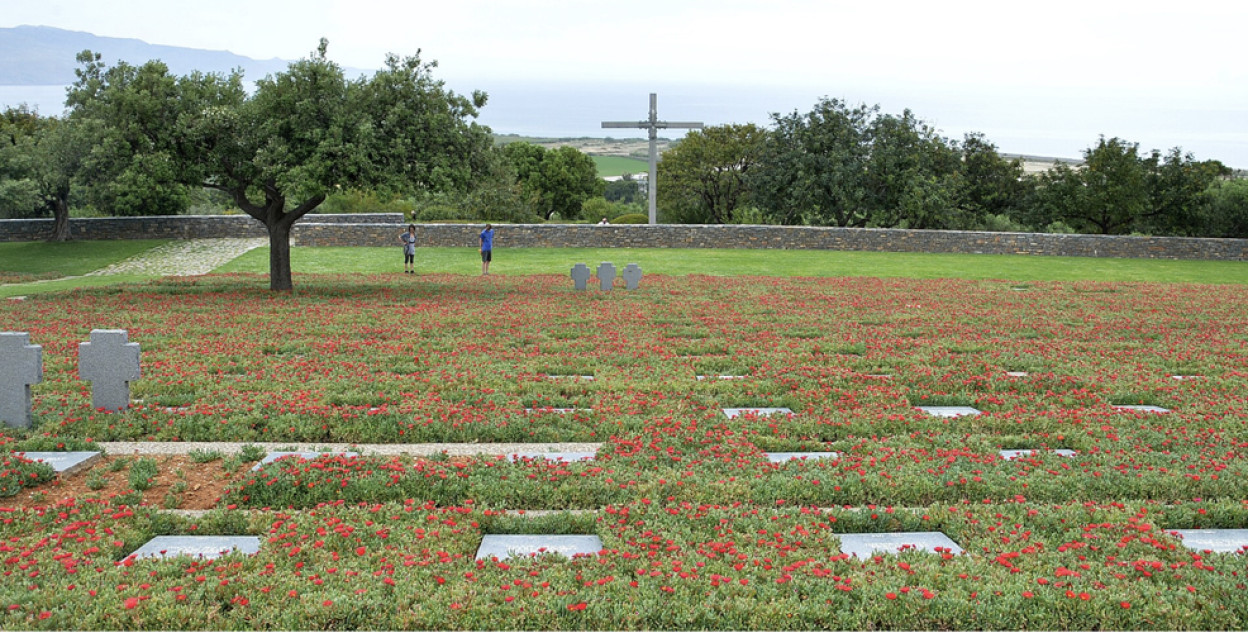
<The German War Cemetery in Maleme / public domain

German War Cemetery in Maleme
This is the final resting place for thousands of German soldiers, located on the hills above Maleme. More than 15,000 German soldiers lost their lives during WWII in Greek territory. The cemetery in Maleme (Deutschen Soldatenfriedhof in Maleme) is one of the two cemeteries in Greece where the graves of German soldiers are (the other is the military cemetery Dionysus – Rapentozis in Attica), and 4,465 soldiers who are buried here, most of them were paratroopers who died during the invasion.
Souda Bay War Cemetery
The Souda Bay War Cemetery in Crete, located within an olive grove (10 minutes drive from Chania), holds the graves of over 1,500 Commonwealth service members from WWII (primarily from the 1941 Battle of Crete; the cemetery also contains 19 WWI burials and 37 non-war burials.) The site of Souda Bay War Cemetery was chosen after the war, and graves were moved there by 21st and 22nd Australian War Graves Units from the four burial grounds that had been established by the German occupying forces at Chania, Iraklion, Rethymnon and Galata, and from isolated sites and civilian cemeteries. Around 776 of the burials are unidentified but special memorials commemorate a number of casualties believed to be buried among them.
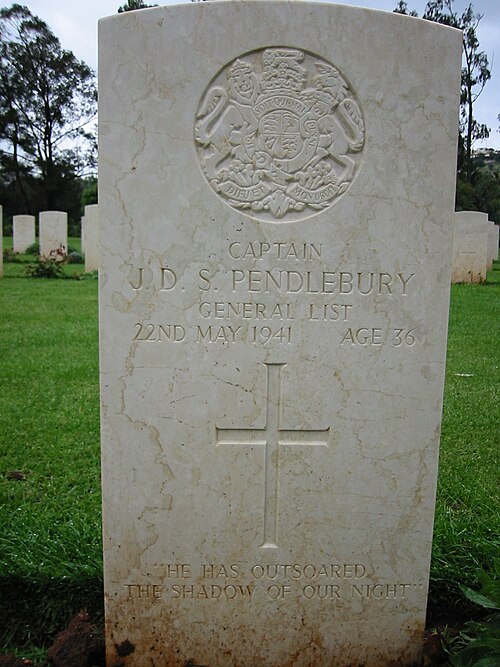
<Grave of Pendlebury in Souda Bay War Cemetery / public domain

The Cemetery at Souda Bay also contains the grave of John Pendlebury, Assistant Director of BSA and curator at Knossos, who notably worked with Evans. During the Battle of Crete, Pendlebury was executed for espionage and a street in Iraklion now bears his name, marking the area where he was wounded during the airborne invasion by the Germans.
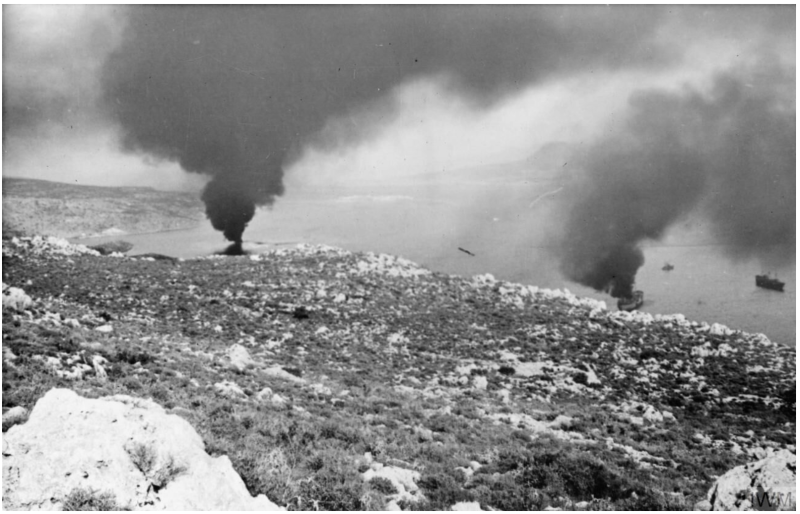
<Smoke hanging over the harbour in Souda Bay / image via Wikimedia Commons

Archanes Crossroads
The site of the audacious kidnapping on 26th April 1944 of the German general, Heinrich Kreipe by British officers, Patrick Leigh Fermor and William Stanley Moss, who were disguised as German MPs.
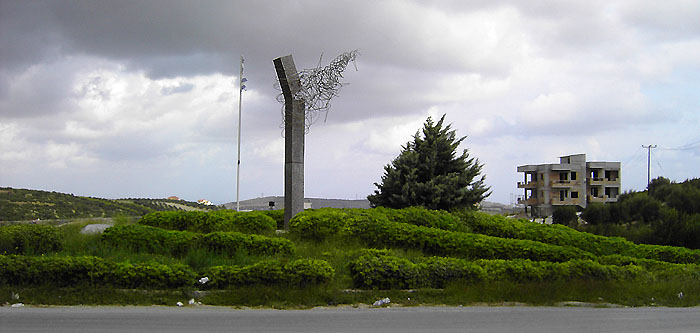
Galatas & Prison Valley
Galatas is a small village in the hills south of Chania; it was the site of intense counterattacks and heavy infantry engagements during the week-long Battle of Crete when, on 25th May 1941, German forces attacked and eventually took the village in five days. Part of the town square is now a memorial to the New Zealanders and the local Cretan people who lost their lives in the Battle, and in the German suppression of ongoing local resistance.
From the hill behind Galatas – which is known as ‘Cemetery Hill’, owing to the local cemetery near the top – there a good view of the valley that runs south from Chania; labelled ‘Prison Valley’ because German forces captured the local prison and used it as their headquarters.
Platanias Wartime Tunnels
Located in the village of Platanias in Chania, under the Church of Agios Dimitrios, are a series of underground tunnels and bunkers used during the conflict and subsequent occupation. The site has been preserved and now functions as a museum. Visitors have the opportunity not only to explore its structure and the layout of its rooms and tunnels, but also to admire an collection of WWII artefacts, in particular the names and symbols were carved on the walls by soldiers.
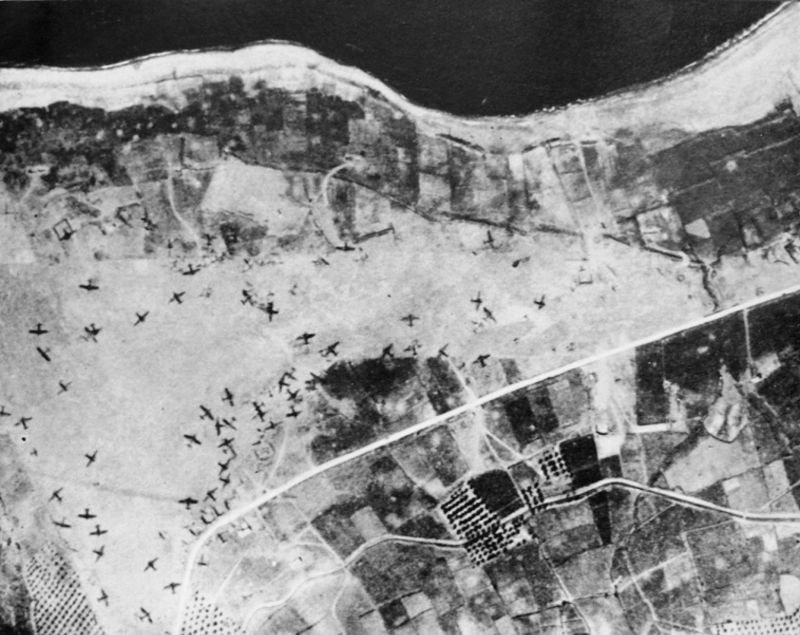
<Maleme Airfield / public domain

Golgotha
On a hill overlooking the village of Agia, outside of Hania, Golgotha was the location where German soldiers brought prisoners and rebels for execution during the occupation years. The hill was located next to the local prisons, which were also used by the Nazi forces to hold those accused of aiding Allied soldiers as they fled the island during the Battle of Crete. At the site today, a simple memorial has been created to honour the men, women and even children were assassinated.
These sites are of particular interest to both GCSE and A-Level History students focusing on WWII material; the Battle of Crete provide contextual background for Hitler’s military strategy, airborne invasions, and the fall of Greece as a European ally.
Feel free to contact us to tailor your own tour. 01342 324727
Any trip can be adapted to include personal favourites or key syllabus sites.