


Classical Italy
Explore the historic sites in Rome, where every road leads to eternity, and in the Bay of Naples, where towns are frozen in time. Follow in the footsteps of the Gracchi, Sulla & Marius, the Triumvirates, Cicero & Caecilius. Trace the rise and fall of Republic and Empire through the public & private lives of the inhabitants.
This programme can easily be shortened to include archaeological sites and museums specific to your areas of study.
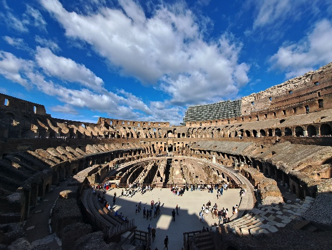
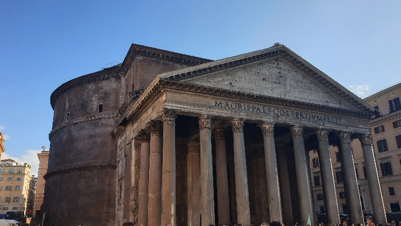
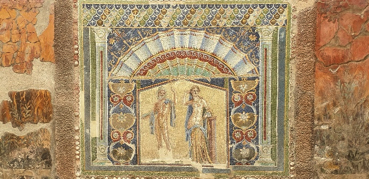
Day 1 Discover mosaics and frescoes in situ, before visiting the newly-renovated museum to see sarcophagi, reliefs, statues, busts and other finds from across the site. There is a café and restaurant on site, but, depending on flight times, we can always organise a stop in the square just outside the archaeological park for a quick lunch there. Once you’ve finished at Ostia, meet your coach and depart for the Rome hotel, check in and then depart for the evening meal at the local trattoria. After breakfast collect your whispering guides (still an entry requirement for the Colosseum) and depart on foot for the Colosseum. After a walk around the greatest symbol of Rome’s might and power (don’t miss the mini-museum space on the second floor), cross the Piazza to the Arch of Titus entrance to the Forum. If Rome was the heart of the empire, the Forum was its Rome’s heart. A monument to Rome’s history, from the ruins of the Regia to the Column of Phocas, Walk between Basilicas, Arches and Temples before climbing the Palatine hill to see the remains of the Imperial Palace, Augustus’s house was small and humble (if we believe the sources) but it was greatly expanded under his successors and then again by the Flavian and Severan dynasties. Make sure you’ve seen everything in this part before you depart, your ticket only allows for one entry! Find some food nearby for lunch (James always recommends the Monti district). After lunch you can explore the open-air ancient sites in the area – take a self-guided walk through the space of the Circus Maximus, Rome’s huge racetrack, get up close to the temples and arches in the Forum Boarium, Velabrum and spot the altar of Concordia Augusta, re-erected where it was discovered. For €3pp in situ you can even go below the Church of Saint Nicolas in Prison to see the remains of the Temples of Juno, Spes and Janus in the Forum Holitorium. Follow the road round to see Tiber Island and the oldest bridge in Rome, the pons Fabricius, before walking up to the Theatre of Marcellus, and the Portico of Octavia, monuments dedicated by Augustus to his sister and nephew. You’ll be near the base of the Capitoline stairs by now, so climb those to enter the Musei Capitolini. The oldest public museums in the world, they hold a vast collection of epigraphy and statuary, including the bronze equestrian statue of Marcus Aurelius, and the colossal remains of the podium of the Temple of Jupiter Optimus Maximus. Once you’ve explored the museum, head out for dinner at a local trattoria and retire to the hotel. Inside the museum you’ll find a few displays on the altar, a tabletop map of the Campus Martius as it was when the altar was built, as well as busts of the Augustan imperial family, then you reach the altar. Well it and soundproofed against the road outside it sits in an Oasis of calm, walk around and through the altar, spotting all the subtle (and unsubtle) symbolism, and debate the identity of the goddess on the upper back external relief before departing. You’re now on your way to the greatest building in the City, the Pantheon! Marvel at the monolithic columns before entering and craning your neck to look through the eye of the gods, the oculus. Once you’ve been sufficiently awed, head out to stop for a local lunch and then head back to the hotel to meet the coach and depart for your Sorrento area (or Pompeii) hotel. Arriving just in time to check in before dinner. After breakfast meet your coach and depart for Pompeii. One of greatest archaeological sites in the world and the greatest example we have for the layout of a Roman town. Walk though the streets, poking your heads into doorways to see remains of atria and more! Walk across the floor of the oldest stone amphitheatre, marvel at the luxury of the House of the Faun, look down into the Insula dei Casti Amanti, find the statue of Eumachia in her eponymous building at the Forum, see the wonderful frescoes at the Villa of the Mysteries and make sure you see if the House of Caecilius is open! The restaurant near the Forum is currently undergoing works but for lunch you can head up to the Casina dell’Aquila (you exit at it from the Insula dei Casti Amanti) for lunch. There’s so much more to see at Pompeii, even one full 7 hour day probably isn’t enough. The House of the Vettii has recently reopened for the first time in decades, so make sure that is on your list, and stop off at the Antiquarium on your way out. Meet your coach and depart for your hotel to have some free time before dinner at the hotel. Once you’ve finished breakfast, meet your coach and depart for Mt. Vesuvius. The infamous volcano that buried Pompeii, Herculaneum and the surrounding villas. As part of the ticketing system you now receive a Guide who will accompany you round the National Park. Once you’ve finished your hike up to the Gran Cono, meet your coach and depart for the modern town of Ercolano. Once there you will have an hour to get lunch, there are plenty of restaurants off the main street in the town. After lunch head down to the site of Herculaneum to see the other major town buried in the eruption. Rather different to Pompeii, a lot of Herculaneum is now under the modern town of Ercolano, so you’ll find no Forum or amphitheatre here (though there are private tours of the buried Theatre which are not annoyingly not bookable for schools). Explore Herculaneum’s streets to see the remains of Baths, the boathouses where the residents fled to try and escape, unsuccessfully, private dwellings, the Hall of the College of the Augustales, and a Palaestra. The differing in the impact here of the eruption compared to Pompeii means you can find more second floors and carbonised wood. Once you have seen all that Herculaneum has to offer, meet your coach and depart for your hotel, you’ll probably have some free time to rest up before dinner. Eat breakfast, check out of the hotel and meet your coach to depart for Naples. You can stop on the way at Villa Poppaea, Oplontis to see the extraordinary frescoes at this villas that may have belonged to the family of Nero’s wife Poppaea. Continue on to Naples to get some lunch and then enter the National Archaeological Museum. The collection of the MANN is nearly completely dedicated to the Bay of Naples (aside from their Egyptian section and some of the statues). You’ll find everything you could ever want here – Statues, Cameos, Gems, Frescoes, Silverware, Busts, Mosaics, numismatics, inscriptions (though the main epigraphic collection is currently closed) and much more. Split across 3 floors and the basement each type of find is split either by type or thematically (there’s a whole section dedicated to the Temple of Isis at Pompeii, for instance) and you can spend hours in here. Their new Campania layout on the ground floor will cover most of your bases, but make sure you head upstairs to see the Mosaics and Frescoes departments – the Alexander Mosaic is one of the greatest surviving from antiquity, before heading back the ground floor to visit the Farnese statuary collection. The Farnese collection includes the very famous statue of Hercules from the Baths of Caracalla in Rome, and then the largest surviving statue from antiquity – the Punishment of Dirce. Once you are museum-ed out, meet your coach and depart for Naples airport to check in and get ready to fly home. Feel free to contact us to tailor your own tour. 01342 324727 Optional Extras: Rome Transfer Day Bay of Naples Blogs:
Resources: Information, maps & plans for Pompeii, Boscoreale, Oplontis, Stabiae, Longola & Villa Sora.
If you require a quotation, send us your wish list!
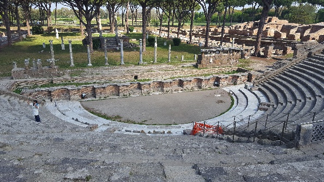 Arrive Rome Airport, meet your Courier and transfer to the one of Rome’s key ports, Ostia Antica. One of the best archaeological sites, where you can freely wander through bathhouses, temples, the forum, the theatre, houses, bakeries and the Square of the Corporations.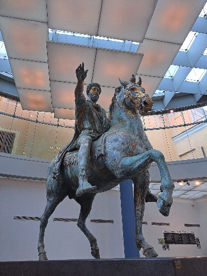
 After breakfast at the hotel, check out and leave your luggage in the hotel’s storeroom, depart on foot for the Ara Pacis Museum to see the Altar to Augustan Peace. This monument was reconstructed by Mussolini and moved to sit next to the Mausoleum of Rome’s first emperor. The Mausoleum is still under renovation, but should be opening in 2026. If you arrive early, remember to check out the modern copy of the Res Gestae on the side of the Museum.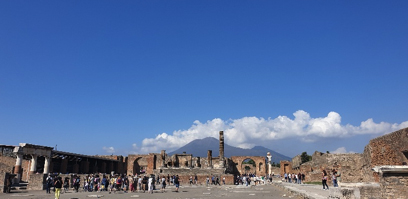
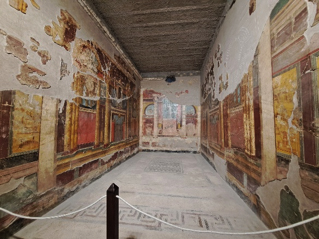
It is impossible ‘to do’ the Rome/Sorrento programme in one visit, so choose wisely – better still, visit at least twice!
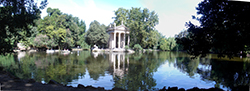 < Villa Borghese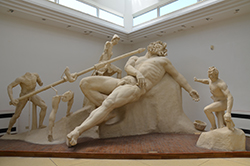
< The Blinding of Polyphemus, Villa of Tiberius, Sperlonga
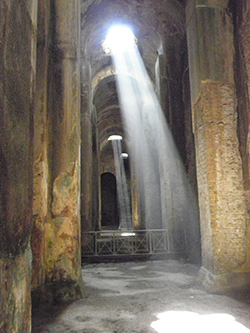
< Piscina Mirabilis, Bacoli
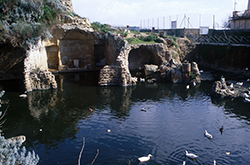
< Sacello Augustali, Misenum
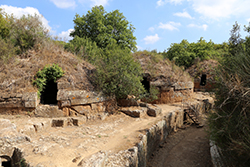
Three Days in Rome
A long weekend in Rome
Bay of Naples – New Hotels, TWO Glass Bottomed Boats and a new Site – Pausylipon (Seiano Grotto)!
What did the Romans (and Etruscans) ever do for Firenze? Part 1
What did the Romans (and Etruscans) ever do for Firenze? Part II
Walking Rome’s Obelisks Official Pompeii Archaeological Site: http://pompeiisites.org/en/
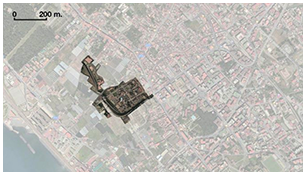 Herculaneum – Guide, Plan and Info for Visiting the Ruins: https://www.visitpompeiivesuvius.com/en/herculaneum
 The Herculaneum Society: https://www.herculaneum.ox.ac.uk/