

Liberation of Italy – Word War II
Rome can be a great trip option for modern historians, just as much as it is for students of the ancient world. The city’s place as Caput Mundi, seat of government for the Papal States, and the capital of the unified Italy in the 19th Century means that it has always been one of the most important cities in the Western world. Both the influence of Il Duce and the advance on Rome (the first Axis Capital to be liberated) by the Allied Forces of Liberation in 1944 are instrumental in the development of modern Europe.
The venues below are not comprehensive by far but are merely suggestions from which to start considering a cross-curricular trip with the Modern History Department. Alternatively, use the opportunity to increase the awareness and knowledge base of your Classics students in an area where modern and ancient history march side by side.
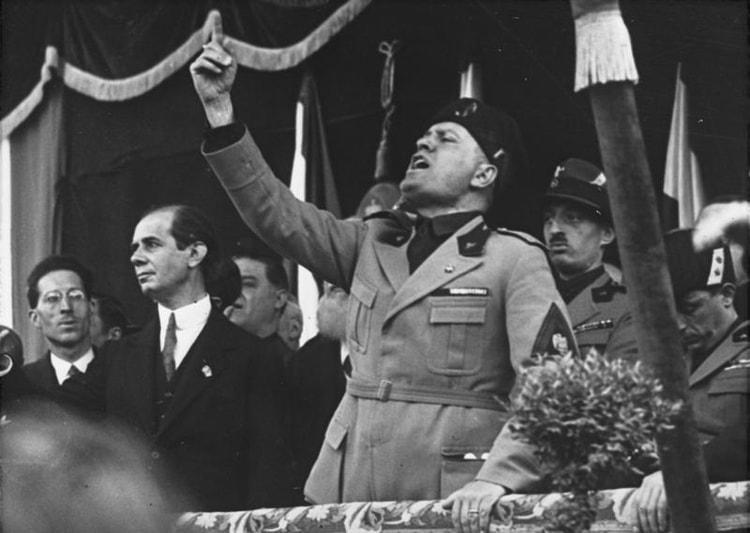
<Bundesarchiv, Bild 102-09844 Creative Commons Attribution-ShareAlike
For an obvious and full cross-curricular military and political trip in Rome, do check out our Augustus and Mussolini Itinerary Just as Augustus rebuilt his city in marble, so Mussolini wanted to build ‘la Terza Roma’, his Third Rome. Both used the city as political propaganda. Mussolini also adopted the Republican Fasces.
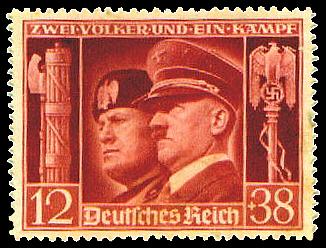
<Published in Germany before the Law on Copyrights and Neighboring Rights
Additional WWII sites are listed below; some are in Rome others require day trips outside the city.
If you require a quotation, send us your wish list!
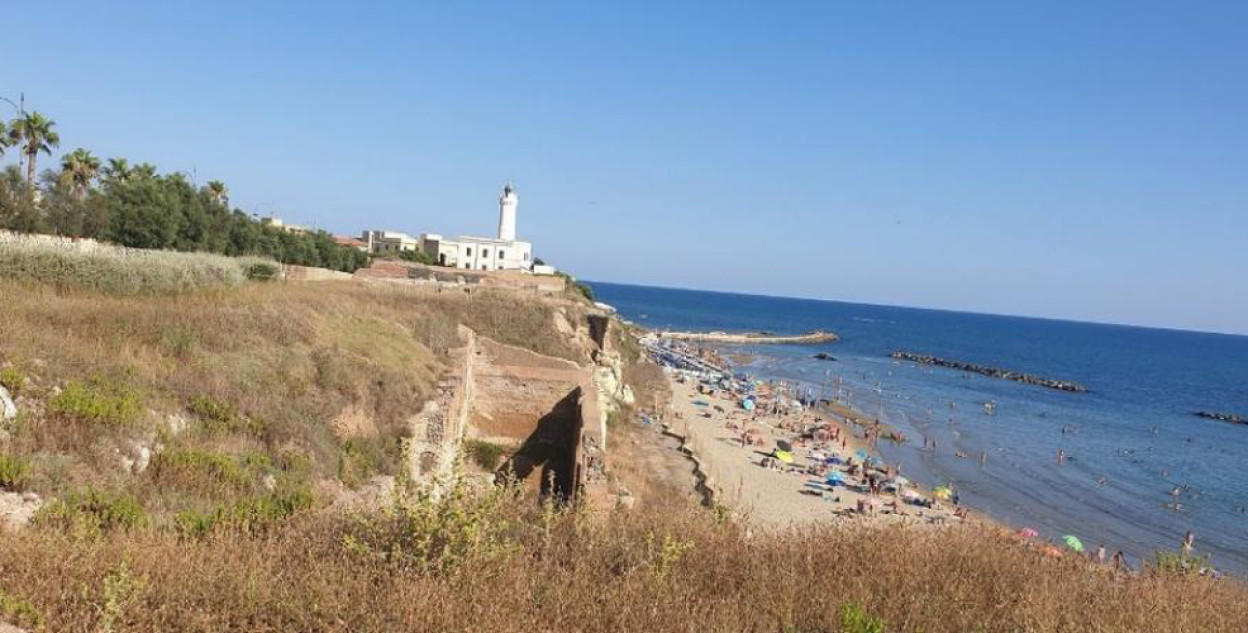
Anzio, known to the ancient Romans as Antium and home to several luxury Villas in both the Republic and Imperial periods. For modern historians, Anzio is the site of the Allied Landings in January 1944 where progress stalled until late May when they eventually broke through the German defensive lines and made it to Rome on 4th June. One can visit the Anzio Beachhead Museum at Villa Adele (open every day except Mon and Weds, 10:30-13:00 and 17:00-19:00), the Civic Archaeological Museum, the Monument to the Fallen, and the Commonwealth War Graves at Anzio Cemetery.
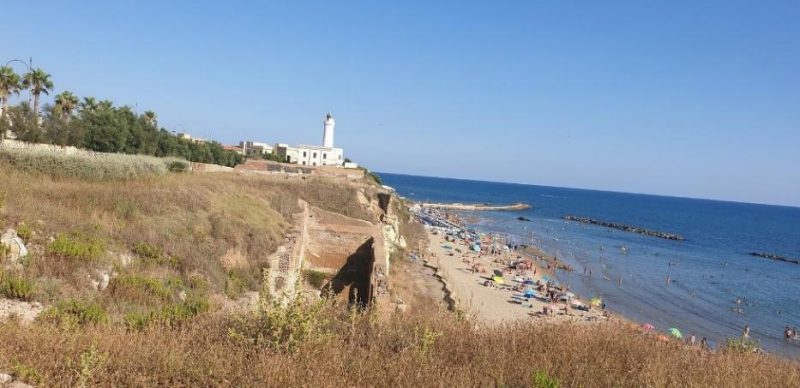
<Anzio Beach by James Heath
Monte Cassino sits just under 2 hours south of Rome on the way to the Bay of Naples. The Monastery was built on top of the mountain under Saint Benedict in AD 529. In February 1944, it was subject to bombing by the Allied forces who mistakenly believed that the German forces had set up an observation post in the Abbey. The Monastery was completely rebuilt after the War. Visitors today can see the rebuilt Monastery as well as the War cemeteries of Polish, Commonwealth, German and French troops. You can also visit the Memorial Museum of the 2nd Polish Corps, and the remains of a Sherman tank on the hill behind the Abbey. On the winding road up to the Abbey, the remains of Roman Casinum can be visited (Museum, Theatre, Amphitheatre, and Mausoleum).
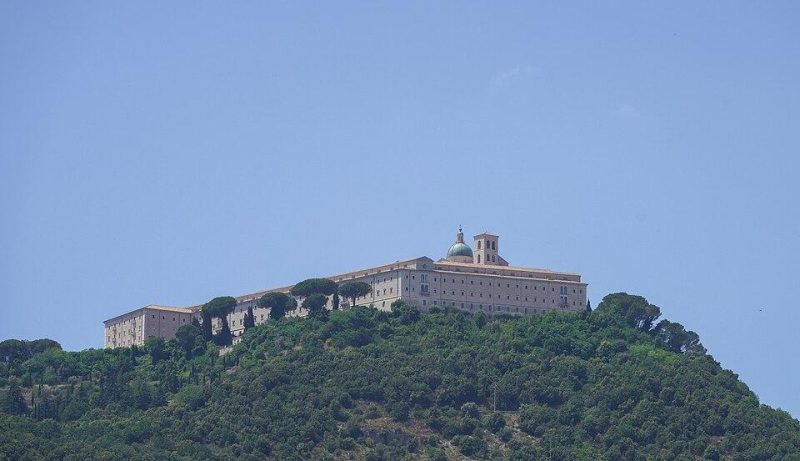
<Creative Commons Attribution-Share Alike 4.0 International license.
San Pietro Infine (near Monte Cassino). Site of a major engagement in December 1943, the first in which Italian troops fought beside those of the Allies. The village was completely destroyed, its dramatic ruins left as an open-air war memorial.
Naples Underground (Napoli Sotterranea) includes a section of the route with an underground WWII Museum featuring a collection of materials, objects and documents relating to the period from June 1940 to September 1943.
Fosse Ardeatine Memorial is located on the Via Ardeatine, south of Rome, near the Catacombs of San Sebastiano and San Callisto. It commemorates the 335 civilians and political prisoners killed by the occupying German forces on the 24th of March 1944. This mass killing was in response to an Italian Partisan attack on the Via Rosella the day before killing 33 members of the German Army with a bomb. If one visits the Via Rasella today, the buildings still have the scars from the explosion and the subsequent gunfire. It was decided by the Lieutenant Colonel of the Security forces in Rome, Herbert Kappler, that 10 Italians would be killed for every German death, however, five extra people were rounded up. These 335 Italians were taken to the disused pozzolana quarries and executed 5 people at a time by firing squad, before having German military engineers detonate explosives to bury the evidence. The Memorial was built between 1947 and 1949 and contains the tombs of the fallen as well as other commemorative monuments.
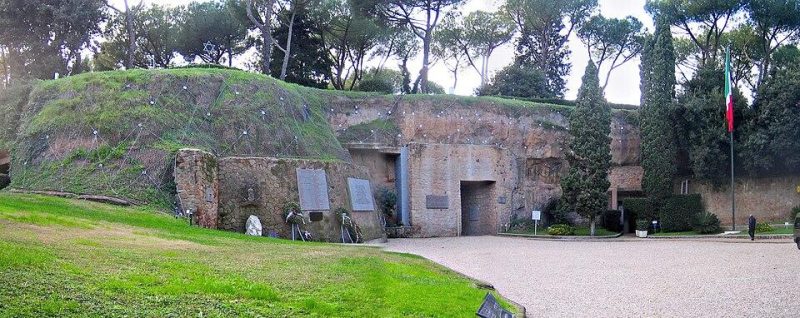
<antmoose Creative Commons Attribution 2.0 Generic license
The Cemetery at Souda Bay also contains the grave of John Pendlebury, Assistant Director of BSA and curator at Knossos, who notably worked with Evans. During the Battle of Crete, Pendlebury was executed for espionage and a street in Iraklion now bears his name, marking the area where he was wounded during the airborne invasion by the Germans.
Rome’s Jewish Ghetto was established in 1555 by Pope Paul IV, forcing Rome’s Jewish population (one of the oldest in the world outside the Middle East) of about 2, 000 people to move into a walled area where the gates were then locked at night. The Ghetto covered about three hectares along the side of the Tiber. As the Ghetto was controlled by the Church, when the Papal State ceased to exist in September 1870, the Ghetto was liberated by Risorgimento troops. In 1888 the walls were torn down, and the Great Synagogue built in 1904. Nazi Germany reestablished the Ghettos in the 1930s across their conquered territories in Europe. On October 16th, 1943, the Gestapo raided the Ghetto and deported 1,023 Jews to Auschwitz. From this number, only sixteen people survived (15 men and 1 woman). Rome’s Jewish population was around 8000 people, 2,000 of whom were deported before the liberation of Rome on the 4th of June 1944. Of this total, only 102 survived the Holocaust, and 75 were killed as part of the
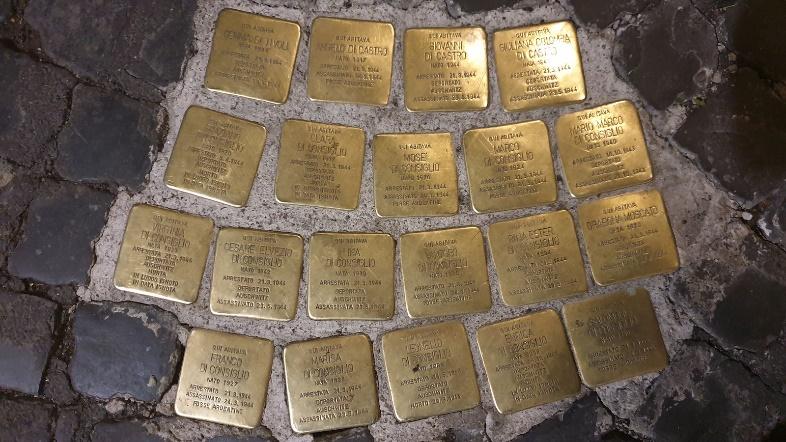
Ardeatine Massacre. In the Ghetto, and throughout Rome as a whole, visitors can find the bronze Stolpersteine (Stumbling Stones) by Gunter Domnig which were created in 1992 to commemorate victims of the Nazis. There are over 100,00 of these Stumbling Stones across 30 European countries. They were placed outside the homes of the victims with their name, date of birth, date of arrest, location of deportation, and date of death.
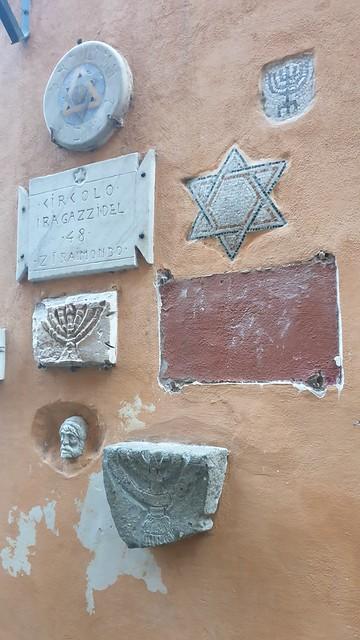
<Both photos by James Heath
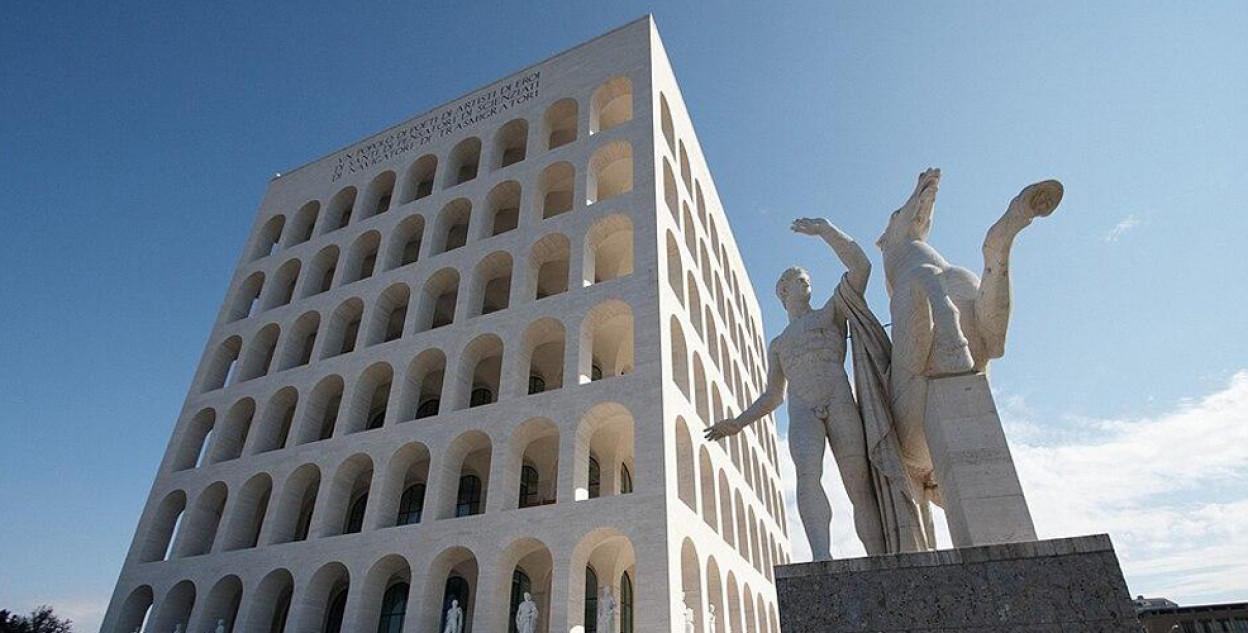
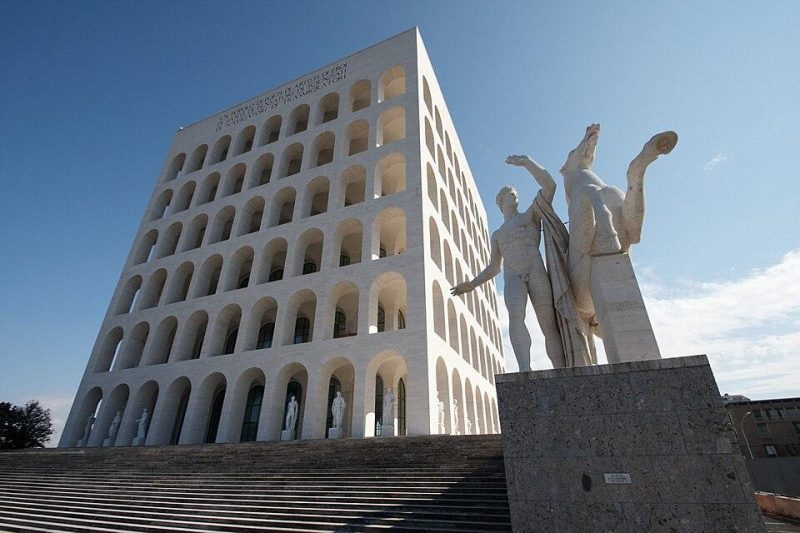
EUR District and Foro Italico are two of the largest areas of Fascist era architecture in Rome. The former was designed by Mussolini in the 1930s to host the 1942 World’s Fair (which was cancelled due to the Second World War). It is now Rome’s main financial and business district, as well as being a residential district. EUR is short for “Esposizione Universale Roma”. The layout of EUR was inspired by the town planning of the Roman empire. Many buildings are made of limestone, tuffa and marble, as used by the ancient Romans. The most recognisable of these buildings is the Palazzo della Civiltà Romana, also now known as the Square Colosseum, but you can also find the Basilica parrocchiale dei Santi Pietro e Paolo, Palazzo dei Congressi and the Archivio Centrale dello Stato. There ae several museums located in the district – Museum of Roman Civilisation, National Museum of the Middle Ages, Prehistoric Ethnographic Museum and the Astronomy Museum. The Museum of Roman Civilisation hosts Gismondi’s model of Rome, but it is currently closed for restoration (and has been since 2014). The Obelisk of Marconi also sits in the district. Several additional buildings have been added since, mostly in the 1960s.
<Alexandre Delbos Creative Commons CC0 1.0 Universal Public Domain Dedication
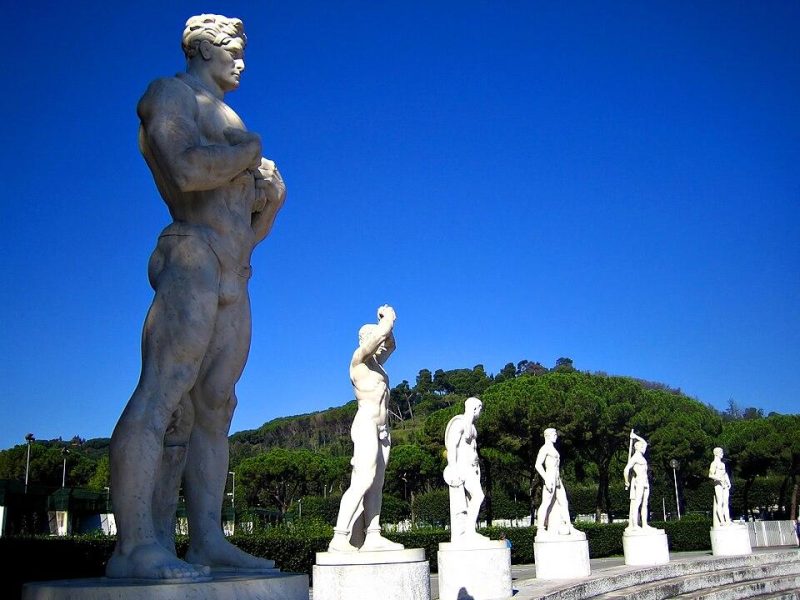
The Foro Italico complex is located in the north of the city, on the slopes of Monte Mario. It was designed in the 1920s and inaugurated in 1932 with the name “Foro Mussolini” ahead of the cancelled 1944 Olympics. It is comprised of several buildings – the Academy of Physical Education, the Palazzo delle Terme, the Stadio dei Marmi, Casa della Scherma, Piazza dell’Impero, the Stadio Olimpico, the Stadio del Tennis di Roma. the Polo Natatorio del Foro Italico and the Stadio Olimpico del Nuoto. These last two were built in ahead of the 1960 Summer Olympic Games and the Stadio Olimpico was reconstructed for the same Olympics before being upgraded for the 1990 World Cup.
<antmoose Creative Commons Attribution 2.0 Generic license.
Villa Torlonia, north of the centre was occupied by Mussolini between 1925 to 1943. During the War, the garden was repurposed for vegetable growing production. After the Liberation of Rome in June 1944, the Allied Troops occupied the Villa and accompanying buildings until 1947. Small groups (15 at a time) can visit Mussolini’s bunker in the grounds.
Museum of the Liberation of Rome (Museo Storico della Liberazione), a road away from Manzoni’s metro station, hosts several rooms dedicated to a variety of topics focused on the Occupation and Resistance.
The Aurelian Walls at the Pyramid of Cestius feature a series of plaques dedicated to various groups. The first, dedicated in 1984, is to all the soldiers that fell during the Italian Campaign; the second is dedicated to the Partisans and was erected in 1947 by the Partisans of Lazio; the third is the Government Plaque, dedicated in 1980 to honour the civilian and military sacrifices during the Battle of Rome; the final plaque is dedicated to the Women of Rome who risked their lives when they cared for the wounded and salvaged the dead.
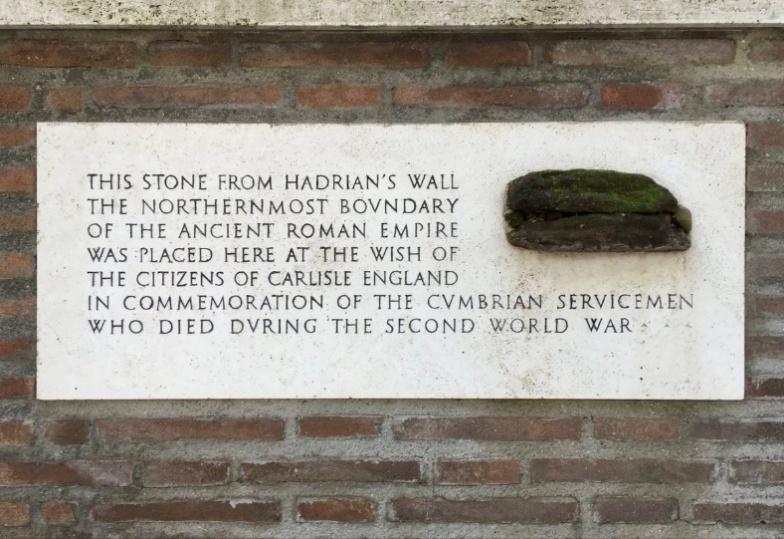
The Commonwealth War Cemetery is just down the road from the Pyramid of Cestius and contains the graves of 422 soldiers from the Second World War. You can also find a stone from Hadrian’s Wall dedicated by the citizens of Carlisle to commemorate the Cumbrian servicemen who died in WWII.
<Used with permission from Dr. Sophie Hay, Instagram
Feel free to contact us to tailor your own tour. 01342 324727
Any trip can be adapted to include personal favourites or key syllabus sites.